
A bathroom is often one of the smallest rooms in a home, yet it has a surprisingly big effect on how the home feels.
Think about the difference between walking into a bathroom that is cluttered, poorly lit and difficult to use and one where everything has its place, the lighting is comfortable and the materials feel good under both your eyes and your feet.
The difference isn’t necessarily the size of the room.
It is often the planning.
A well-designed bathroom can feel calm, private and almost spa-like without requiring an enormous space. The key is to make every decision—from the layout to the smallest storage detail—work for the way the bathroom is actually used.
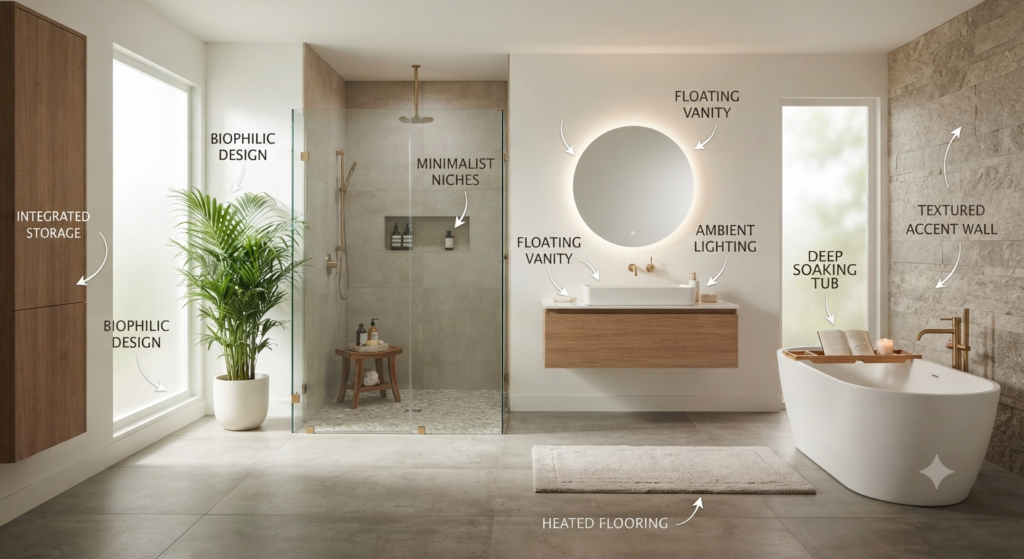
1. Begin With the Bathroom Layout
Before choosing tiles or a vanity, understand the available space.
Where is the door?
Where are the plumbing points?
Where is the window or ventilation?
How much room is available around the toilet, basin and shower?
These questions may not sound exciting, but they determine what can realistically fit into the bathroom.
A beautiful design on paper can become frustrating if the door hits the vanity or there isn’t enough space to move comfortably around the shower.
Good bathroom design begins with movement.
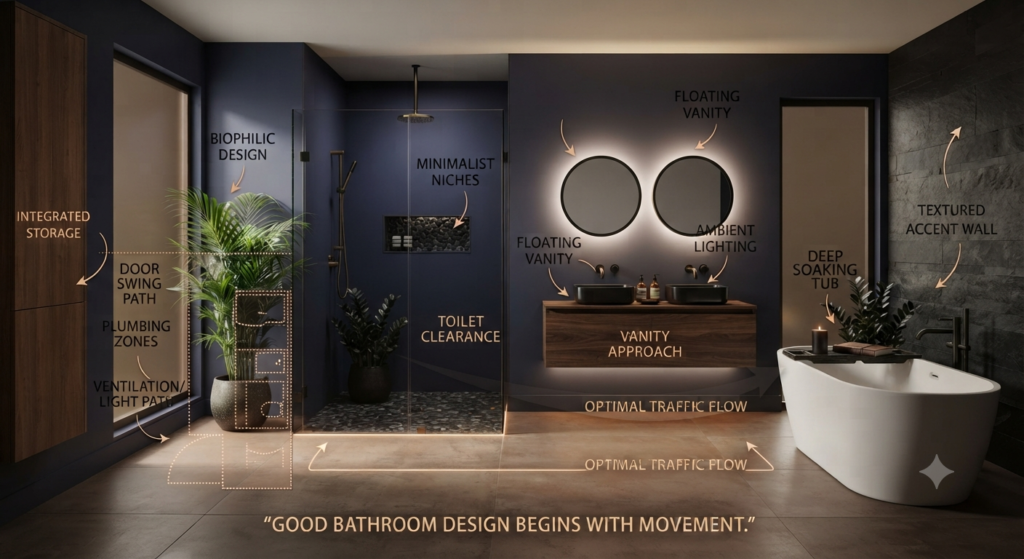
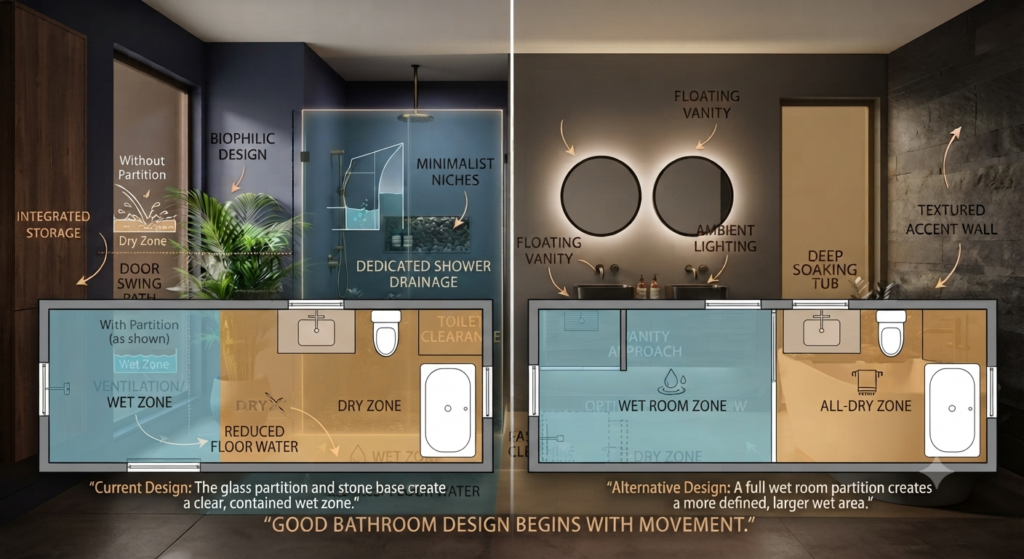
2. Separate Wet and Dry Areas
One simple way to make a bathroom feel more organised is to clearly separate areas that get wet from those that don’t.
A shower enclosure or glass partition can help keep water contained while allowing the bathroom to remain visually open.
This can also make cleaning easier and reduce the amount of water reaching the rest of the floor.
In a smaller bathroom, clear glass can be particularly useful because it doesn’t create a heavy visual barrier.
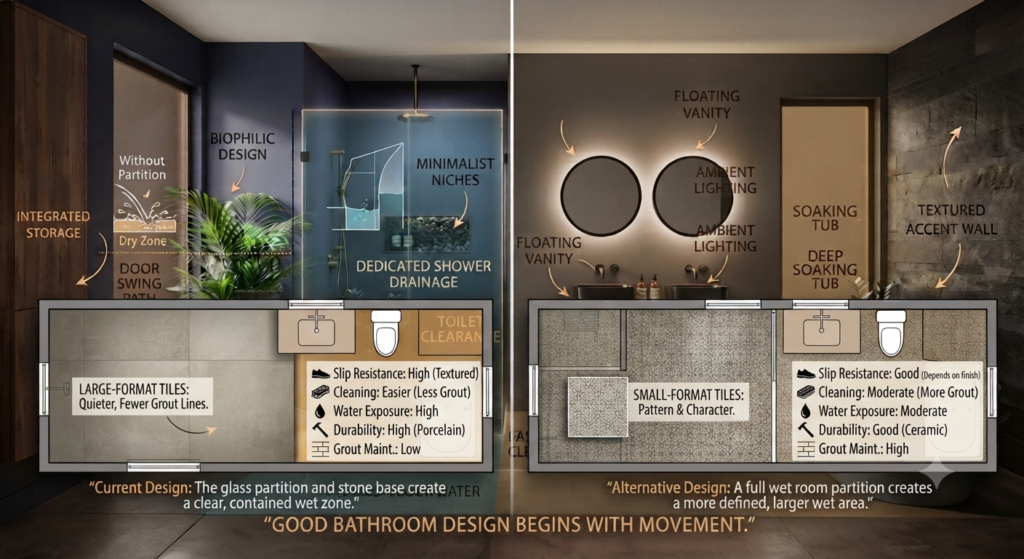
3. Choose Tiles for More Than Their Appearance
Tiles are one of the biggest visual elements in a bathroom, but appearance shouldn’t be the only consideration.
Think about:
- Slip resistance
- Cleaning
- Water exposure
- Durability
- Grout maintenance
- How the surface feels visually in different lighting
Large-format tiles can create a quieter appearance because there are fewer grout lines.
Smaller tiles can introduce pattern and character.
Neither is automatically better. The right choice depends on the size and character of the room.
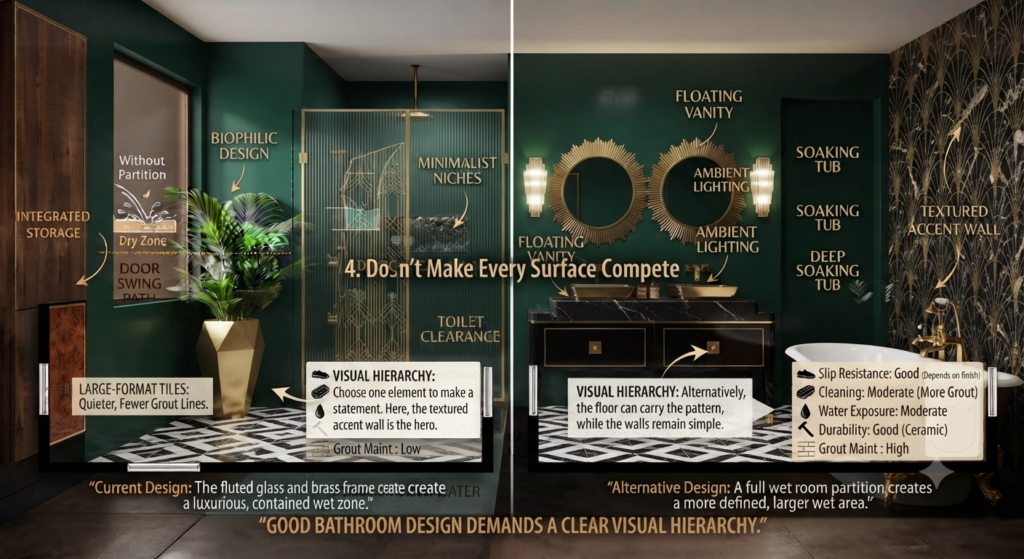
4. Don't Make Every Surface Compete
A bathroom can quickly become visually overwhelming when the floor, walls, vanity and shower area all have different patterns.
Instead, choose one element to make a statement and let the surrounding surfaces support it.
For example, a distinctive stone-look wall can become the feature while the remaining surfaces stay relatively quiet.
Or the floor can carry the pattern while the walls remain simple.
A bathroom usually feels more sophisticated when there is a clear visual hierarchy.
5. Give the Vanity Proper Attention
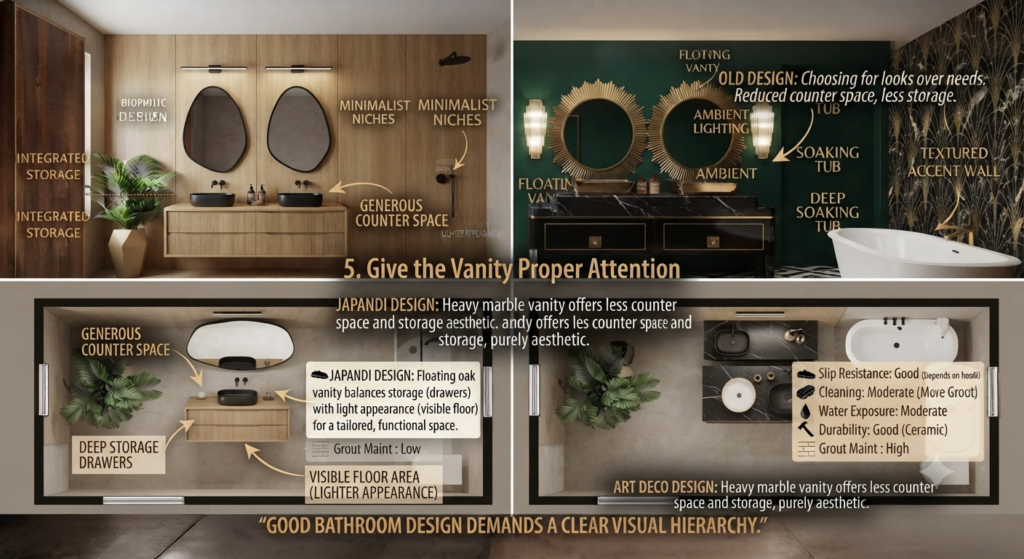
The vanity is both a functional and visual feature.
Think about how much counter space you actually need, how many people will use the bathroom and what needs to be stored nearby.
A floating vanity can make the floor beneath it visible and create a lighter appearance.
A full vanity with drawers may be more useful when storage is the priority.
The important thing is to choose based on the bathroom’s requirements rather than selecting a vanity simply because it looks good in a photograph.
6. Make Storage Part of the Design
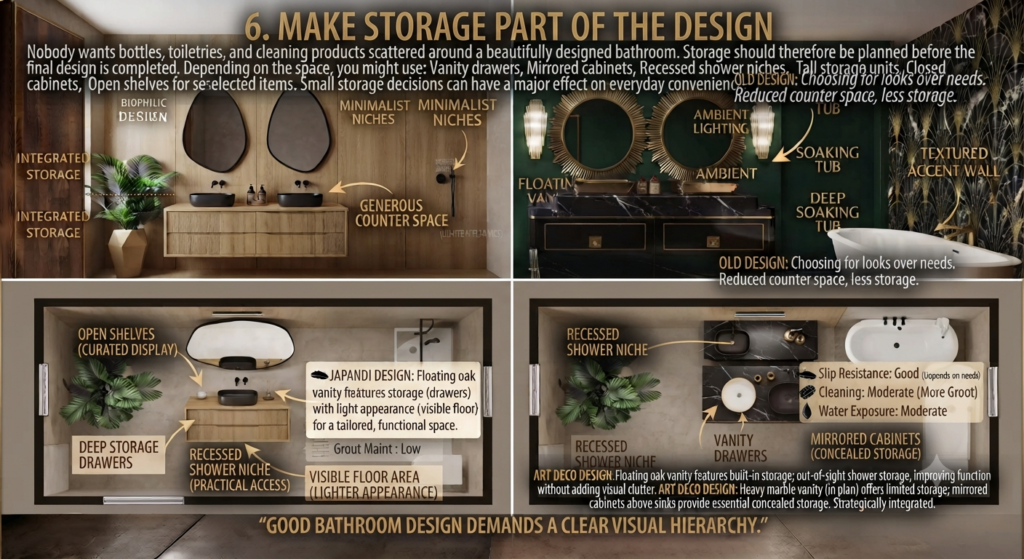
Nobody wants bottles, toiletries and cleaning products scattered around a beautifully designed bathroom.
Storage should therefore be planned before the final design is completed.
Depending on the space, you might use:
- Vanity drawers
- Mirrored cabinets
- Recessed shower niches
- Tall storage units
- Closed cabinets
- Open shelves for selected items
A recessed niche inside the shower can be particularly useful because it keeps products accessible without adding another object to the room.
Small storage decisions can have a major effect on everyday convenience.
7. Choose Fixtures as a Set
Taps, shower fittings, handles and other hardware may be small, but there are enough of them in a bathroom that inconsistency becomes noticeable.
You don’t necessarily need everything from the same collection.
But the finishes should feel intentional.
Depending on the design, you might use chrome, brushed metal, matte black, brass or another finish.
The important thing is to think about the whole bathroom rather than choosing each fitting independently.

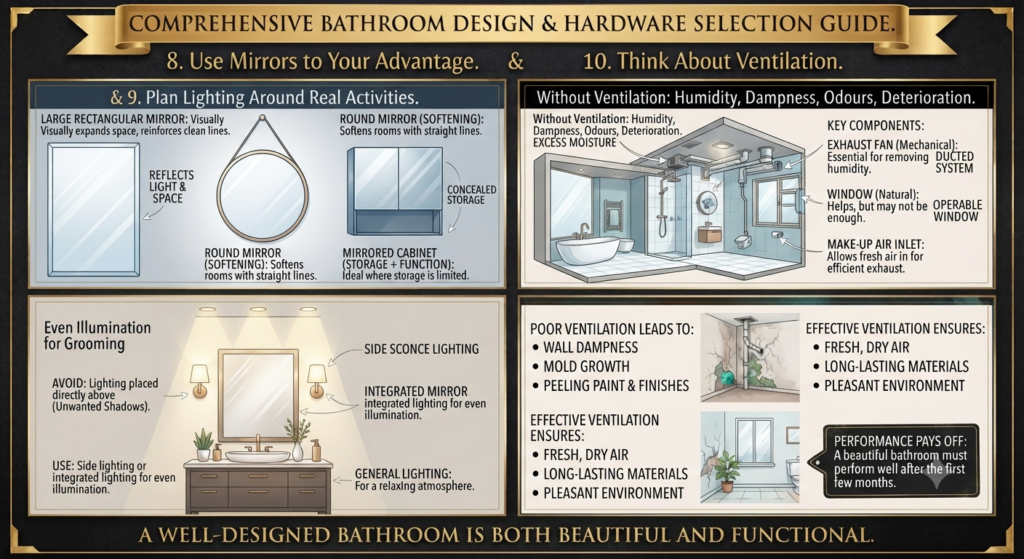
8. Use Mirrors to Your Advantage
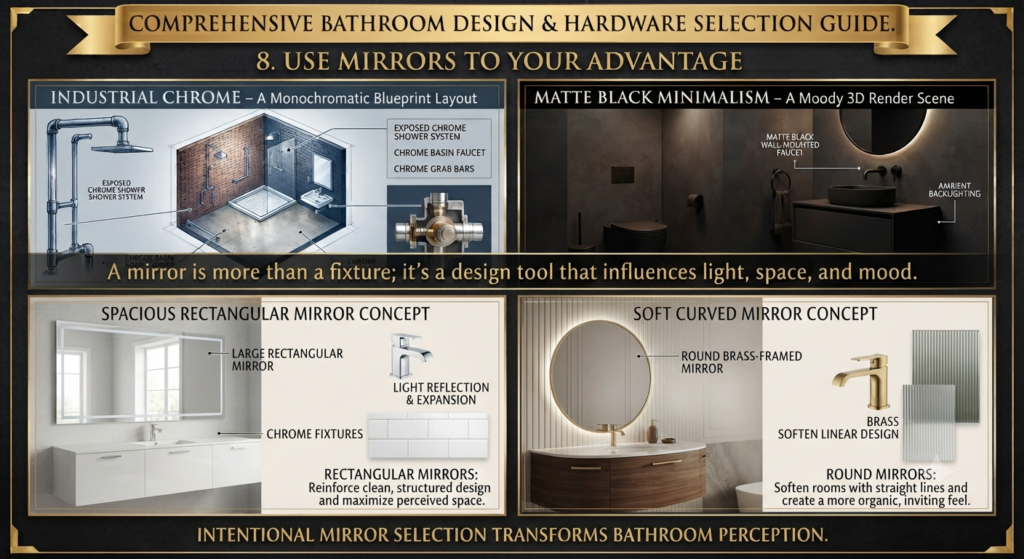
A mirror is essential in most bathrooms, but it can also influence how spacious the room feels.
A large mirror can visually expand a smaller bathroom, particularly when positioned where it can reflect light.
You can also consider a mirrored cabinet if storage is limited.
Shape matters too.
A rectangular mirror can reinforce a clean, structured design, while a round or curved mirror can soften a room with many straight lines.
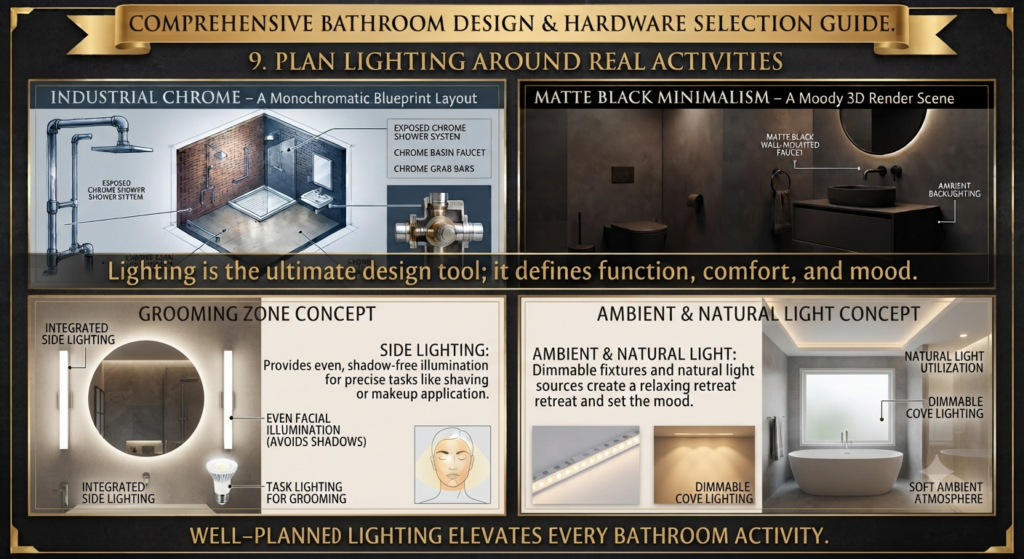
9. Plan Lighting Around Real Activities
Bathroom lighting needs to do more than simply make the room bright.
You need enough light around the mirror for grooming, comfortable general lighting and, where appropriate, softer lighting for a more relaxing atmosphere.
Lighting placed directly above a mirror can sometimes create unwanted shadows on the face.
Side lighting or carefully positioned integrated lighting can provide more even illumination.
If the bathroom has natural light, use it as part of the overall design rather than trying to replace it completely.
10. Think About Ventilation
This isn’t the most glamorous part of bathroom design, but it is one of the most important.
Bathrooms deal with moisture every day.
Without appropriate ventilation, excess humidity can contribute to unpleasant odours, dampness and deterioration of finishes over time.
A window can help where available, while an appropriate exhaust system can provide additional ventilation.
A beautiful bathroom still needs to perform well after the first few months.
11. Bring in Warmth
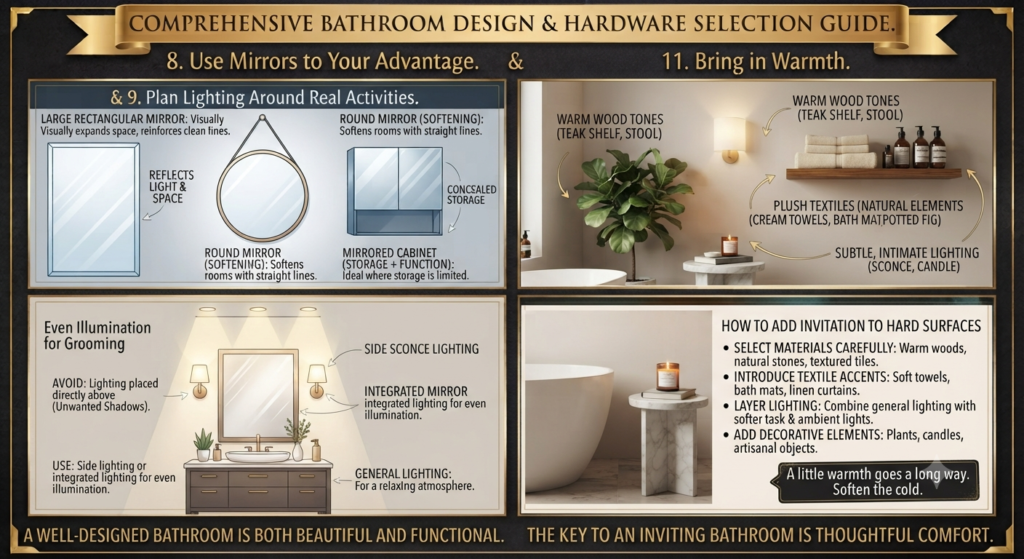
Bathrooms can easily become cold-looking because of all the hard surfaces.
You can soften that feeling through carefully chosen materials and accessories.
Warm wood tones, soft towels, subtle lighting, natural-looking finishes and a few carefully selected decorative elements can make the room feel more inviting.
You don’t need to turn the bathroom into a decorated living room.
A little warmth goes a long way.
12. Think About Maintenance Before You Finalise the Design
This is one question that deserves to be asked before installation:
“How difficult will this be to maintain?”
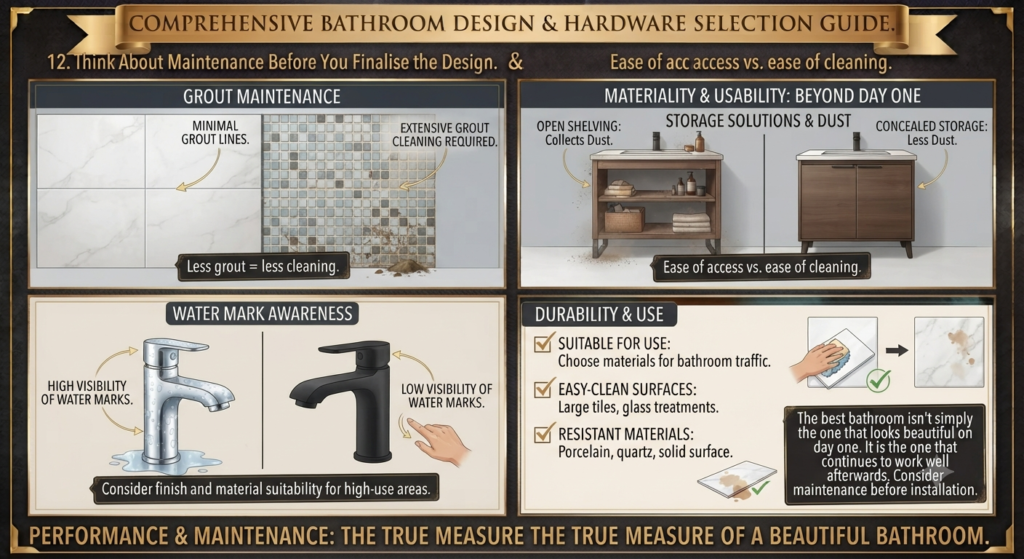
A surface may look beautiful when freshly installed but require constant cleaning to stay that way.
Consider how easily water marks show, how much grout needs cleaning, whether open shelving will collect dust and whether the chosen materials are suitable for the amount of use the bathroom receives.
The best bathroom isn’t simply the one that looks beautiful on day one.
It is the one that continues to work well afterwards.
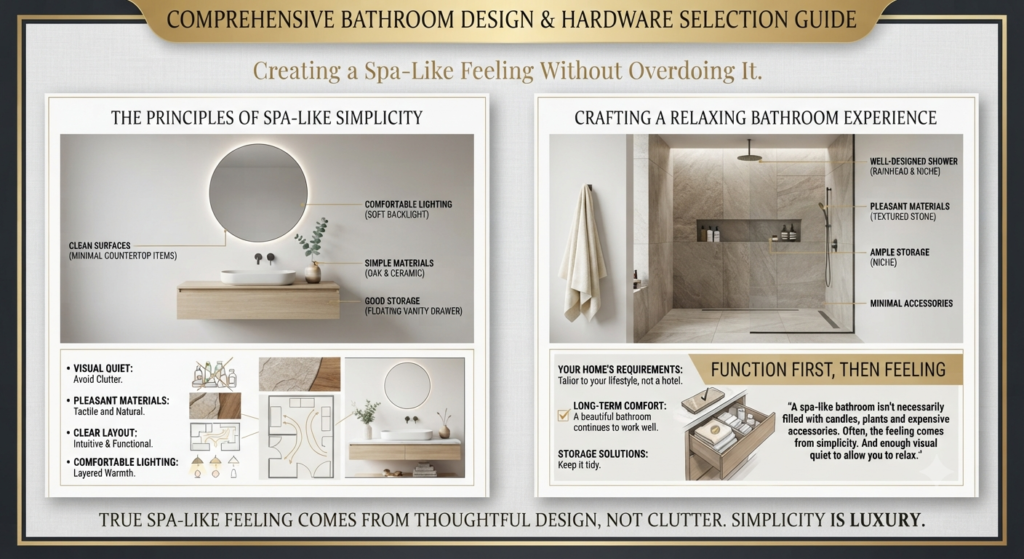
Creating a Spa-Like Feeling Without Overdoing It
A spa-like bathroom isn’t necessarily one filled with candles, plants and expensive accessories.
Often, the feeling comes from simplicity.
A clear layout.
Comfortable lighting.
Clean surfaces.
Good storage.
Pleasant materials.
A well-designed shower.
And enough visual quiet to allow you to relax.
You don’t need to copy a hotel bathroom exactly. Your home has different requirements, and your bathroom should reflect them.
Small Bathrooms Can Still Feel Special
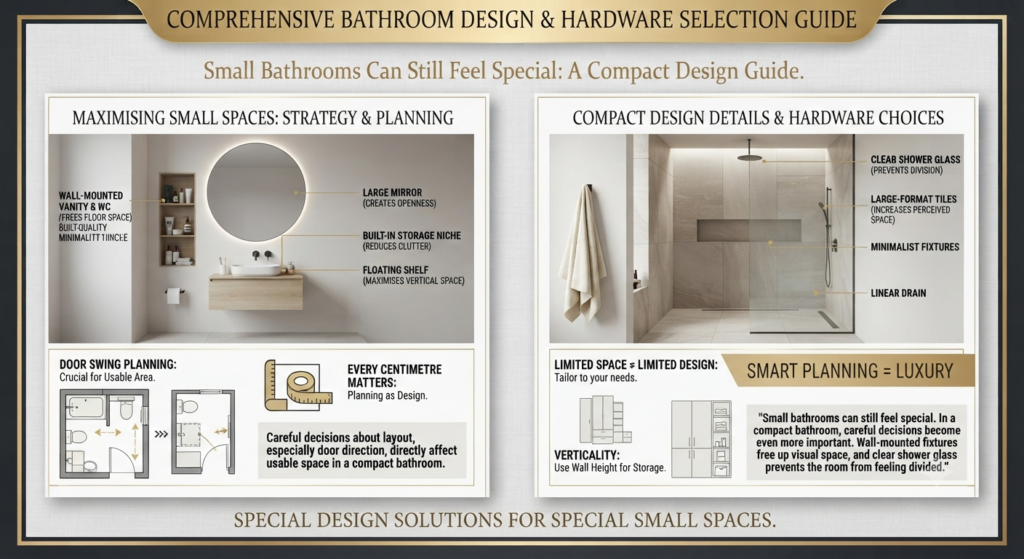
Limited space doesn’t mean limited design possibilities.
In a compact bathroom, careful decisions become even more important.
Wall-mounted fixtures can free up visual space. Large mirrors can create a greater sense of openness. Built-in storage can reduce clutter. Clear shower glass can prevent the room from feeling divided.
Even the direction in which a door opens can affect how much usable space remains.
When every centimetre matters, planning becomes part of the design itself.
The Bathroom Should Work as Well as It Looks
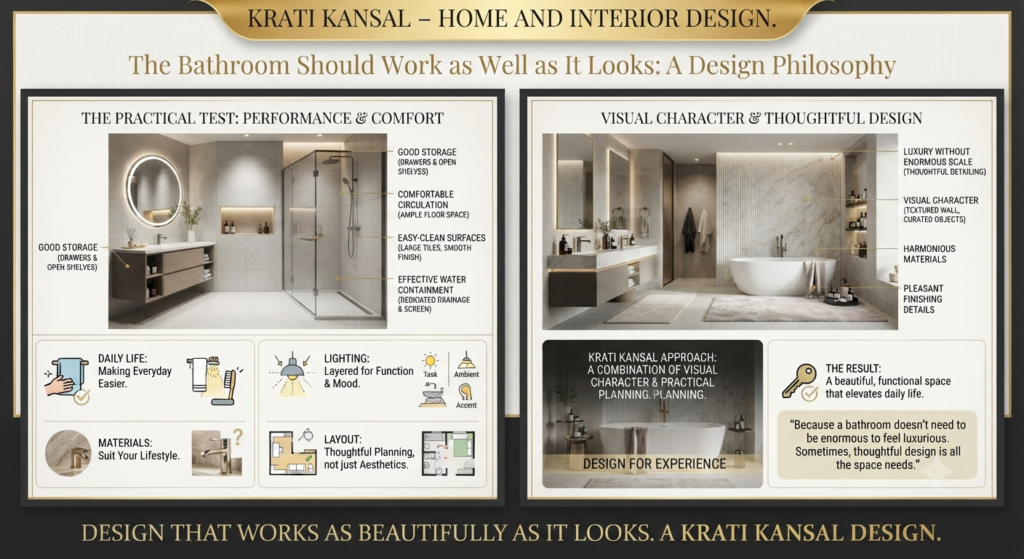
It is easy to become focused on tiles, colours and fittings when designing a bathroom.
But the real test comes later.
Can you move around comfortably?
Is there enough storage?
Can you clean the room easily?
Does the lighting work in the morning?
Does the shower area contain water properly?
Do the materials suit the way you use the space?
If the answer is yes, then the design has achieved something more valuable than simply looking good.
It has made everyday life easier.
At Krati Kansal – Home and Interior Design, bathroom design is approached as a combination of visual character and practical planning. From the layout and storage to materials, lighting and finishing details, each decision should contribute to the way the space is experienced.
Because a bathroom doesn’t need to be enormous to feel luxurious.
Sometimes, thoughtful design is all the space needs.
Thinking About Redesigning Your Bathroom?
Whether you are planning a complete renovation or simply want to make better use of an existing bathroom, thoughtful planning can transform even a compact space.
Let’s create a bathroom that feels calm, considered and completely yours.