
A bedroom can look beautiful and still not feel like a place where you want to spend time.
That usually happens when too much attention goes into how the room looks and not enough into how it feels at the end of a long day.
A bedroom is different from most other rooms in the house. It doesn’t need to entertain guests or make a dramatic first impression. Its main job is much simpler: it should help you switch off.
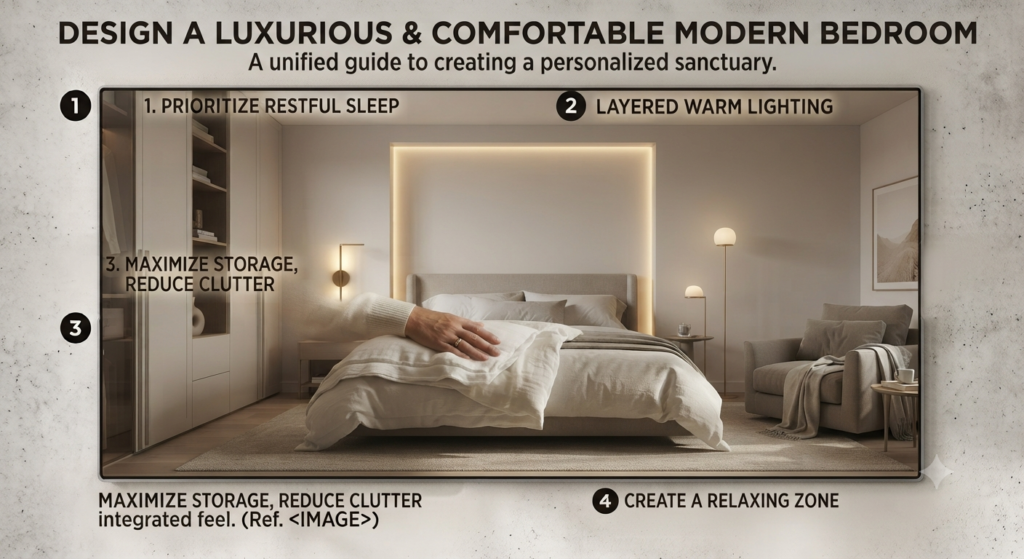
That means the bed, lighting, storage, colours, furniture and even the amount of visual activity in the room need to work together.
Here are some practical things to consider when creating a bedroom that feels both modern and genuinely comfortable.
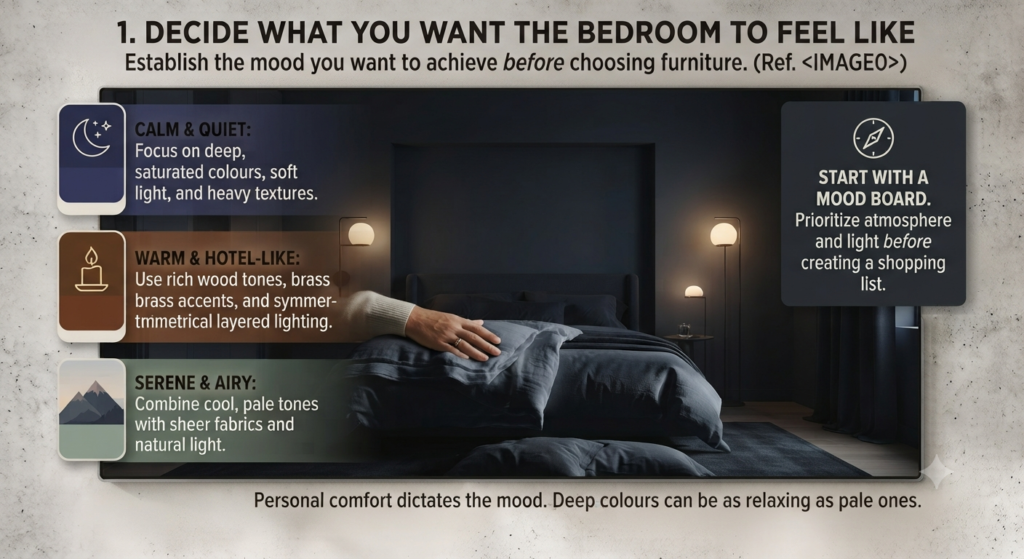
1. Decide What You Want the Bedroom to Feel Like
Before choosing furniture, think about the mood you want when you walk into the room at night.
Perhaps you want it to feel calm and quiet. Maybe you prefer something darker and more intimate, or warm and hotel-like.
There isn’t one correct answer.
A bedroom with deep colours and low lighting can feel just as relaxing as a pale, airy room. What matters is whether the choices create the atmosphere you personally find comfortable.
Start with that feeling rather than starting with a shopping list.
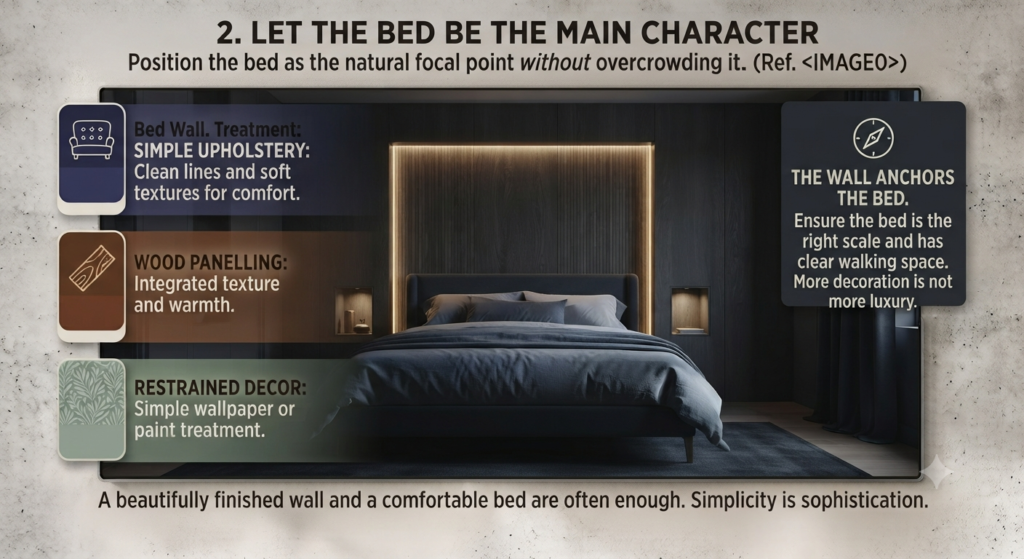
2. Let the Bed Be the Main Character
The bed naturally becomes the most important piece in a bedroom.
That doesn’t mean it needs to be enormous or overly decorative. It simply needs to feel properly positioned within the room.
Look at the wall behind it, the available walking space and the relationship between the bed and the other furniture.
A well-designed bed wall might include a simple upholstered headboard, wooden panelling, wallpaper, bedside niches or a restrained decorative treatment.
But sometimes a beautifully finished wall and a comfortable bed are enough.
More decoration isn’t automatically more luxurious.
3. Make the Bed Comfortable Before Making It Beautiful
This sounds obvious, but it is surprisingly easy to forget.
A bedroom is a room you use every day, so comfort should influence the design from the beginning.
Consider the mattress, pillows, bedding and the height of the bed.
Then think about smaller things that affect everyday use:
Can you comfortably get out of bed?
Is there somewhere to place your phone or a glass of water?
Can you reach the light without getting up?
Are the curtains easy to operate?
These aren’t glamorous questions, but they are the things you experience every night.
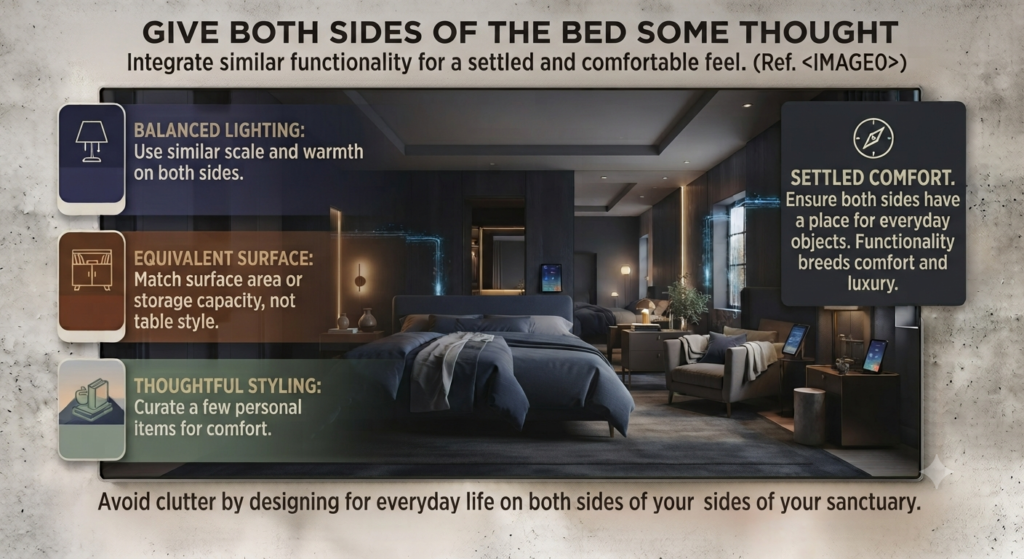
4. Give Both Sides of the Bed Some Thought
When space allows, having a similar level of functionality on both sides of the bed can make the room feel more settled.
This doesn’t mean the bedside tables have to be identical.
You could have a table on one side and a small cabinet or floating shelf on the other.
What matters is giving each side a useful surface and appropriate lighting.
A bedroom becomes much more comfortable when everyday objects have somewhere to go instead of ending up on the floor or bed.
5. Plan the Wardrobe Around Your Routine
A wardrobe isn’t just a large box for clothes.
Its internal layout should reflect how you actually use it.
Think about how much space you need for:
- Hanging clothes
- Folded clothing
- Shoes
- Accessories
- Bags
- Seasonal items
If possible, separate frequently used items from things you only need occasionally.
The exterior matters too. Full-height wardrobes can create a cleaner appearance and make better use of vertical space.
Handles, shutters, mirrors and lighting can then be selected according to the overall bedroom design.

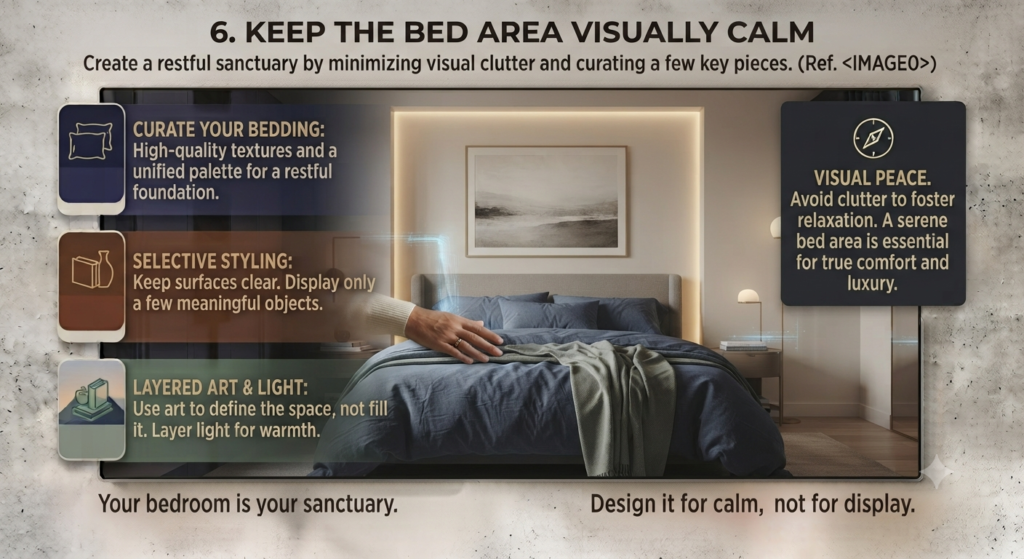
6. Keep the Bed Area Visually Calm
Your bedroom is probably not the place for every object you love.
Too many open shelves, decorations and visible belongings can make the room feel busy when you’re trying to relax.
This doesn’t mean the room needs to be completely empty.
A few carefully chosen objects, artwork or personal pieces can make it feel warm and lived-in.
The difference is that everything doesn’t need to demand attention at the same time.
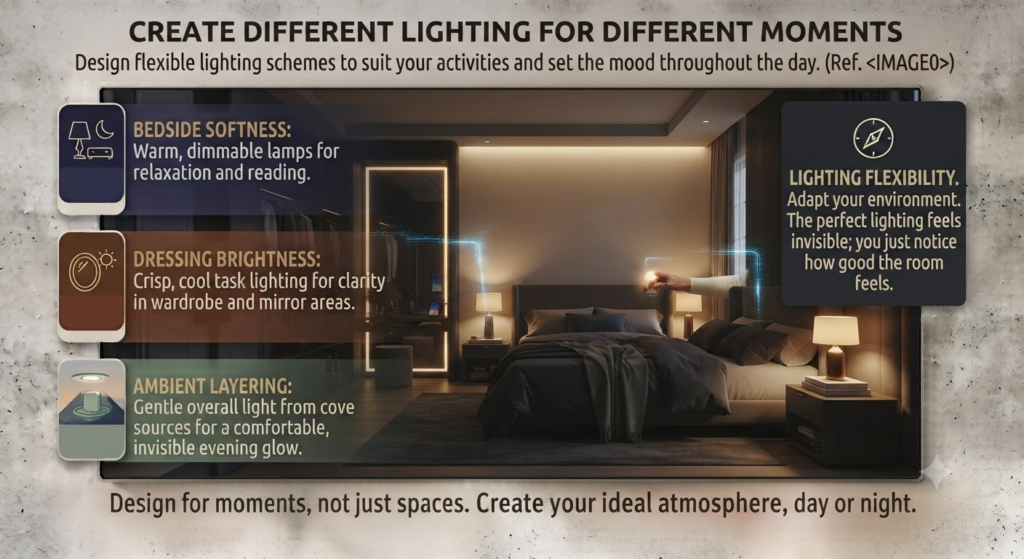
7. Create Different Lighting for Different Moments
You probably don’t want the same lighting at 7 p.m. that you need while getting dressed in the morning.
Think about the different activities that happen in the room.
You might need brighter lighting around the wardrobe or dressing area, softer bedside lighting for reading and a gentle overall light for the evening.
Bedside lamps or wall-mounted lights can also make the room feel much more comfortable than relying entirely on one ceiling fixture.
The best bedroom lighting often feels almost invisible.
You simply notice that the room feels good.
8. Don't Underestimate the Curtains
Bedrooms benefit from good light control.
Curtains can help with privacy, morning sunlight and the overall softness of the room.
A layered approach can work particularly well: a sheer layer for daytime and a heavier curtain for darkness and privacy.
The fabric also changes the atmosphere.
Soft, flowing curtains can make a bedroom feel relaxed, while structured fabrics can give it a more tailored appearance.
Think about both how the curtains look and how they work.

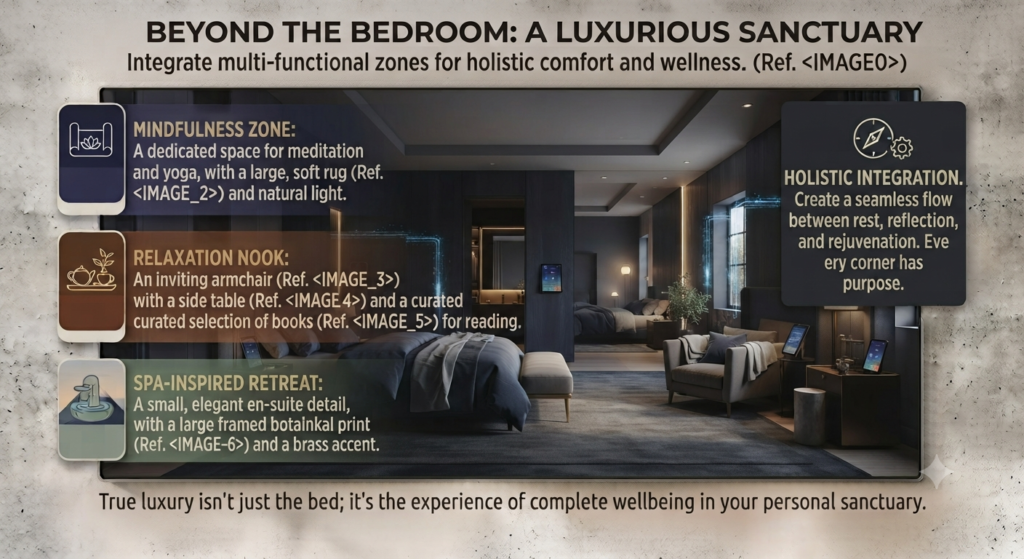
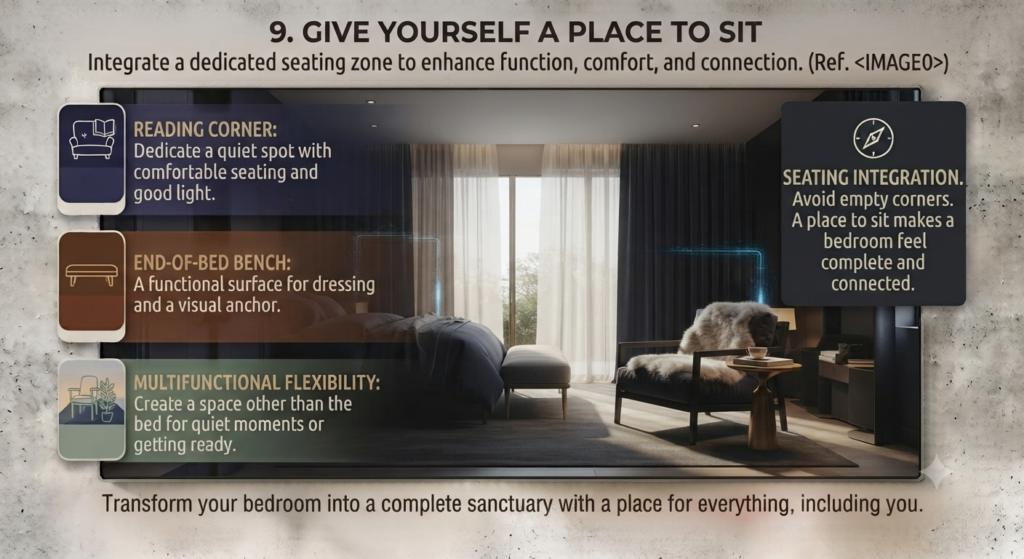
9. Give Yourself a Place to Sit
If the bedroom has enough space, a small seating area can make it feel more complete.
It could be a comfortable chair near a window, a bench at the end of the bed or a small reading corner.
It doesn’t need to be large.
The purpose is to create a place other than the bed where you can sit, read, get ready or simply spend a few quiet minutes.
This is particularly useful in larger bedrooms, where an empty corner can otherwise feel disconnected from the rest of the room.
10. Make Storage Feel Invisible
Bedrooms can become messy very quickly because they contain so many everyday items.
The goal isn’t to hide everything unnaturally. It’s to give everything a sensible place.
Bedside drawers, wardrobes, built-in cabinets, under-bed storage and dressing units can all help.
When storage is planned properly, fewer belongings remain permanently visible.
And when there is less visual clutter, the room naturally feels calmer.

11. Add Something Personal
A bedroom shouldn’t feel like a hotel room unless that’s specifically what you want.
Photographs, artwork, books, a meaningful object or even a favourite piece of furniture can make the room feel like yours.
These details don’t need to match perfectly.
In fact, a room can become more interesting when some of its elements have a story behind them.
A beautiful bedroom isn’t necessarily one where everything looks newly purchased.
Sometimes the most memorable part of the room is the thing you already owned.

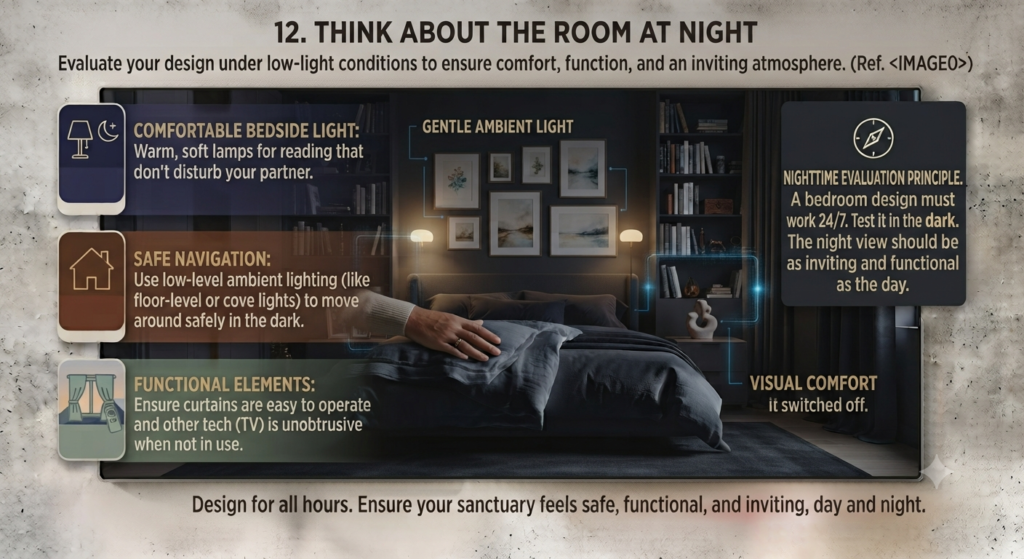
12. Think About the Room at Night
This is one of the simplest ways to test a bedroom design.
Imagine the room with the main lights switched off.
Where does the light come from?
Can you find your way around comfortably?
Is the television too visually dominant?
Can you close the curtains easily?
Is the bedside lighting comfortable?
Does the room still feel inviting?
A bedroom can look completely different in daylight and at night. Since you will use it during both, the design should work in both situations.
What Makes a Bedroom Feel Truly Comfortable?
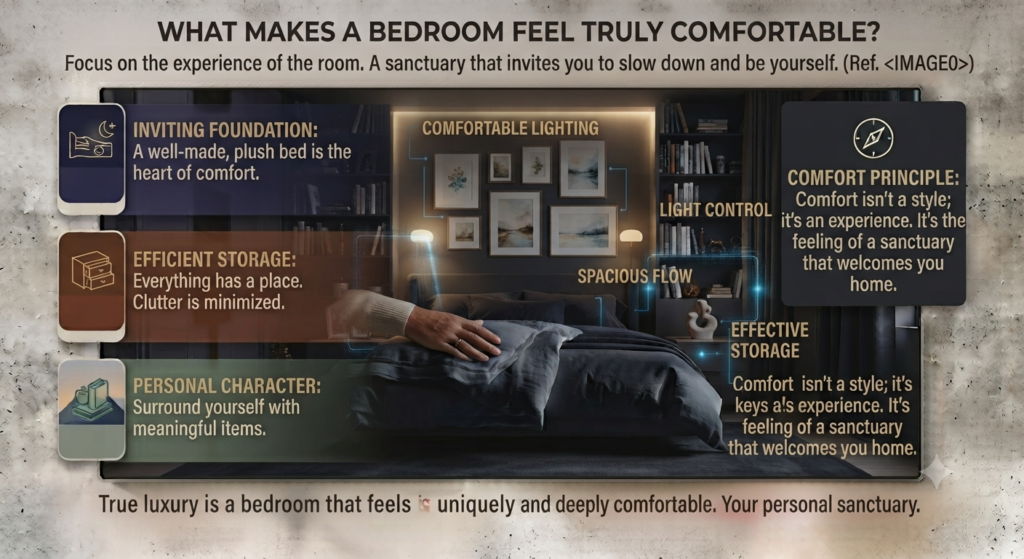
It isn’t one particular colour, bed or furniture style.
It is the experience of the room.
You should be able to walk in at the end of the day and feel that the environment is asking you to slow down.
The storage works.
The lighting is comfortable.
The bed feels inviting.
There is enough space to move.
Your belongings have somewhere to go.
And the room contains enough of your personality to feel like your bedroom, rather than a staged photograph.
Design the Bedroom for Real Life
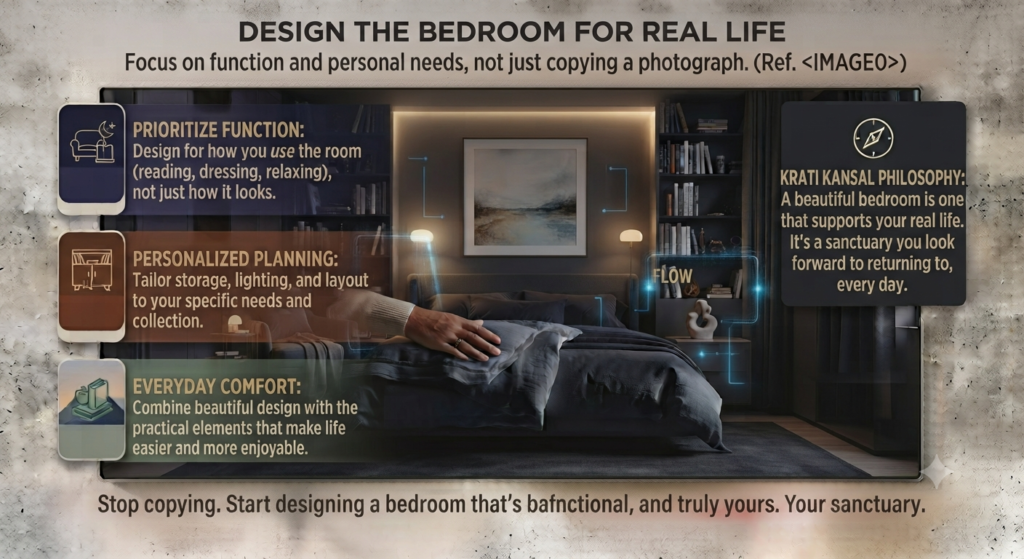
A bedroom doesn’t need to be perfect to be beautiful.
It needs to support the way you actually live.
Someone who reads before sleeping may need a very different setup from someone who watches television in bed. Someone with a large wardrobe may need more storage planning than someone with a smaller collection of clothes.
That is why copying a bedroom from a photograph rarely produces the same result.
The photograph shows you what the room looks like.
Your design needs to figure out how the room should work.
At Krati Kansal – Home and Interior Design, the goal is to create bedrooms that combine a considered visual style with everyday comfort. Every element—from the bed and wardrobe to lighting, storage and finishing touches—should contribute to the way the room is experienced.
Because the best bedroom isn’t the one that looks impressive for five minutes.
It’s the one you look forward to returning to at the end of the day.
Thinking About Redesigning Your Bedroom?
Whether you’re planning a complete bedroom makeover or simply trying to make your existing space work better, the right planning can change the entire experience.
Let’s create a bedroom that feels as good as it looks.