
The living room is usually the first space people notice when they enter a home. It is where guests are welcomed, conversations happen, evenings are spent and, quite often, where everyone ends up gathering even when there are other rooms available.
That makes designing a living room slightly different from simply making it look beautiful.
It needs to look good, feel comfortable and work naturally.
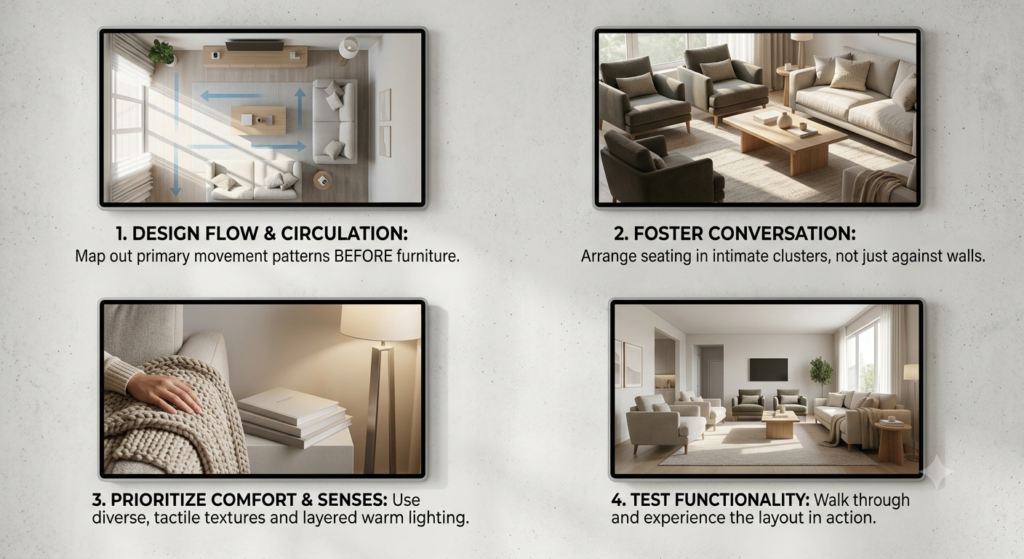
A common mistake is to begin with a sofa or a colour scheme and build everything around it. A better approach is to look at the room as a whole and decide how you want people to move, sit, talk and use the space.
Here is a practical way to approach it.
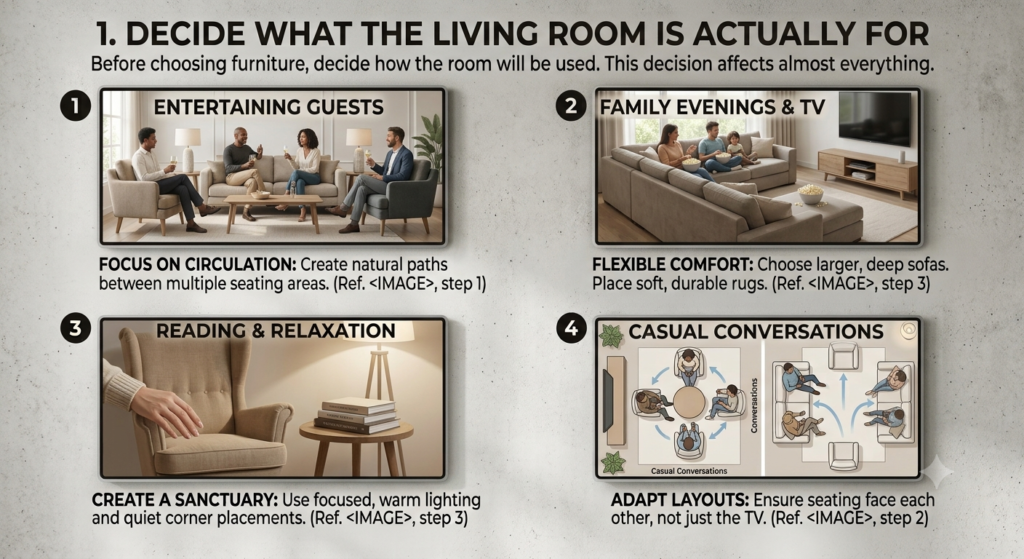
1. Decide What the Living Room Is Actually For
Before choosing furniture, decide how the room will be used.
Will it mainly be used for entertaining guests? Family evenings? Watching television? Reading? Casual conversations?
Sometimes it will need to do several of these things at once.
This decision affects almost everything that follows.
A room designed primarily for conversation may need seating arranged around each other rather than facing a television. A family living room might need more flexible seating and easier movement. A formal sitting room may have a completely different arrangement.
Start with the life that will happen in the room, not the furniture catalogue.
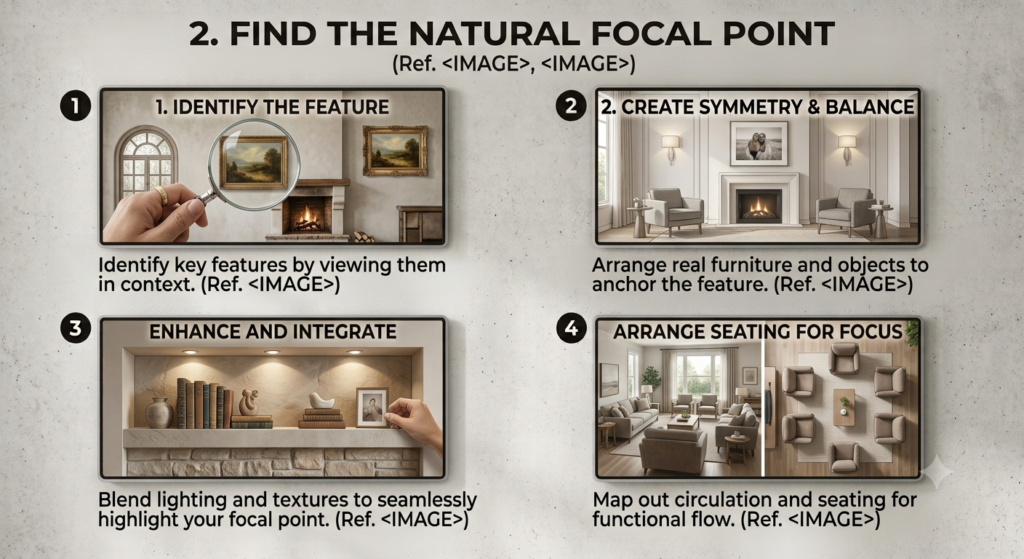
2. Find the Natural Focal Point
Every living room benefits from having something that naturally draws attention.
It could be:
- A large window
- A fireplace
- An artwork
- A statement TV wall
- An architectural feature
- A particularly interesting piece of furniture
Once you identify that feature, the rest of the room can support it.
This prevents the space from having too many competing points of attention.
If the television is the main focus, for example, the seating should allow comfortable viewing without making the entire room feel like a cinema.
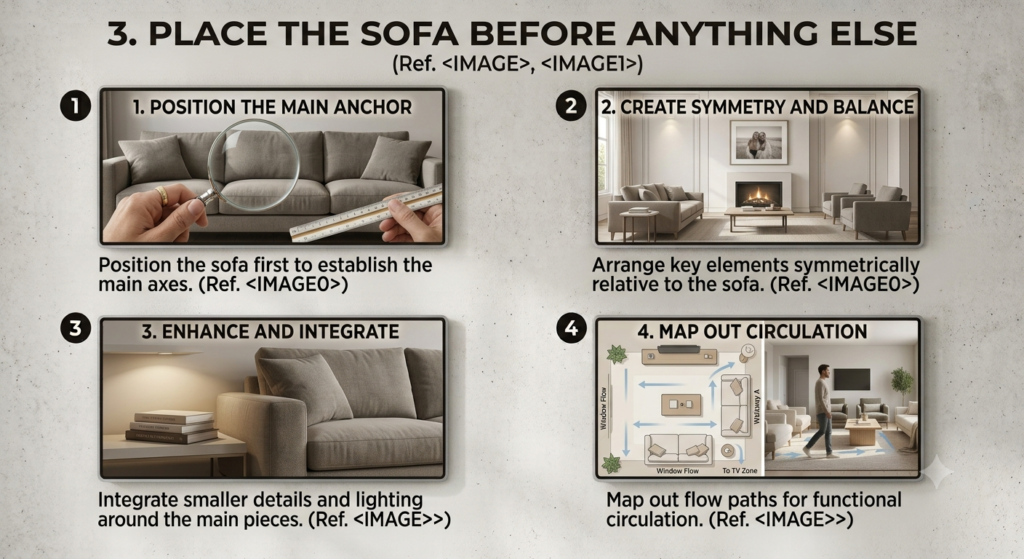
3. Place the Sofa Before Anything Else
The sofa is usually the largest piece of furniture in a living room, so its position has a major effect on the entire layout.
Don’t automatically push it against the wall.
Depending on the size and shape of the room, bringing the sofa slightly forward can create a more defined seating area and improve the sense of separation between spaces.
Then consider the relationship between the sofa and:
- Armchairs
- Centre table
- Side tables
- Television
- Windows
- Walkways
You should be able to move through the room without constantly walking around furniture.
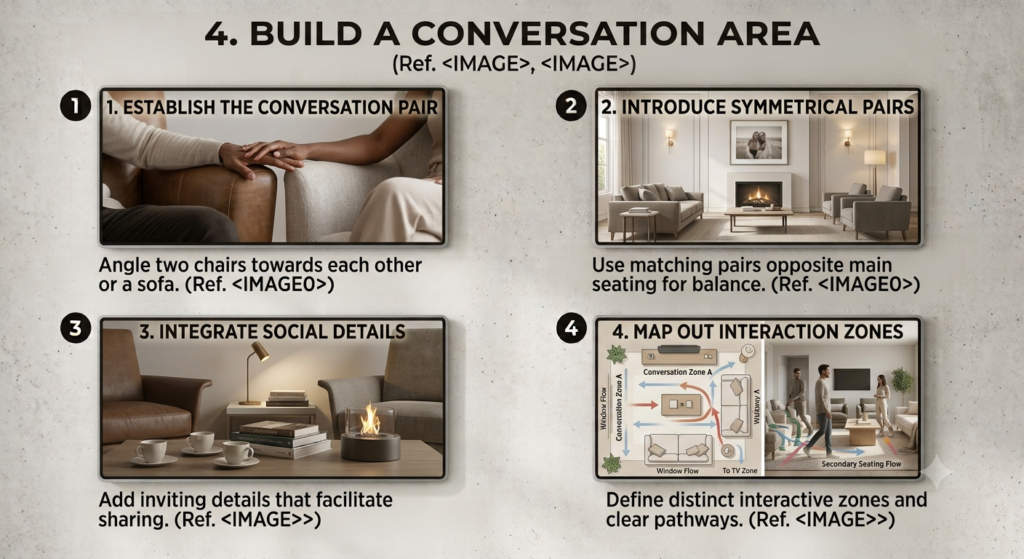
4. Build a Conversation Area
A living room shouldn’t require everyone to sit in a straight line.
If space allows, angle an armchair toward the sofa or introduce a pair of chairs opposite it.
This creates a more natural setting for conversation.
Even in a television-focused living room, try to maintain some sense of interaction between the seats.
A room feels more inviting when the furniture appears to be talking to each other.
5. Choose the Centre Table Carefully
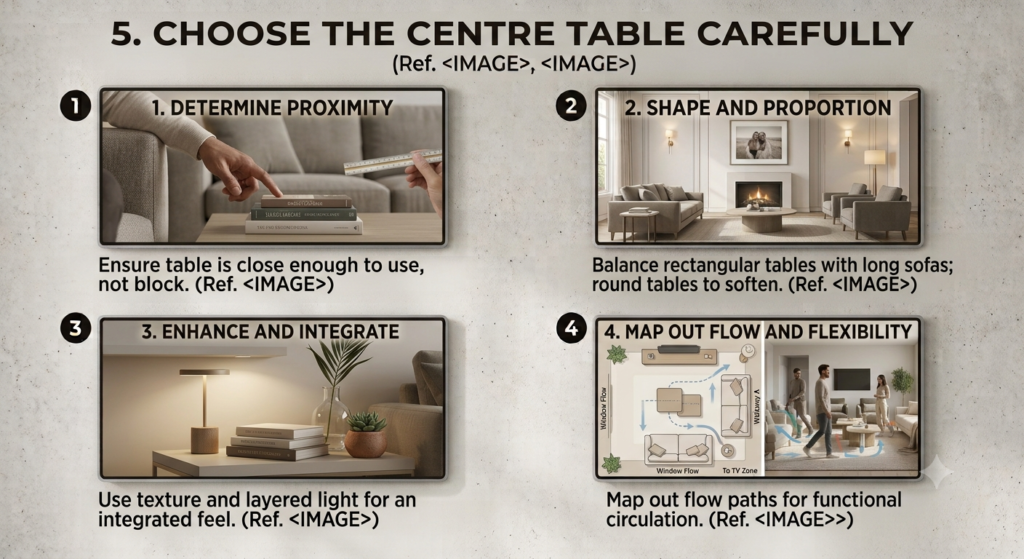
The centre table might seem like a small decision, but its position affects how comfortable the whole seating area feels.
It should be close enough to the seating to be useful without blocking movement.
Its shape can also influence the character of the room.
A rectangular table can work well with a long sofa, while a round or oval table can soften a room filled with straight lines.
And don’t feel obligated to use one huge table.
Two smaller tables can sometimes be more flexible, particularly in a room where furniture needs to move around.
6. Treat the TV Wall as Part of the Architecture
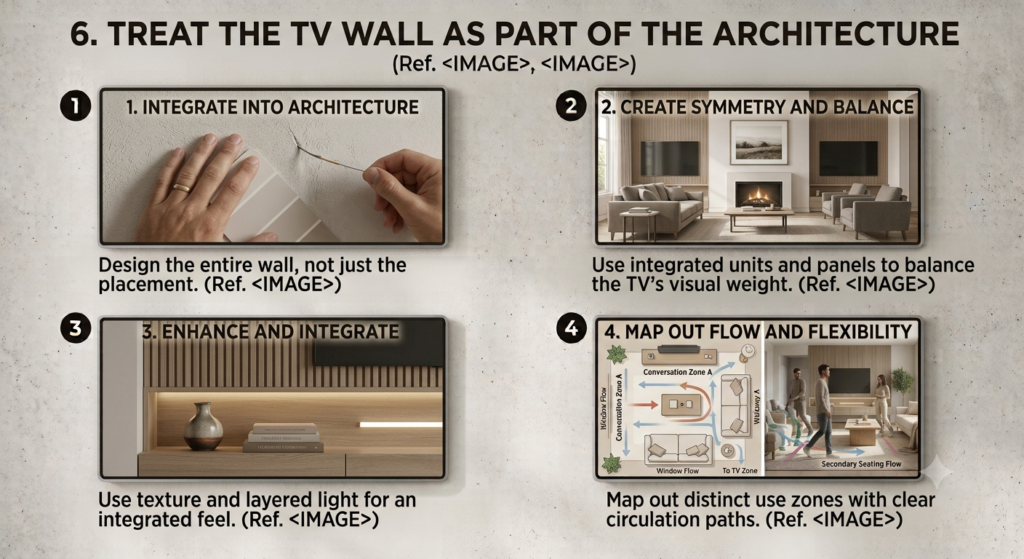
A television doesn’t have to become the most visually dominant object in the room.
Instead of simply mounting a screen on an empty wall, consider how the entire wall can be designed.
Depending on the interior, this could include:
- A simple textured backdrop
- Wood panelling
- A built-in storage unit
- Open shelving
- Concealed wiring
- Subtle lighting
- A combination of finishes
The idea is to make the television feel integrated into the room rather than added afterwards.
At the same time, avoid turning the TV wall into a collection of unrelated materials. Sometimes a quieter treatment looks far more sophisticated.
7. Think About the Windows Early
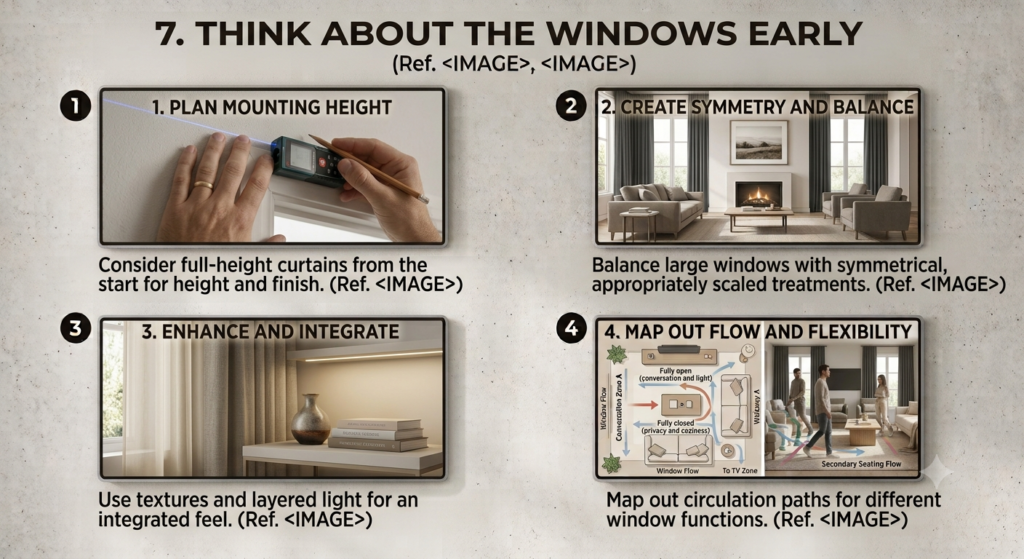
Curtains can completely change the appearance of a living room.
The biggest mistake is treating them as an afterthought.
Curtains that are too short or mounted too low can make the room feel smaller. Taking them higher and allowing the fabric to fall properly can create a more finished appearance.
For a softer look, sheer curtains can be paired with heavier drapes.
The choice depends on how much privacy, sunlight control and softness the room needs.
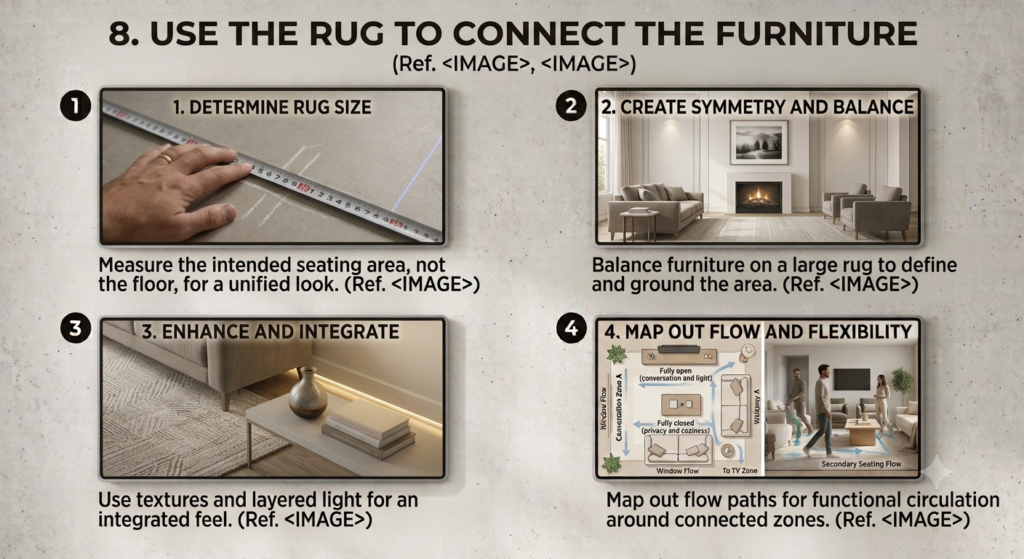
8. Use the Rug to Connect the Furniture
A rug shouldn’t look like a small island sitting underneath a coffee table.
Ideally, it should help connect the main seating pieces and visually define the living area.
The right size depends on the room and furniture arrangement, but going too small is one of the easiest ways to make a living room feel disconnected.
If you’re unsure, measure the seating area first and choose the rug around that arrangement—not the other way around.
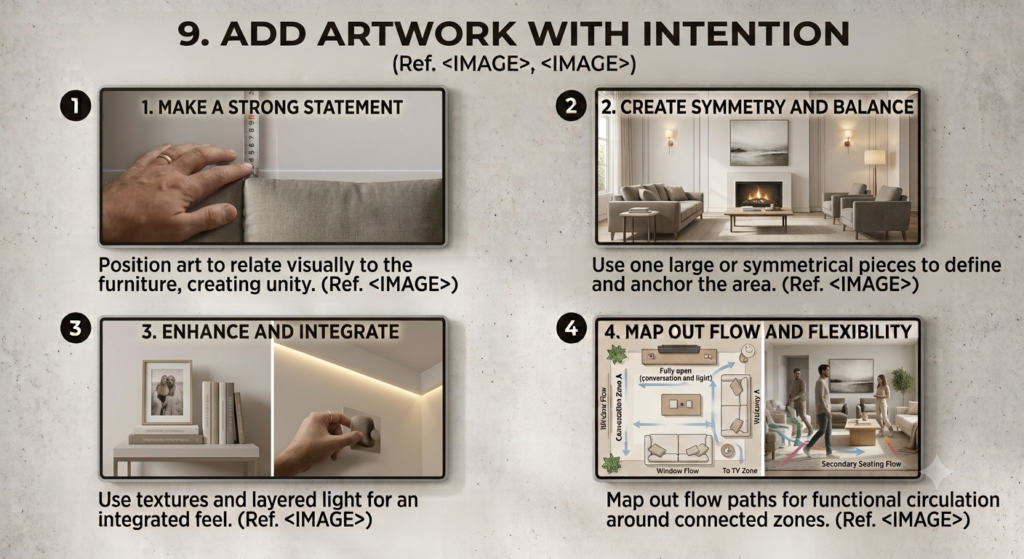
9. Add Artwork With Intention
Blank walls don’t always need to be filled.
One large artwork can create a stronger statement than several unrelated small pieces.
You can also use artwork to introduce something that isn’t already present elsewhere in the room—a stronger colour, an interesting shape or a personal reference.
The most important part is placement.
Artwork that is too high can make the wall and furniture feel disconnected. It should relate visually to the furniture beneath or around it.
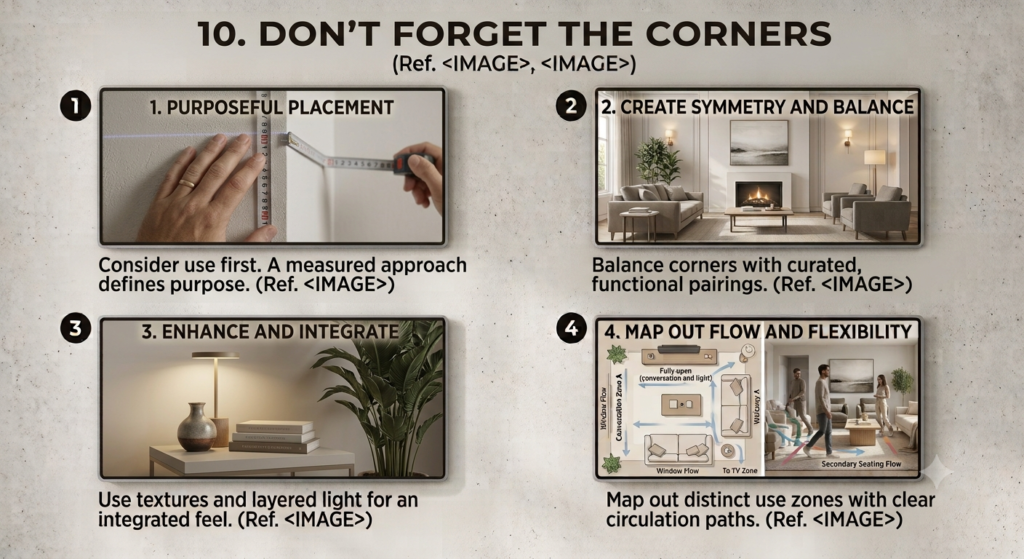
10. Don't Forget the Corners
Living rooms often have awkward corners that are either completely ignored or filled simply because they are empty.
Instead, ask whether the corner can serve a purpose.
It could become:
- A reading spot
- A small display area
- A floor-lamp corner
- A plant feature
- A compact chair
- Additional storage
But leaving a corner empty is also an option.
Not every corner needs a job.
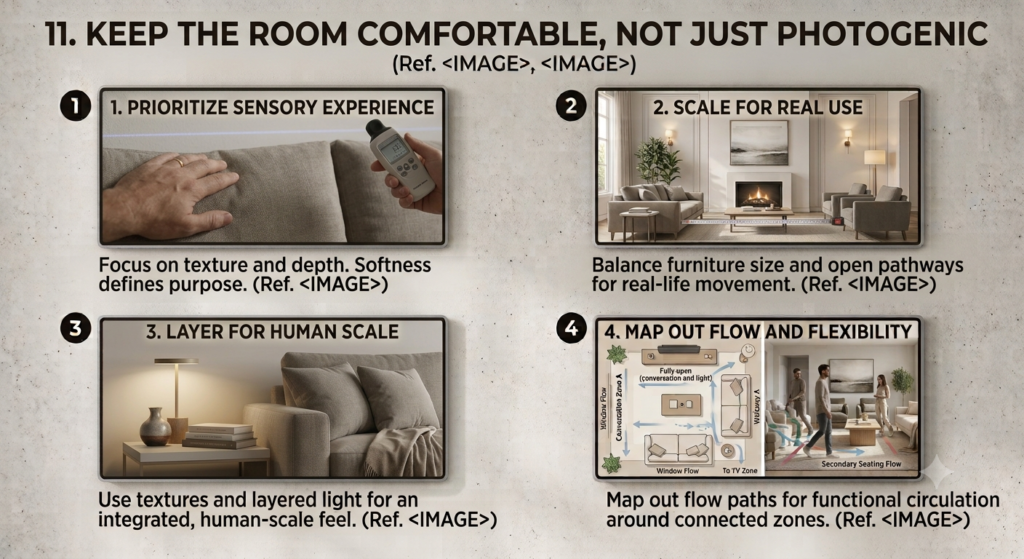
11. Keep the Room Comfortable, Not Just Photogenic
This is where many beautiful living rooms fail.
A sofa may look stunning but be uncomfortable. A centre table may look impressive but leave too little walking space. Decorative cushions may look perfect but make the seating difficult to use.
Your living room should survive an ordinary evening—not just look good in a photograph.
Sit on the furniture.
Walk through the room.
Imagine several people using it at the same time.
Those simple tests can reveal problems that a design board won’t.
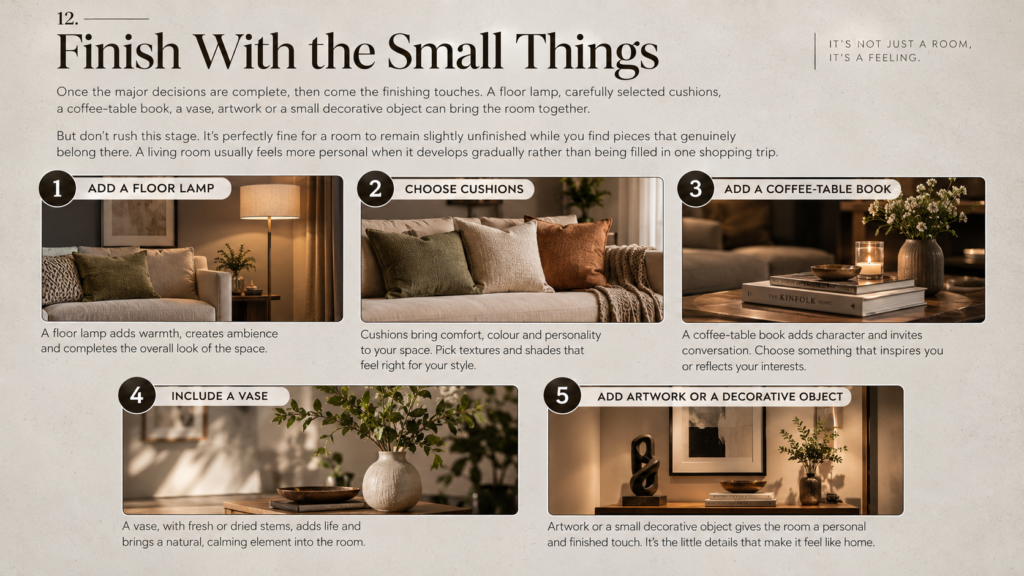
12. Finish With the Small Things
Once the major decisions are complete, then come the finishing touches.
A floor lamp, carefully selected cushions, a coffee-table book, a vase, artwork or a small decorative object can bring the room together.
But don’t rush this stage.
It’s perfectly fine for a room to remain slightly unfinished while you find pieces that genuinely belong there.
A living room usually feels more personal when it develops gradually rather than being filled in one shopping trip.
Common Living Room Mistakes to Avoid
Even a good concept can lose its impact because of a few practical mistakes.
Furniture pushed randomly against walls can make the room feel disconnected.
A rug that is too small can make the seating area appear fragmented.
Too many decorative objects can create visual noise.
Poor television placement can make everyday viewing uncomfortable.
Ignoring walking paths can make a beautiful room frustrating to use.
And perhaps the most common mistake:
Buying furniture before deciding the layout.
It’s much easier to choose the right furniture when you already know where it needs to go.
The Living Room Should Feel Like Your Home
There is no single formula for a perfect living room.
A large open space may need a completely different solution from a compact room. A home built around entertaining will have different requirements from one designed for quiet family evenings.
The best living rooms aren’t necessarily the ones with the most expensive furniture or the most elaborate decoration.
They are the ones where everything seems to make sense.
The sofa is where it should be. The television is comfortable to watch. There is enough space to move. The lighting works in the evening. The furniture feels inviting. And the details reflect the people who actually live there.
At Krati Kansal – Home and Interior Design, the aim is to create living spaces that look considered without losing the comfort that makes them feel like home.
Because a living room shouldn’t simply impress someone when they walk in.
It should make you want to stay.
Planning Your Living Room?
Whether you’re starting with an empty room or trying to improve an existing one, thoughtful planning can make the process much easier.
Let’s create a living room that looks beautiful and lives beautifully.