
One of the first questions people ask when they start thinking about an interior project is also one of the hardest to answer with a single number:
“How much will my interior design cost?”
There isn’t one fixed price.
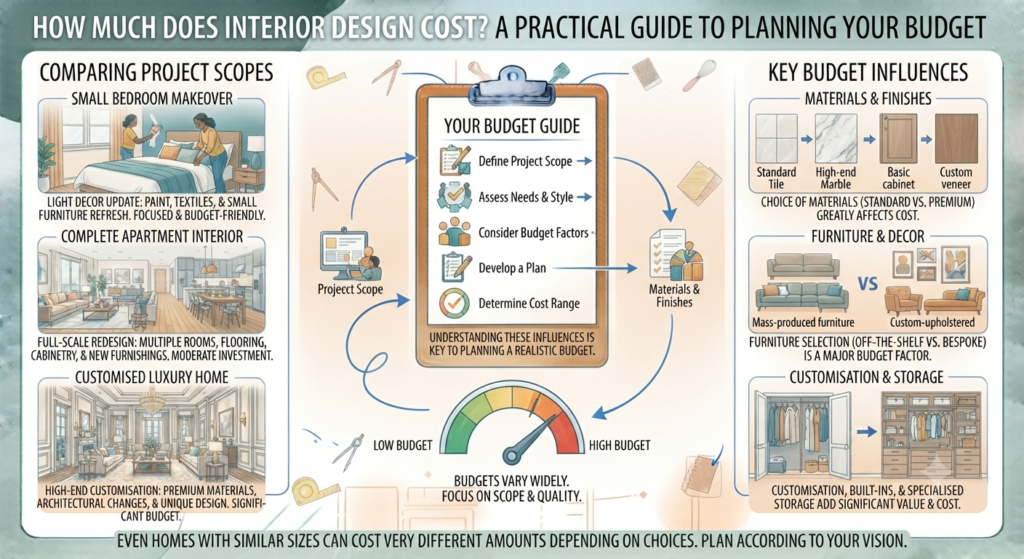
A small bedroom makeover, a complete apartment interior and a customised luxury home can have completely different budgets. Even two homes with similar sizes can cost very different amounts depending on materials, furniture, finishes, storage, appliances and the level of customisation involved.
Instead of looking for one magic number, it is more useful to understand what actually influences an interior design budget.
1. Start With the Scope of the Project
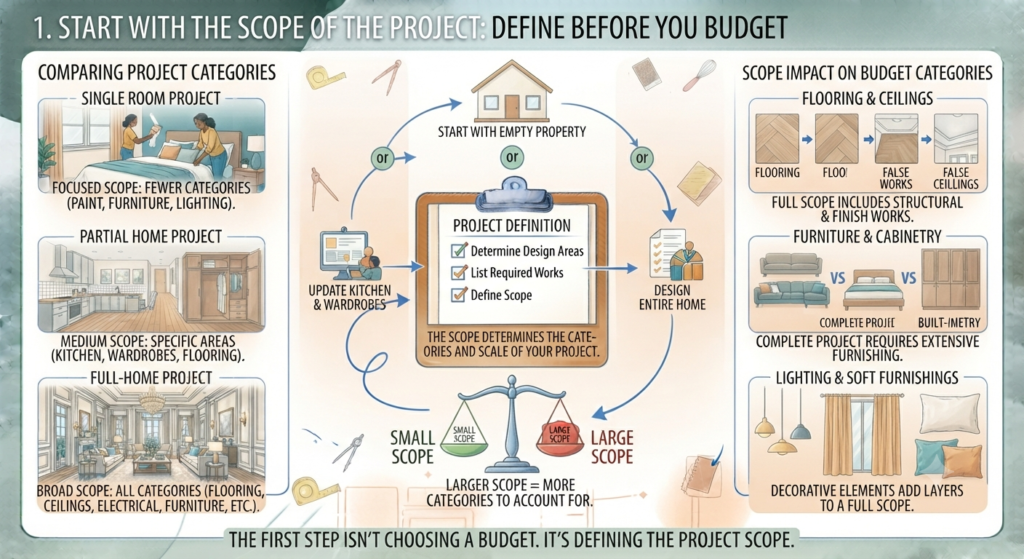
Before discussing costs, decide what you are actually designing.
Are you renovating one room?
Designing the entire home?
Updating only the kitchen and wardrobes?
Or starting with an empty property?
The larger the scope, the more categories you need to account for.
A full-home project can involve flooring, false ceilings, electrical work, furniture, wardrobes, kitchen, bathrooms, lighting, soft furnishings and decorative elements.
A single-room project may require only a few of these.
So the first step isn’t choosing a budget.
It’s defining the project.
2. Separate Design Costs From Execution Costs
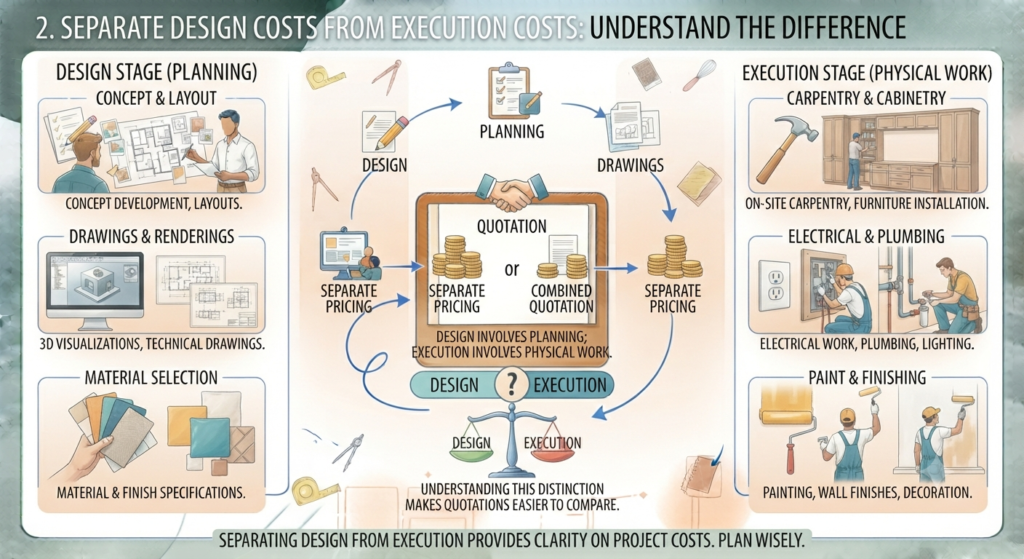
Interior design and interior execution are related, but they aren’t exactly the same thing.
Design involves developing the concept, layouts, material selections, drawings and other planning decisions.
Execution is where those decisions become physical work—carpentry, electrical work, painting, installation, furniture and so on.
Depending on the designer or company, these may be priced separately or combined into a broader project quotation.
Understanding this distinction can make quotations much easier to compare.
3. Decide Where You Want to Spend More
You don’t have to spend the same amount on every part of your home.
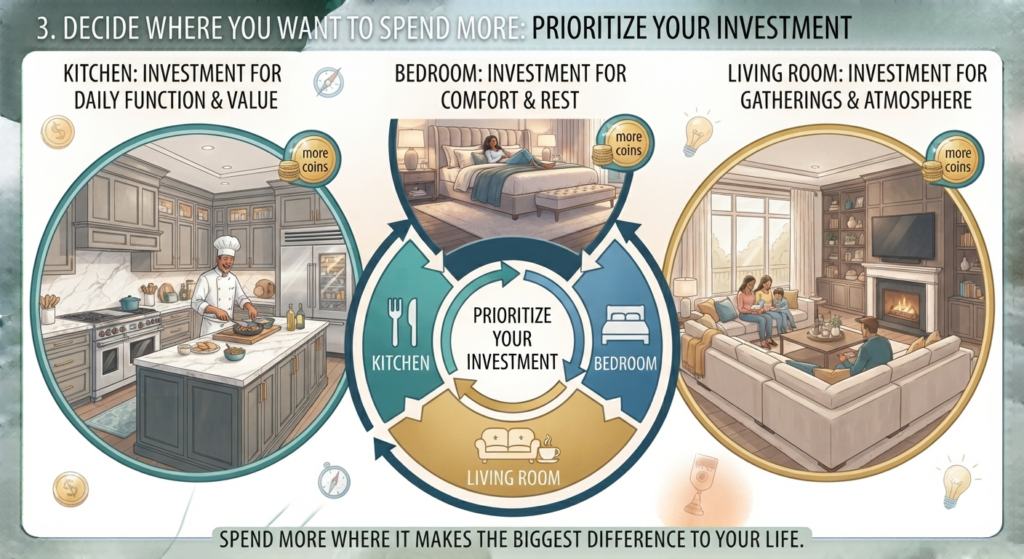
Perhaps the kitchen is a priority because you use it constantly.
Maybe you want to invest more in the bedroom because comfort matters most to you.
Or perhaps your living room is the centre of family gatherings and deserves more attention.
A useful budget isn’t necessarily an equal budget.
Spend more where the investment will make the biggest difference to your everyday life.
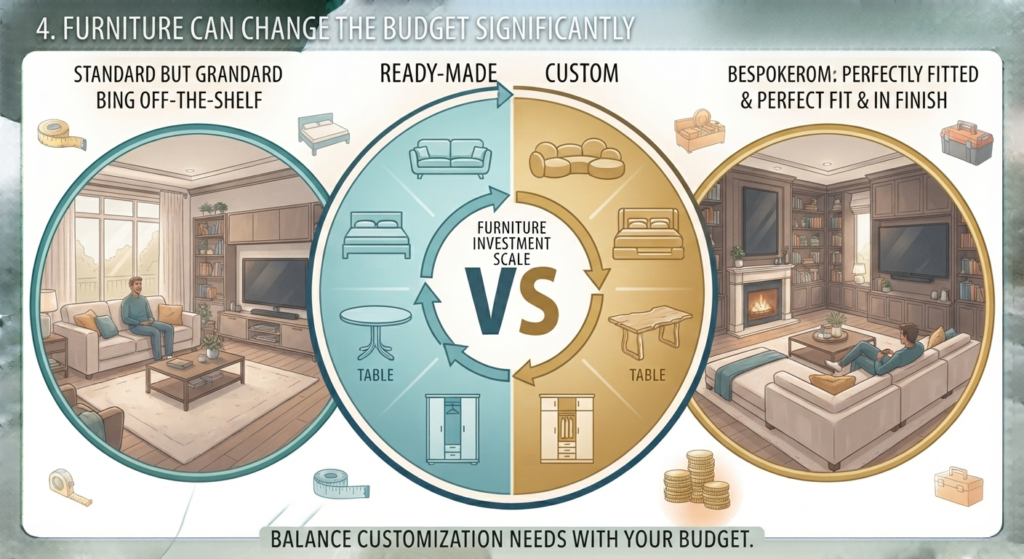
4. Furniture Can Change the Budget Significantly
Furniture is one of the biggest variables in an interior project.
A ready-made sofa and a fully customised sofa are very different purchases.
The same applies to beds, dining tables, chairs, storage units and other furniture.
Custom furniture can offer better control over dimensions, materials and appearance, but it may require a larger investment.
Before deciding, ask whether customisation is genuinely solving a problem or simply adding another expense.
5. Storage Is More Expensive Than It Looks
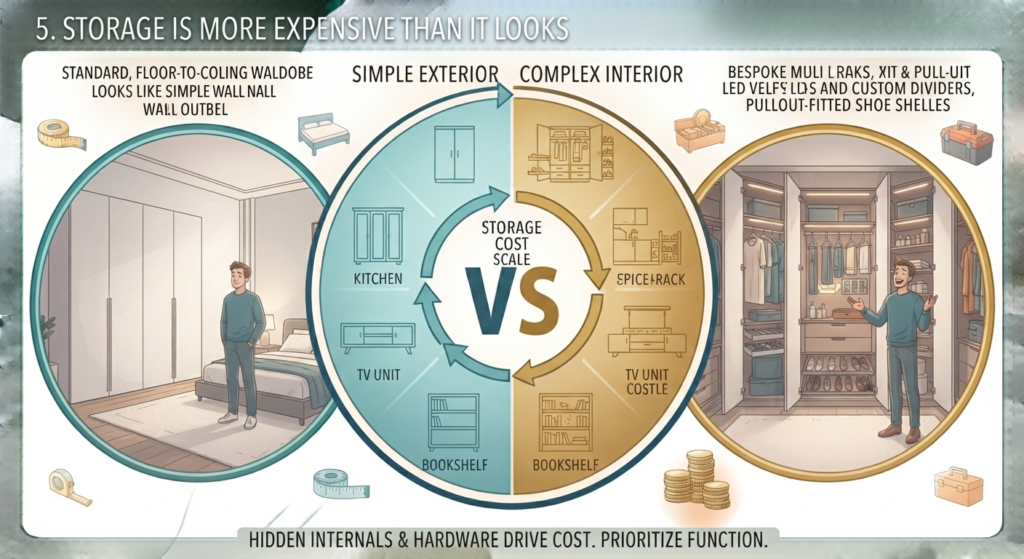
Wardrobes, kitchen cabinets, TV units, bookshelves and other built-in storage can take up a significant part of an interior budget.
And storage isn’t just about the visible exterior.
The internal layout, hardware, drawers, hinges, organisers and finishing materials can all affect the final cost.
This is why a wardrobe that looks simple from the outside can still have a surprisingly different price from another wardrobe of similar size.
6. Materials Create Different Price Levels
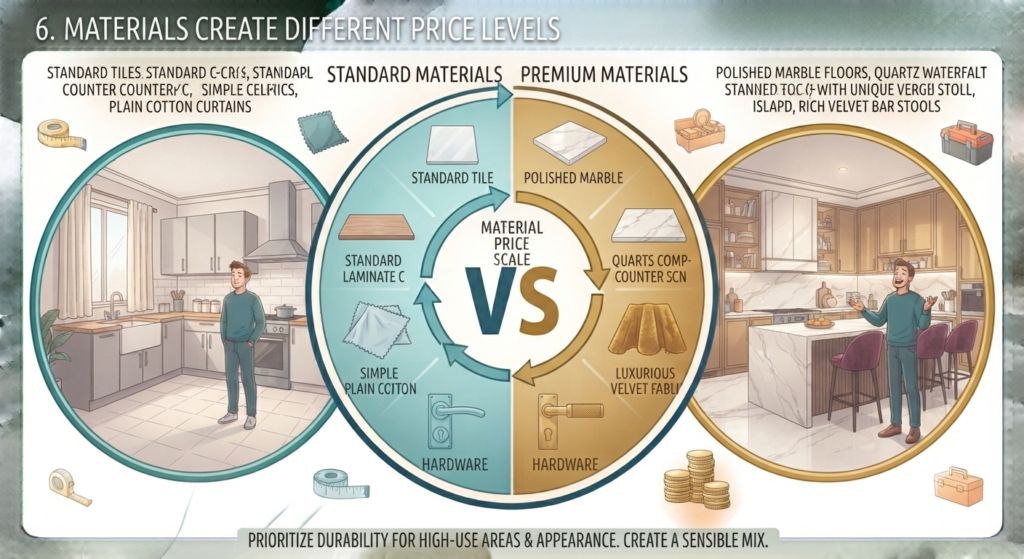
Materials can completely change the cost of an interior.
Flooring, countertop surfaces, laminates, veneers, tiles, sanitaryware, hardware, fabrics and decorative finishes all come in different quality and price ranges.
The most expensive option isn’t automatically the right option.
The better question is:
Where does higher quality actually matter?
For a heavily used surface, durability may be worth prioritising.
For a decorative element, appearance may be more important.
The goal is to create a sensible combination rather than choosing the highest-priced material everywhere.
7. Don't Forget the Technical Work
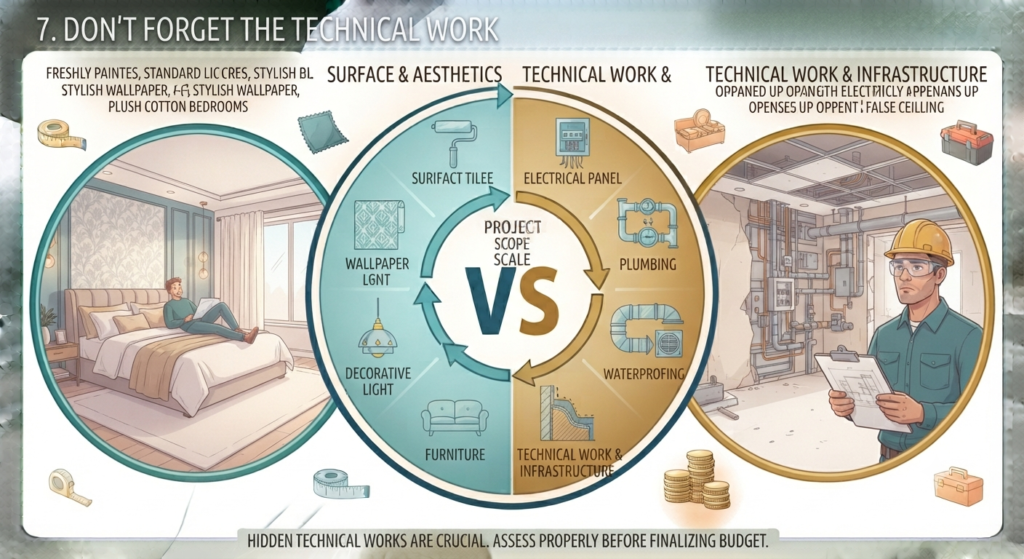
Some of the most important parts of an interior aren’t the things you see in photographs.
Electrical points, plumbing changes, lighting connections, ceiling work, waterproofing, ventilation and other technical requirements can all affect the budget.
These costs can also become more complicated when the existing structure needs modification.
That is why a project should be assessed properly before the final budget is treated as fixed.
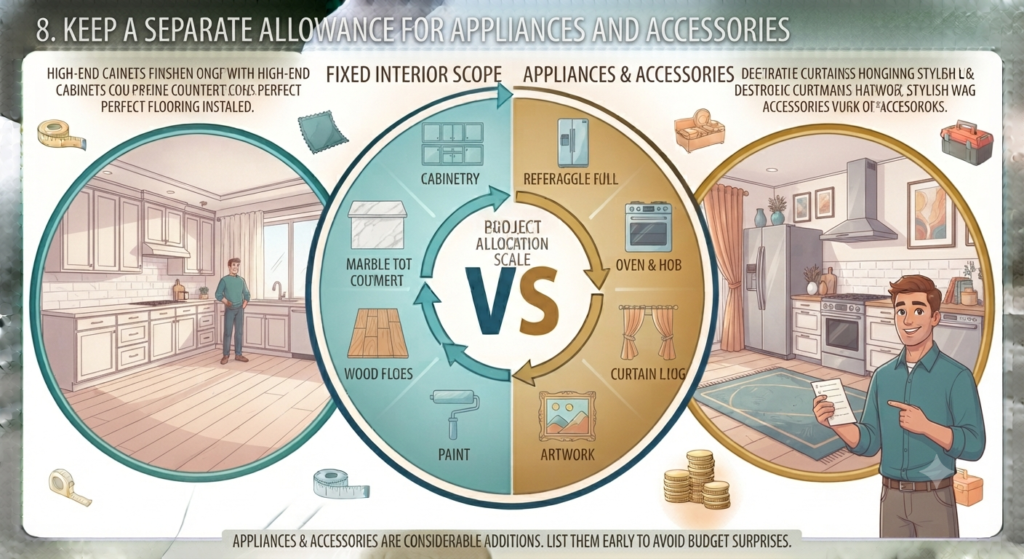
8. Keep a Separate Allowance for Appliances and Accessories
A kitchen budget, for example, may not automatically include every appliance you plan to purchase.
Refrigerators, ovens, dishwashers, microwaves, chimneys and other appliances can represent a considerable additional expense.
The same applies to items such as curtains, rugs, mirrors, artwork and decorative accessories.
Make a list of these items early.
Otherwise, they can become unexpected additions near the end of the project.
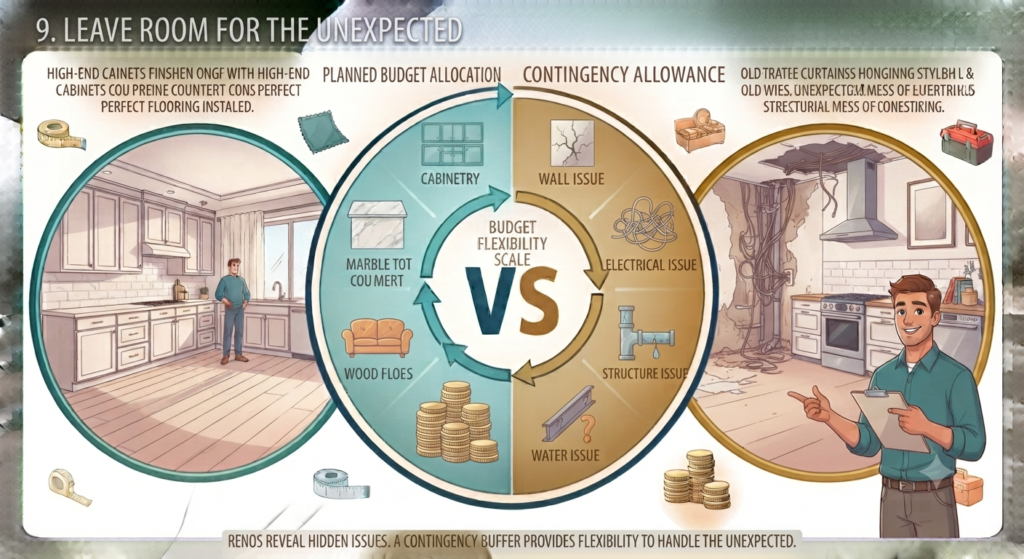
9. Leave Room for the Unexpected
Even with careful planning, renovation and interior projects can sometimes reveal issues that weren’t visible initially.
An existing wall may require additional work. Electrical wiring may need modification. A measurement may change after demolition or installation begins.
This is why using the entire budget on planned items can be risky.
Keeping a reasonable contingency amount gives you some flexibility when something unexpected appears.
It is much easier to deal with an unforeseen expense when you have already allowed for the possibility.
10. Compare Quotations Carefully
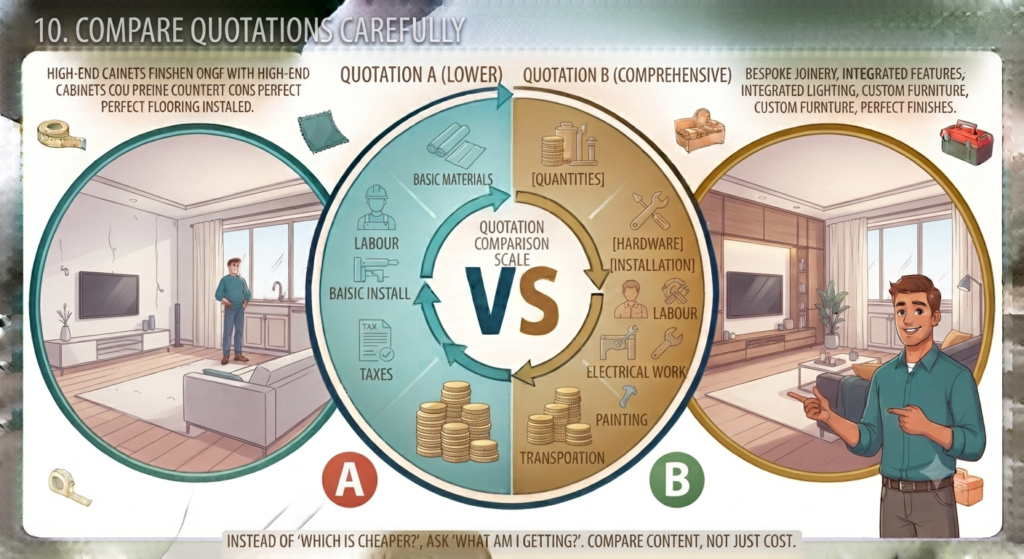
A lower quotation isn’t necessarily a better quotation.
When comparing two proposals, check what is actually included.
Look at:
- Materials
- Quantities
- Hardware
- Installation
- Labour
- Design services
- Electrical work
- Painting
- Transportation
- Appliances
- Taxes or other applicable charges
Two quotations can look very different simply because they include different things.
Instead of asking only “Which one is cheaper?”, ask:
“What am I getting for this amount?”
That question usually gives you a much clearer comparison.
Budgeting Doesn't Mean Making Everything Cheap
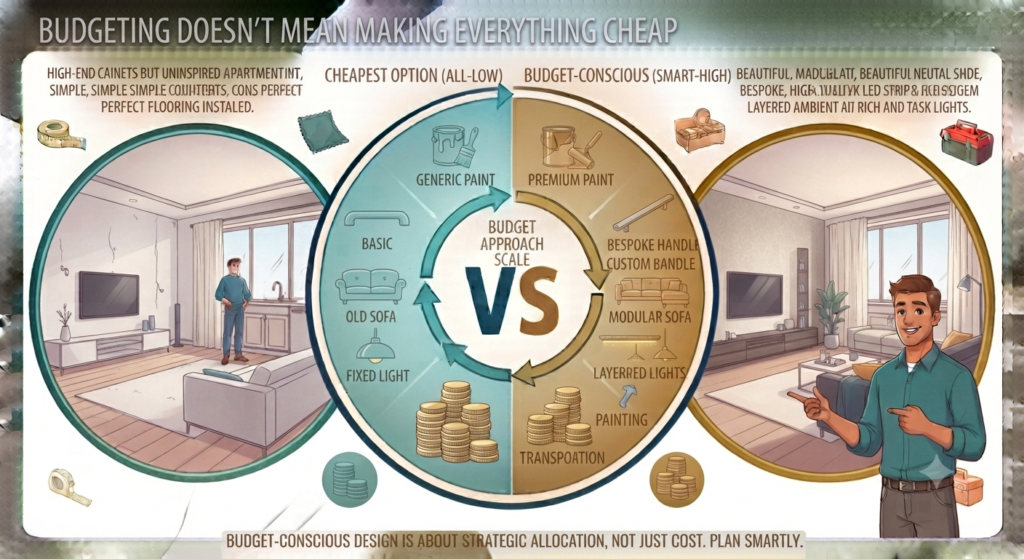
There is an important difference between budget-conscious design and simply choosing the cheapest option.
A budget-conscious approach asks where money should be used carefully.
For example, you might choose a simpler finish for one area and invest in better hardware for a frequently used kitchen.
You might keep the existing flooring but redesign the lighting and furniture.
You might choose ready-made furniture for one room and customise storage where the room has unusual dimensions.
Good planning can sometimes achieve more than simply increasing the budget.
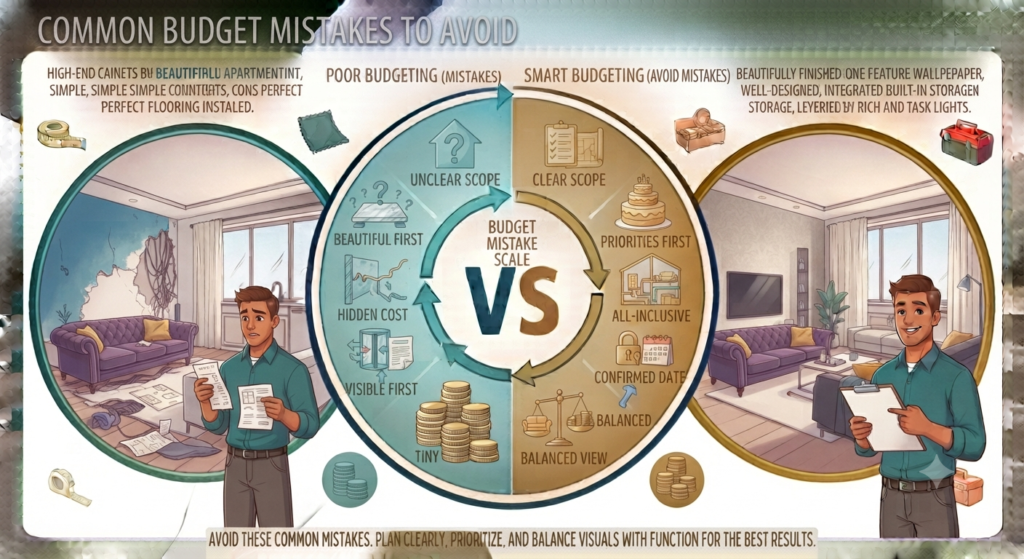
Common Budget Mistakes to Avoid
A few mistakes appear repeatedly in interior projects.
Starting without a clear scope
If you don’t know what the project includes, the budget can keep changing.
Choosing materials before deciding priorities
It is easy to fall in love with one expensive finish before considering the rest of the project.
Forgetting hidden costs
Electrical, plumbing, installation and hardware can have a meaningful impact on the final amount.
Changing decisions repeatedly
Late changes can affect both cost and timelines.
Spending everything on visible elements
A beautiful sofa won’t compensate for poor electrical planning or inadequate storage.
The best interiors balance what you see with what you use.
A few mistakes appear repeatedly in interior projects.
So, What Should Your Interior Budget Be?
There isn’t a universal answer.
Your budget should reflect the size of the project, your priorities, the existing condition of the property, your material preferences and the amount of customisation you want.
Instead of starting with:
“What is the cheapest way to do this?”
try starting with:
“What do I want this home to achieve, and where should my money go?”
That creates a much more useful foundation for planning.
At Krati Kansal – Home and Interior Design, the aim is to understand the client’s requirements first and then build the design around the available space, lifestyle and priorities. Materials, furniture, storage, lighting and finishing details can then be considered as part of one overall plan.
Because a well-planned interior isn’t simply about spending more.
It’s about spending thoughtfully.
Planning Your Interior Budget?
Before beginning your project, create a clear list of your requirements, priorities and must-have features. A thoughtful design plan can help turn that list into a realistic direction for your home.
Let’s plan a space that makes sense for both your lifestyle and your budget.