
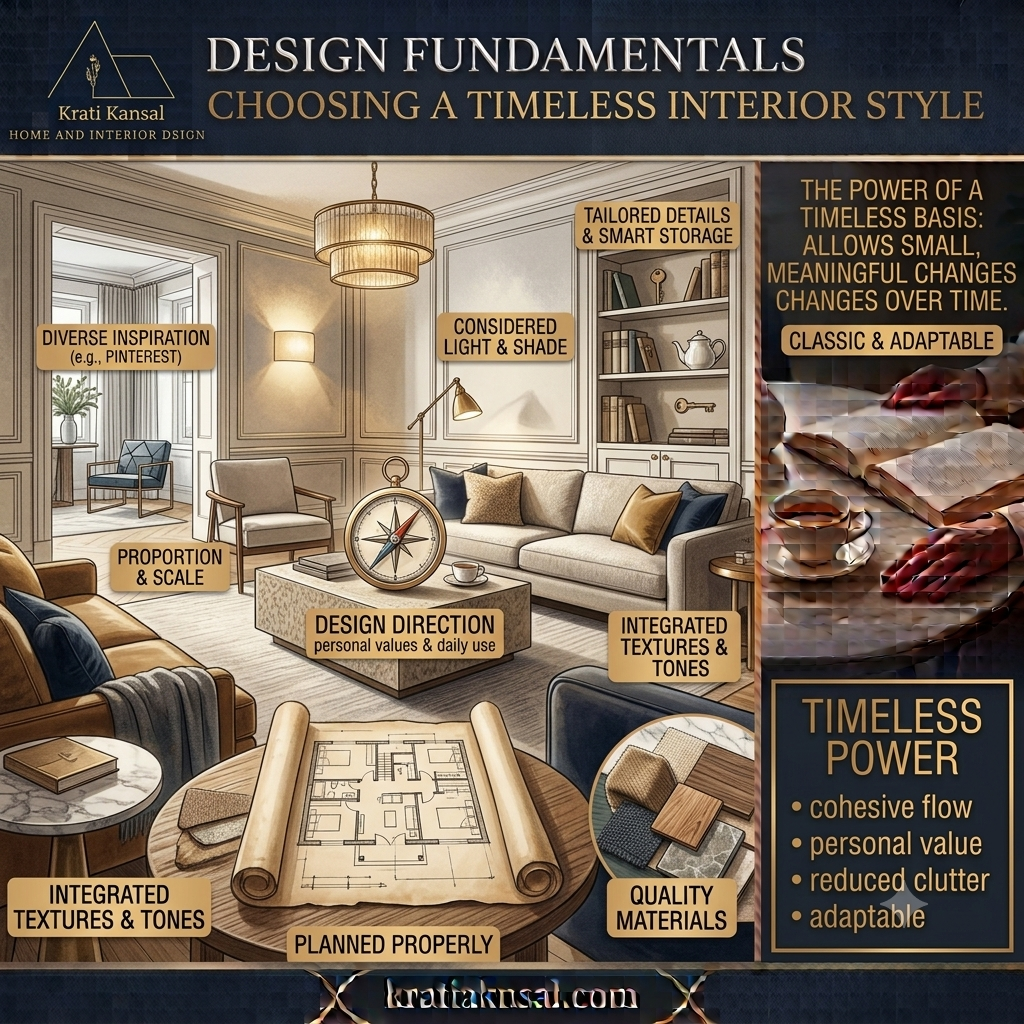
Choosing an interior style sounds easy until you actually have to make the decision.
You may save a modern living room on Pinterest, fall in love with a warm wooden bedroom the next day, and then suddenly find yourself looking at a completely different kind of kitchen.
After a while, everything looks beautiful—but nothing seems to belong together.
That is one of the most common problems people face when planning an interior. The issue isn’t a lack of inspiration. There is usually too much of it.
Your home doesn’t need to follow one trend perfectly. It needs a design direction that feels comfortable, works with the space you have and, most importantly, feels like something you can live with.
Here is how to find that direction.
1. Start With How You Want Your Home to Feel
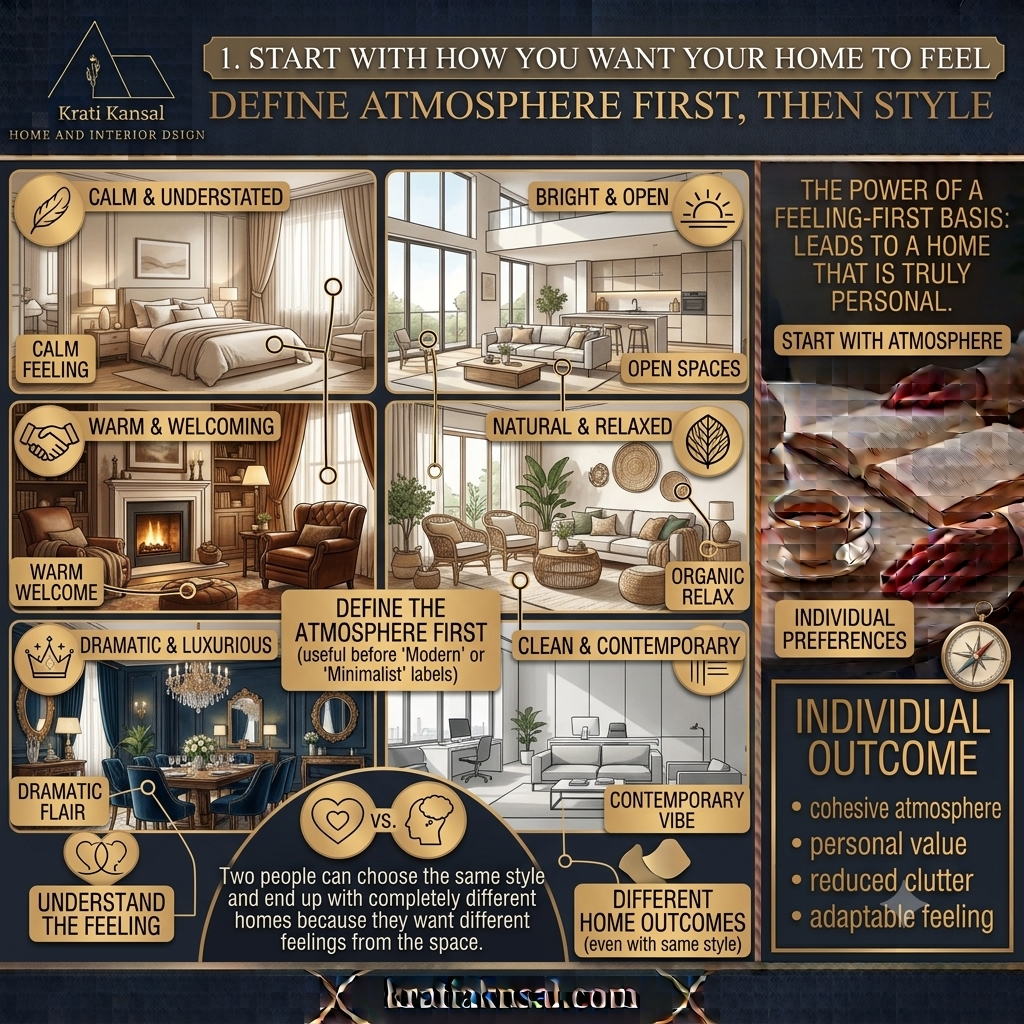
Before searching for a design style, think about the atmosphere you want.
Do you want your home to feel:
- Calm and understated?
- Warm and welcoming?
- Dramatic and luxurious?
- Bright and open?
- Natural and relaxed?
- Clean and contemporary?
This is often more useful than immediately choosing a label such as “modern” or “minimalist.”
Two people can choose the same design style and end up with completely different homes because they want different feelings from the space.
Start with the feeling. The style can come afterwards.
2. Look at the Architecture You Already Have
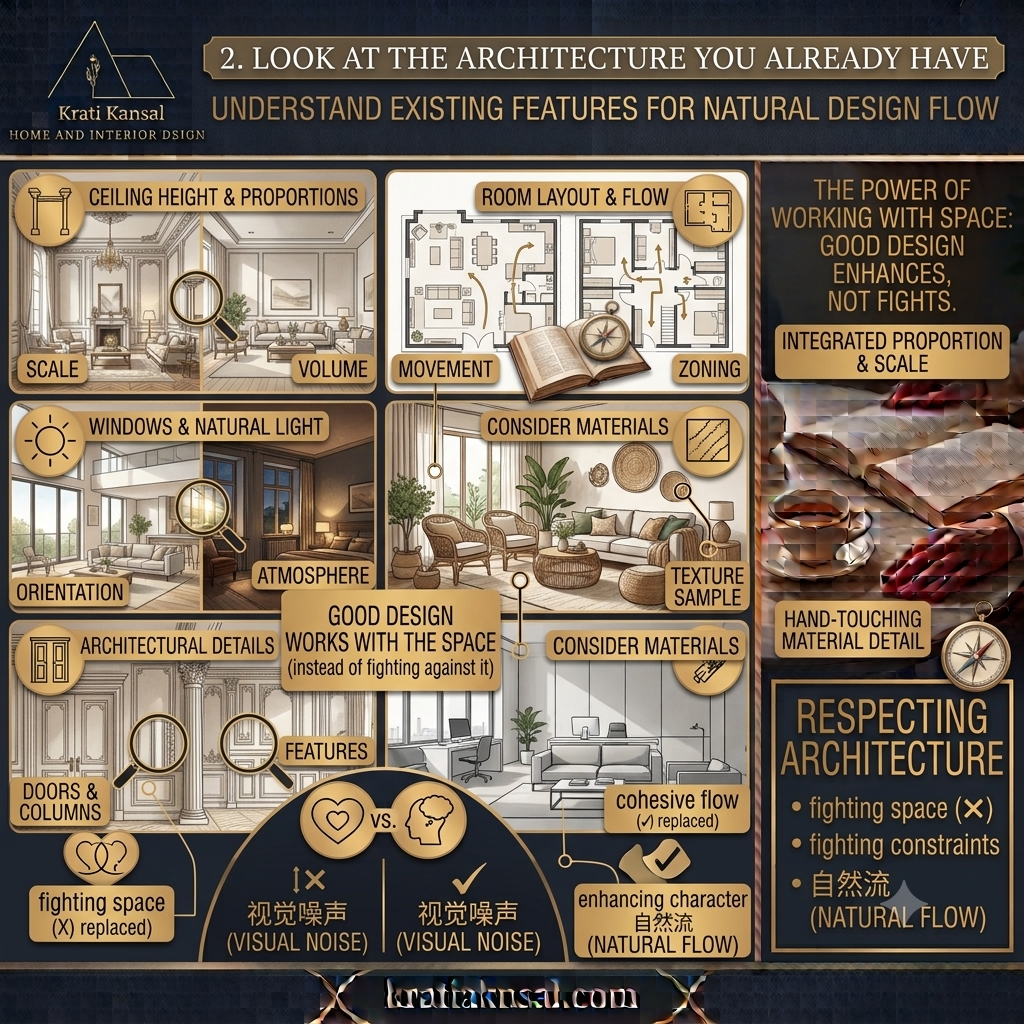
Your home already has a personality before you add furniture.
Ceiling height, windows, flooring, room proportions, doors, columns and architectural details can all influence which design direction works naturally.
For example, a home with large windows and plenty of natural light can support a very different visual approach from a darker space with smaller openings.
This doesn’t mean your architecture limits you.
It simply means good design works with the space instead of constantly fighting against it.
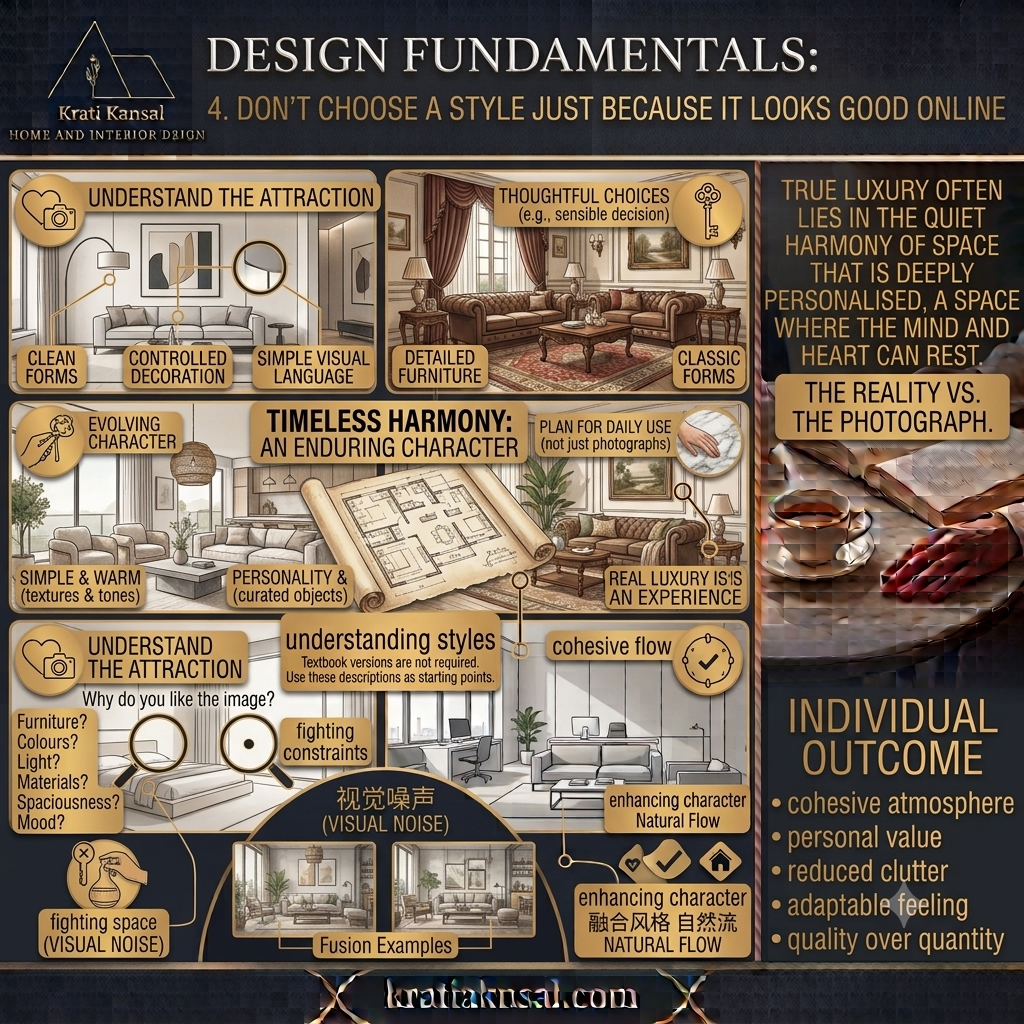
3. Understand What Different Styles Actually Mean
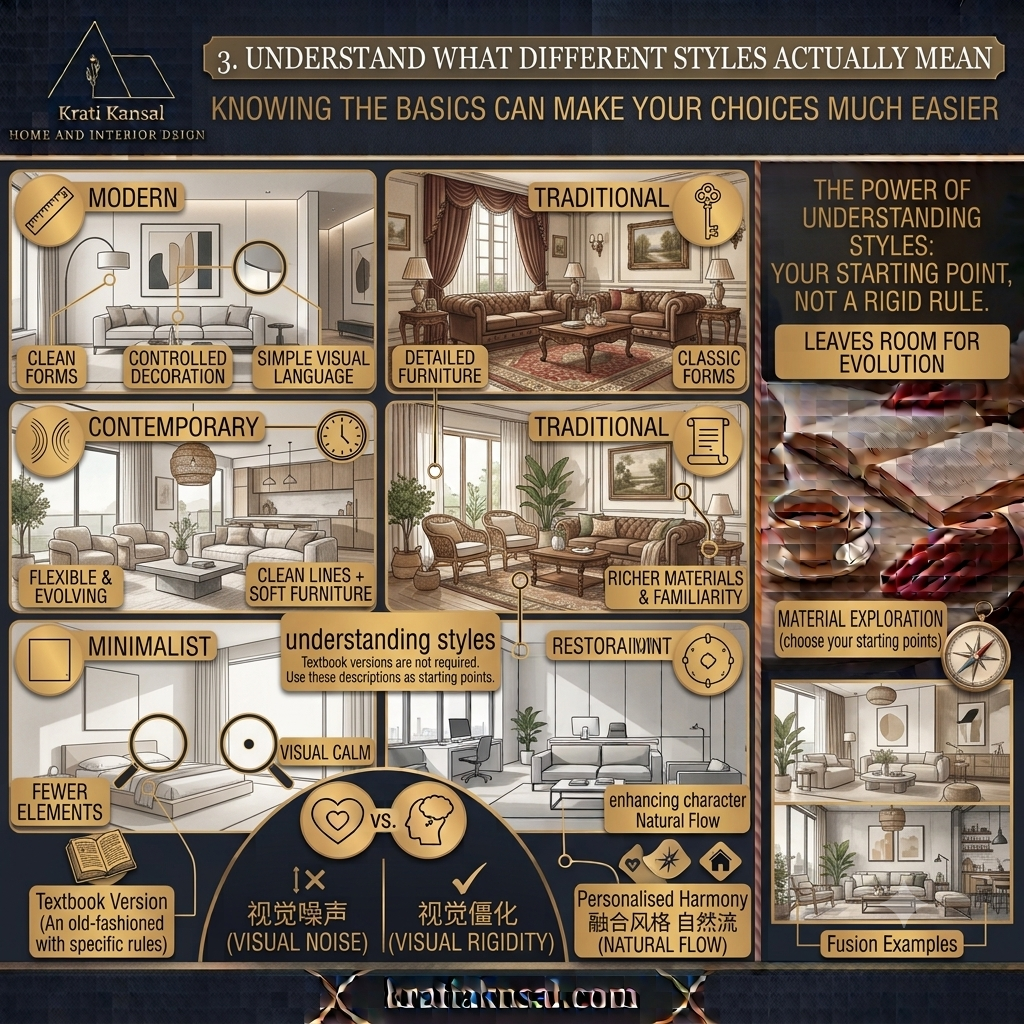
You don’t need to become an interior-design expert, but knowing the basics can make your choices much easier.
Modern
Modern interiors generally focus on clean forms, controlled decoration and a simple visual language.
Contemporary
Contemporary design is more flexible and evolves with current preferences. It can combine clean lines with softer furniture, interesting materials and modern details.
Minimalist
Minimalism is about restraint. The emphasis is on fewer elements, simplicity and visual calm rather than filling the room.
Traditional
Traditional interiors often use more detailed furniture, classic forms, richer materials and a sense of familiarity.
Japandi
Japandi brings together Japanese simplicity and Scandinavian warmth. Natural materials, muted colours and comfortable simplicity are common characteristics.
Industrial
Industrial interiors often embrace exposed structural elements, metal, concrete, brick and a more raw visual character.
These descriptions are starting points, not rules.
You don’t have to recreate a textbook version of any style.
4. Don't Choose a Style Just Because It Looks Good Online
A room can look incredible in a photograph and still be completely wrong for your lifestyle.
Ask yourself why you like the image.
Is it the furniture?
The colours?
The natural light?
The materials?
The spaciousness?
The overall mood?
Sometimes we think we love a particular “style” when we actually love just one element of the room.
Understanding what attracted you to a reference image is much more useful than simply copying it.
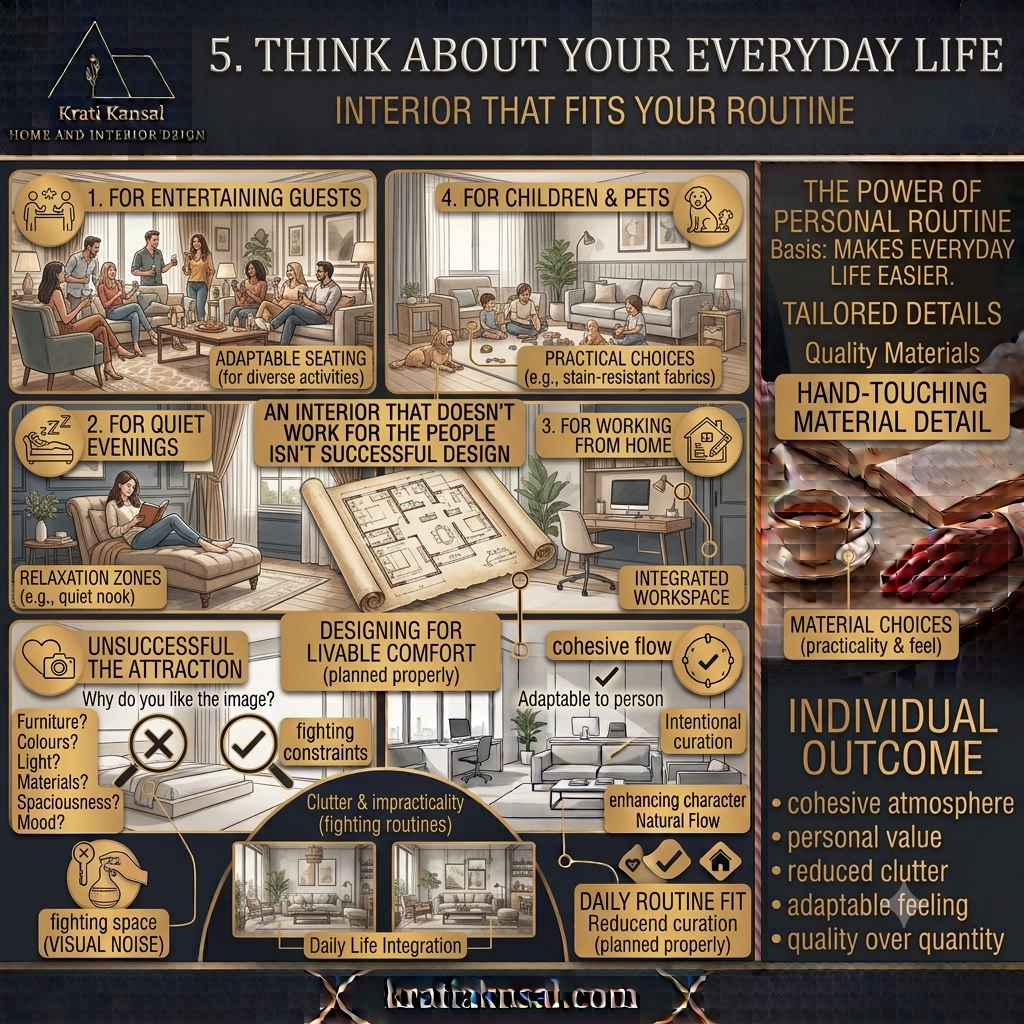
5. Think About Your Everyday Life
Your interior should fit your routine.
If you spend a lot of time entertaining guests, your living space may need a different arrangement from someone who prefers quiet evenings at home.
If you work from home, a workspace may need to become part of the design.
If you have children or pets, some materials and furniture choices may need to be more practical.
And if you genuinely dislike cleaning, designing a home filled with high-maintenance surfaces probably isn’t going to make your life better.
A beautiful interior that doesn’t work for the people living in it isn’t successful design.
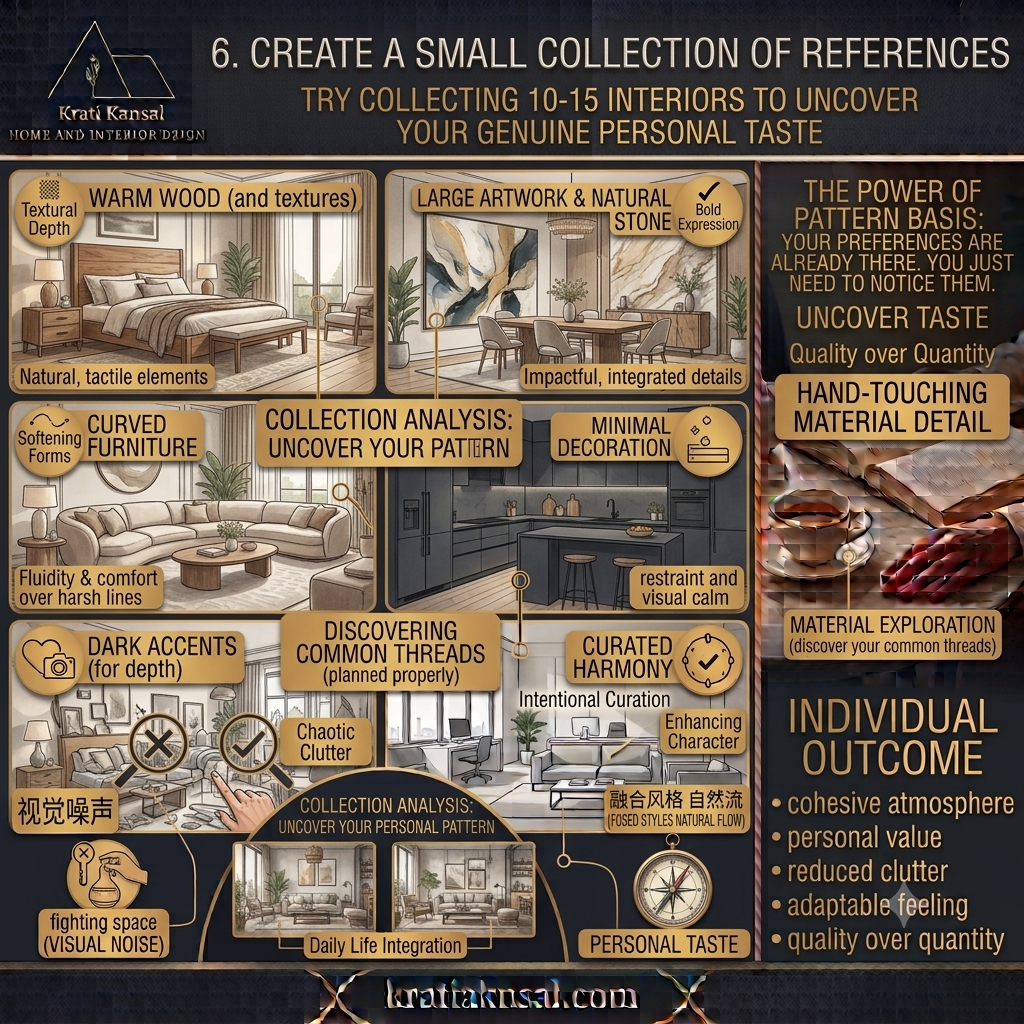
6. Create a Small Collection of References
Instead of saving hundreds of random images, create a smaller collection.
Try collecting around 10–15 interiors that you genuinely like.
Then look at them together.
You may notice a pattern.
Perhaps most of them have:
- Warm wood
- Soft neutral colours
- Curved furniture
- Dark accents
- Large artwork
- Natural stone
- Minimal decoration
That pattern tells you more about your personal taste than a style quiz ever could.
Your preferences are already there. You just need to notice them.
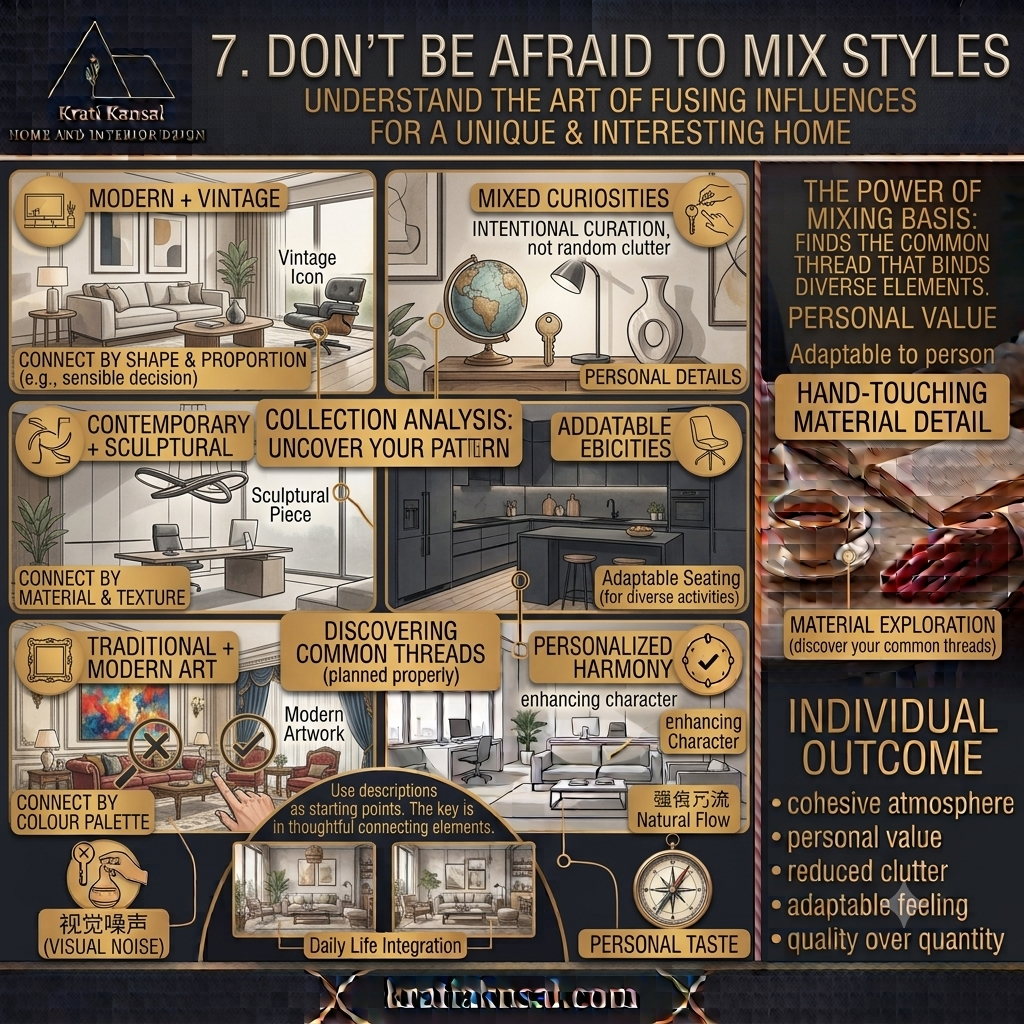
7. Don't Be Afraid to Mix Styles
Your home doesn’t have to be 100% modern, 100% traditional or 100% minimalist.
Some of the most interesting interiors come from combining influences carefully.
A contemporary room can have a vintage chair.
A modern home can use traditional artwork.
A minimalist space can include a bold sculptural piece.
The trick is to find something that connects the different elements—perhaps colour, material, shape or proportion.
Mixing styles works when the differences feel intentional.
When everything is completely unrelated, however, the room can start to feel confused.
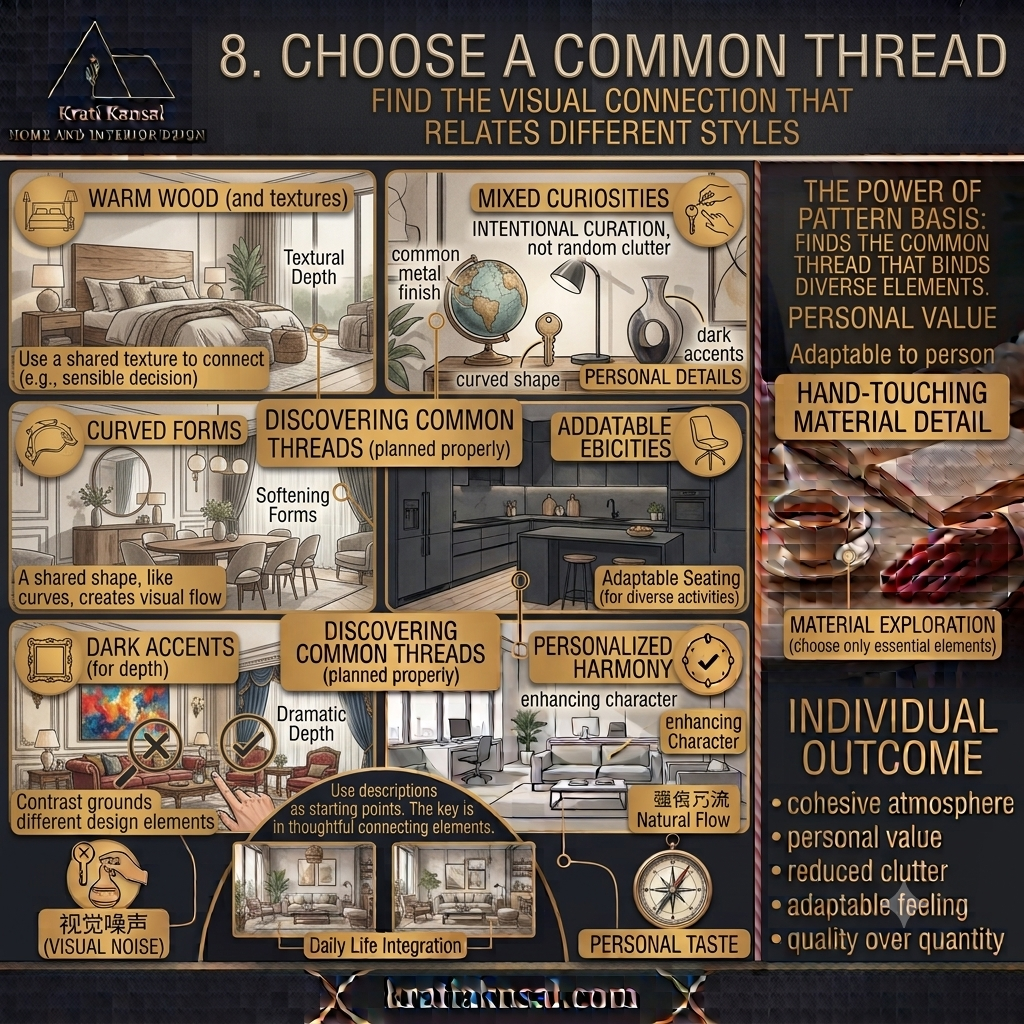
8. Choose a Common Thread
If you want to combine different styles, give the room a visual connection.
For example, you might use warm wood throughout the home.
Or perhaps your common thread is a neutral base with dark accents.
It could even be a particular metal finish repeated across lighting, handles and furniture.
This small amount of consistency helps different pieces feel as though they belong to the same home.
You don’t need everything to match.
You need things to relate to each other.
9. Consider the Style of the Whole Home
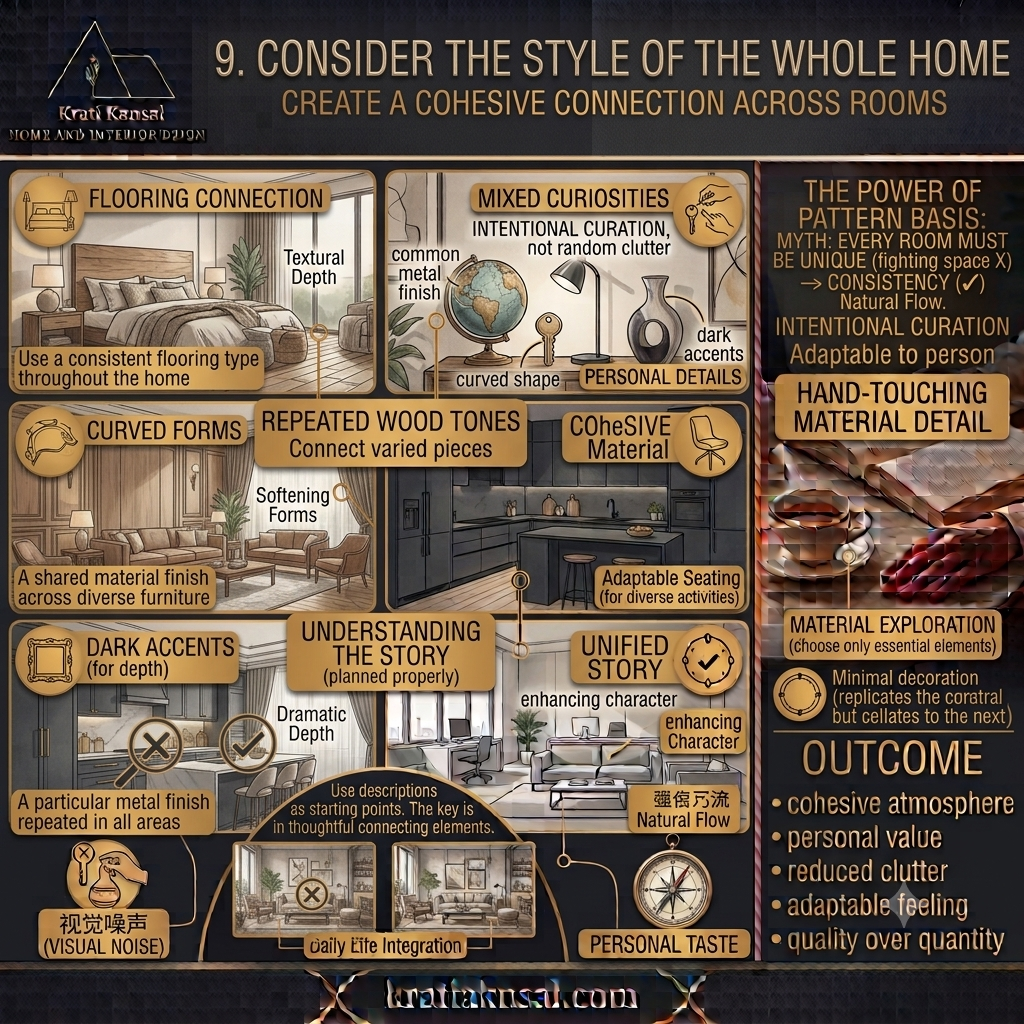
Another mistake is designing every room as if it belongs to a completely different house.
Your bedroom can certainly feel softer than your living room, and your bathroom can have its own character.
But there should still be some connection between spaces.
The same flooring, repeated wood tones, similar hardware or a consistent colour family can create that connection.
Think of your home as one story with different chapters rather than a collection of unrelated rooms.
10. Leave Room for Your Style to Change
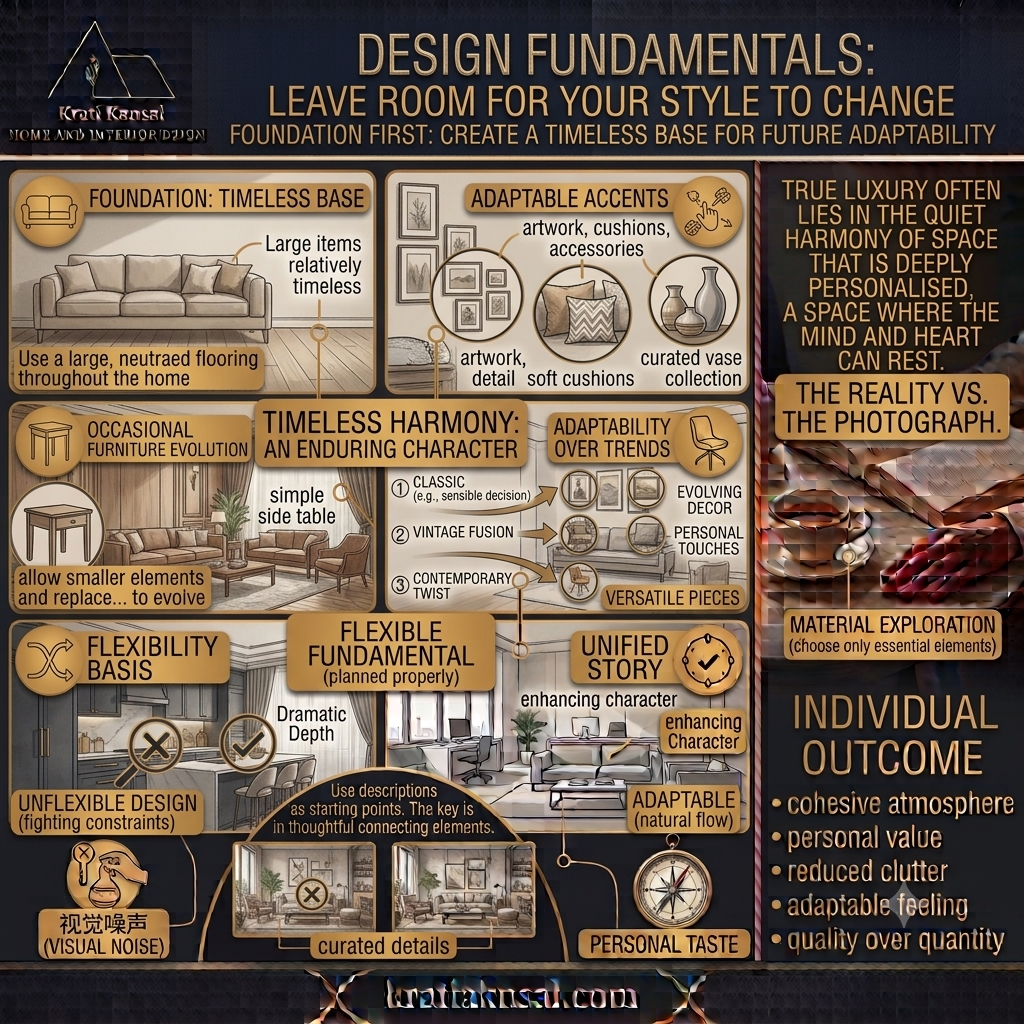
You don’t have to decide everything at once.
Your taste will probably change over time. That’s normal.
Instead of making every element highly specific to one trend, create a foundation that you can adapt.
Keep larger, more expensive decisions relatively timeless and allow smaller elements—artwork, cushions, accessories and occasional furniture—to evolve.
This makes it much easier to refresh the home later without starting from zero.
So, Which Interior Style Is Right for You?
There isn’t one universally correct answer.
The right style is the one that works with your space, lifestyle, preferences and the atmosphere you want to create.
You might discover that you’re drawn to modern interiors but want the warmth of natural materials. Or perhaps you like minimalism but don’t want your home to feel cold. Maybe you prefer traditional details but want a cleaner, more contemporary overall look.
That’s completely fine.
Interior design doesn’t have to fit neatly into one box.
The best homes often have a little flexibility in them.
Your Home Doesn’t Need to Look Like Everyone Else’s
Trends can be useful for discovering new ideas, but they shouldn’t decide what your home looks like.
Instead of asking, “What style is popular right now?”, try asking:
“What kind of space would I actually enjoy coming home to?”
That question usually leads to a much better starting point.
At Krati Kansal – Home and Interior Design, the design process begins with understanding the space, the people using it and the ideas they want to bring into it. The style comes from that conversation—not simply from following a trend.
Because your home should not look like a catalogue page.
It should feel like your space.
Ready to Find Your Design Direction?
Whether you already have a clear vision or are still collecting ideas, thoughtful planning can turn those scattered inspirations into a space that feels cohesive and personal.
Let’s create something that feels right for you.