
When most people hear the words luxury interior design, they often imagine huge homes, expensive furniture, marble everywhere and impressive chandeliers. But luxury doesn’t always look like that.
Walk into a genuinely well-designed space and you may notice something much simpler. Everything just seems to belong.
The furniture feels right for the room. The lighting creates a comfortable atmosphere. The colours work together instead of competing with each other. There are decorative elements, but not so many that the room feels crowded. Even the empty space feels intentional.
That is what separates a room that looks expensive from one that actually feels luxurious.
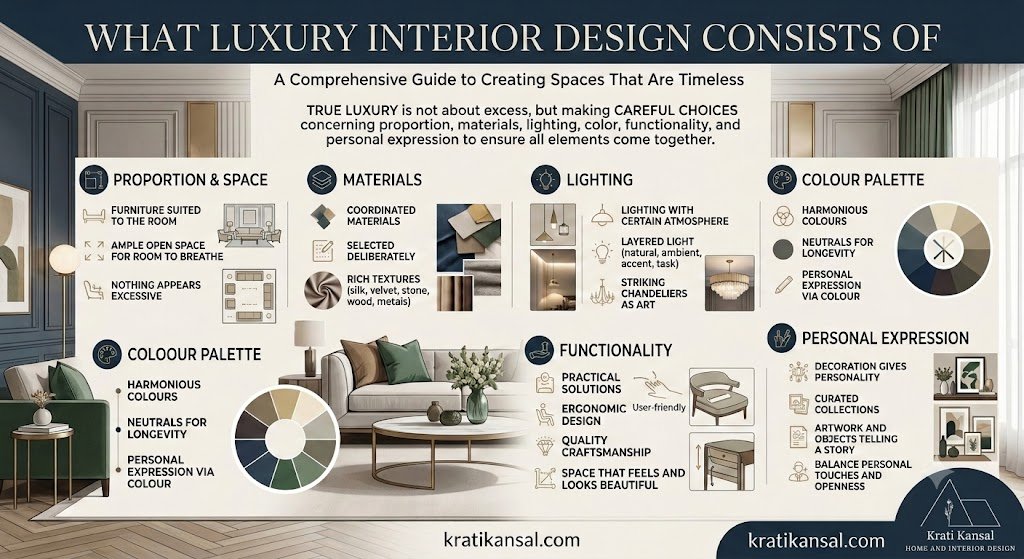
Luxury interior design isn’t about filling a room with the most expensive things you can find. It’s about making thoughtful decisions about proportion, materials, lighting, colour, functionality and personal style—and bringing all of those decisions together in a way that feels natural.
In this guide, let’s look at what luxury interior design really means and the elements that can make a space feel refined, comfortable and timeless.
What Does Luxury Interior Design Really Mean?
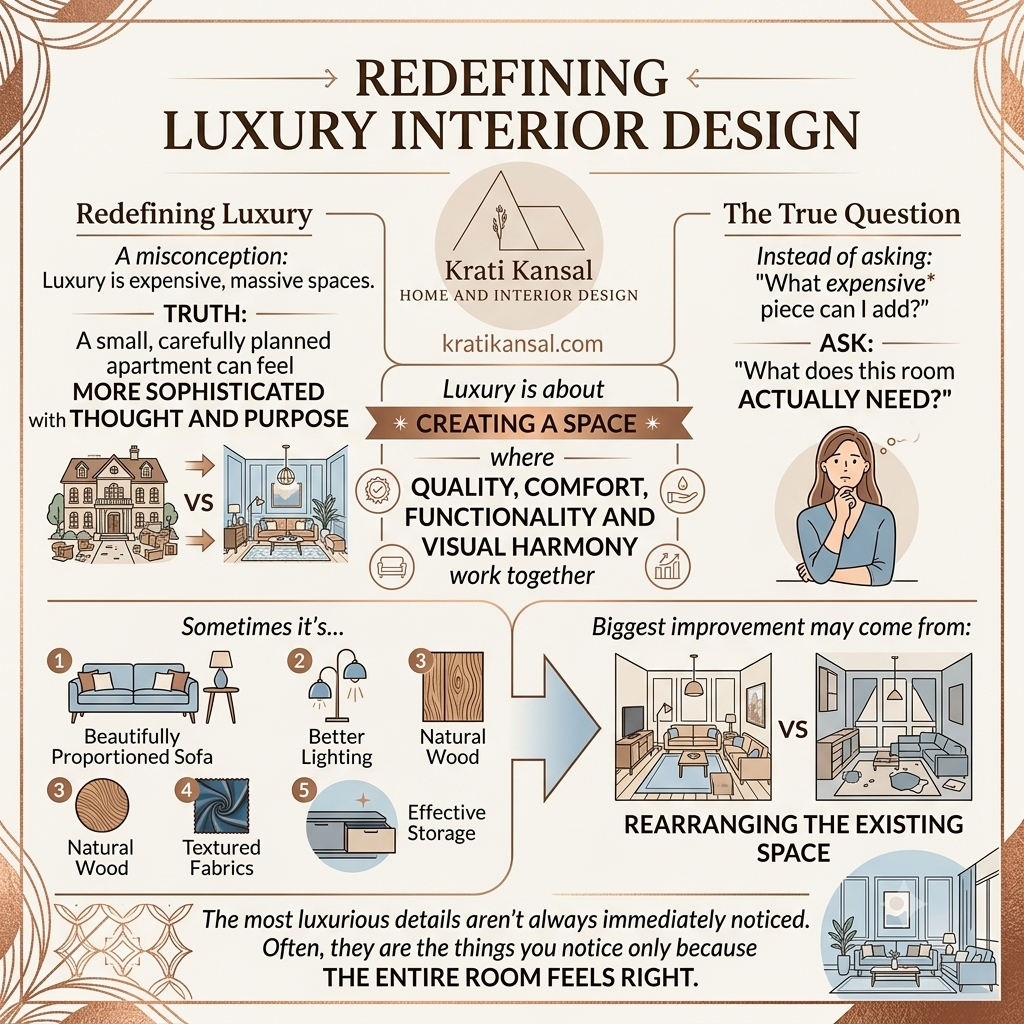
At its heart, luxury interior design is about creating a space where quality, comfort, functionality and visual harmony work together.
And no, you don’t need a massive house or a huge budget to achieve it.
A carefully planned apartment can feel far more sophisticated than a much larger home if the space has been designed with thought and purpose.
The starting point is intentionality.
Instead of asking:
“What expensive piece can I add to this room?”
a better question is:
“What does this room actually need?”
Sometimes the answer is a beautifully proportioned sofa. Sometimes it’s better lighting, natural wood, textured fabrics or more effective storage. In some cases, the biggest improvement may simply come from rearranging the way the existing space is used.
The most luxurious details aren’t always the ones that immediately catch your attention. Often, they’re the things you notice only because the entire room feels right.
Luxury Doesn't Mean Expensive
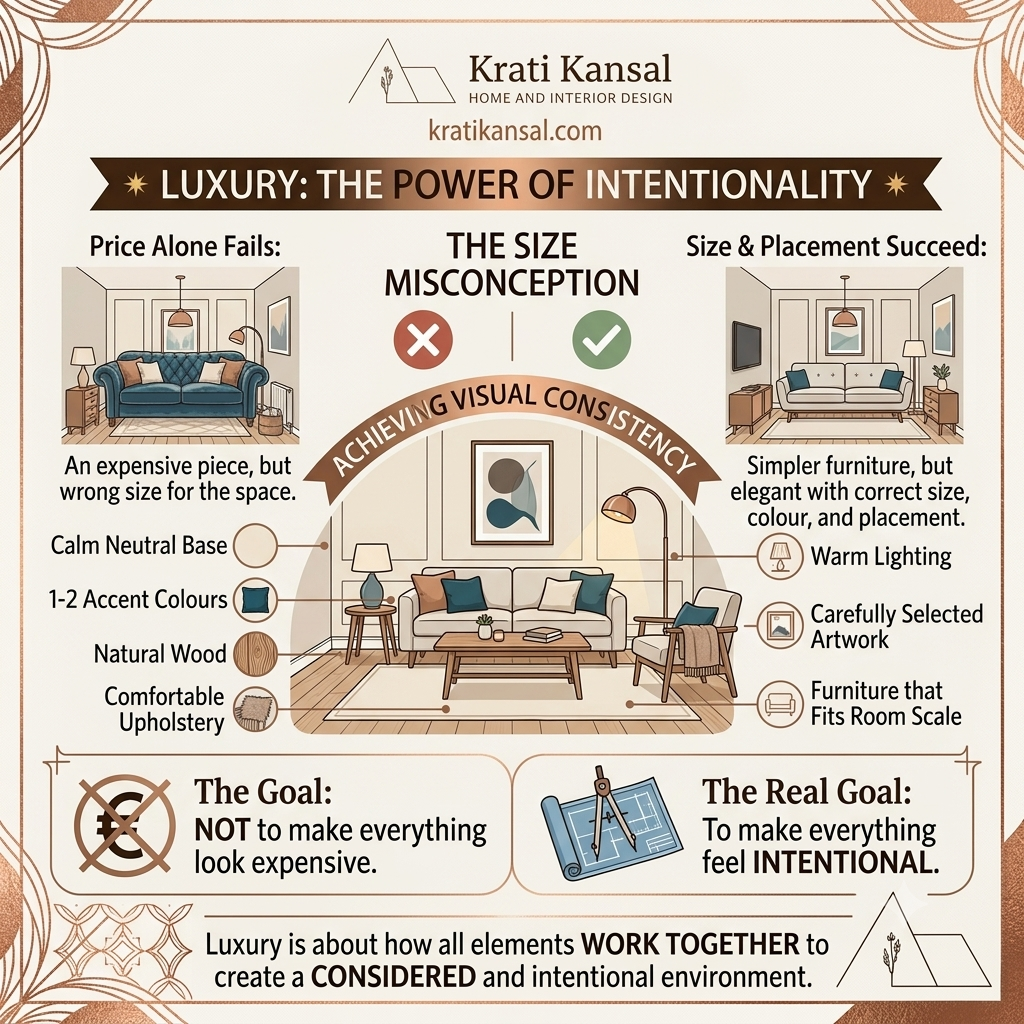
One of the most common misconceptions about luxury interiors is that a higher price automatically means a more luxurious result.
It doesn’t.
An expensive sofa can look completely wrong if it’s too large for the room. On the other hand, a simpler piece of furniture can look elegant when its size, colour and placement are right.
What matters is visual consistency.
Imagine a living room with a calm neutral base, one or two accent colours, natural wood, comfortable upholstery, warm lighting, carefully selected artwork and furniture that fits the scale of the room.
None of these things alone creates luxury.
But when they work together, the room starts to feel considered.
The goal isn’t to make everything look expensive.
The goal is to make everything feel intentional.
1. So, What Actually Is Luxury Interior Design?
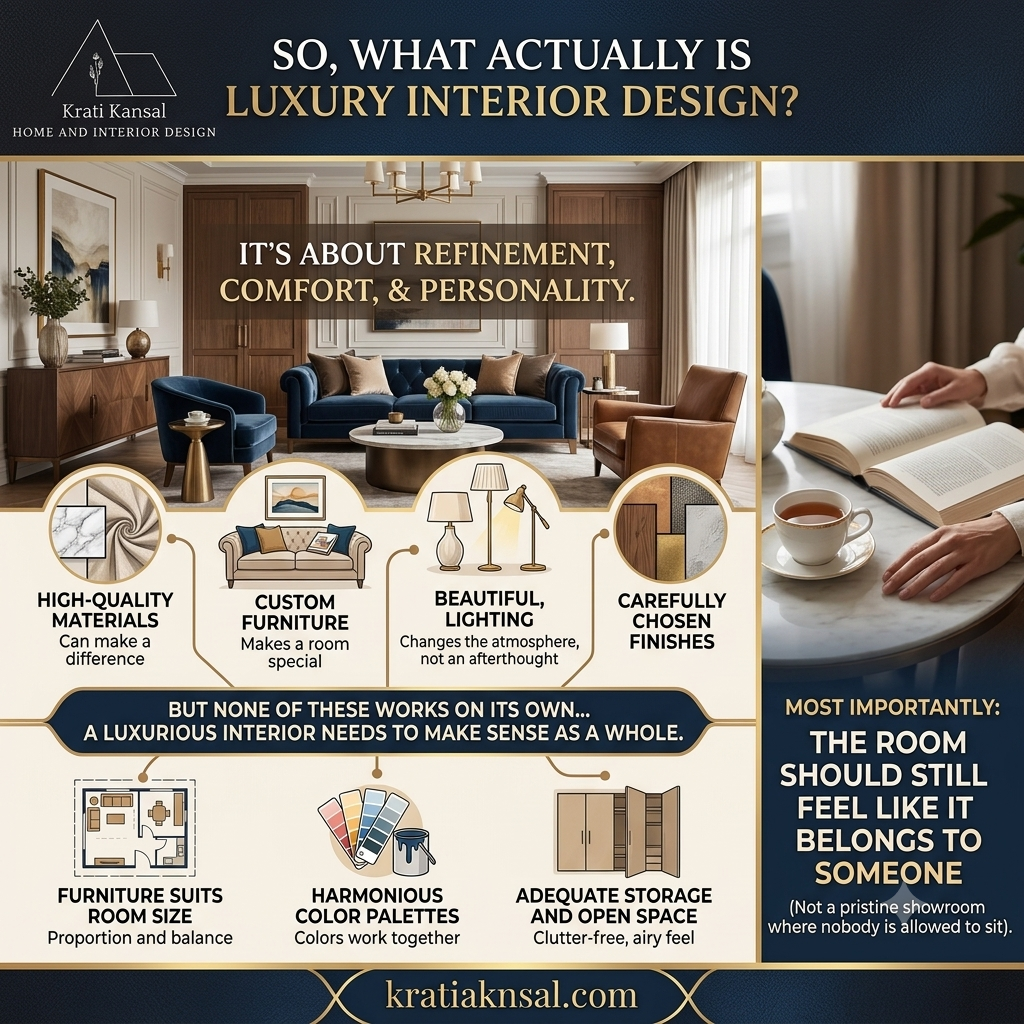
Luxury interior design is about creating a space that feels refined, comfortable and personal.
Of course, good-quality materials can make a difference. Custom furniture can make a room more special. Beautiful lighting and carefully chosen finishes can completely change the atmosphere.
But none of these things works on its own.
A luxurious interior needs to make sense as a whole.
The furniture needs to suit the size of the room. The colours need to work together. Lighting needs to be considered rather than added as an afterthought. There should be enough storage, enough open space and enough personality.
Most importantly, the room should still feel like it belongs to someone.
It shouldn’t look like a showroom where nobody is actually allowed to sit.
2. Luxury Doesn't Always Mean Expensive
This is probably one of the biggest misunderstandings about luxury interiors.
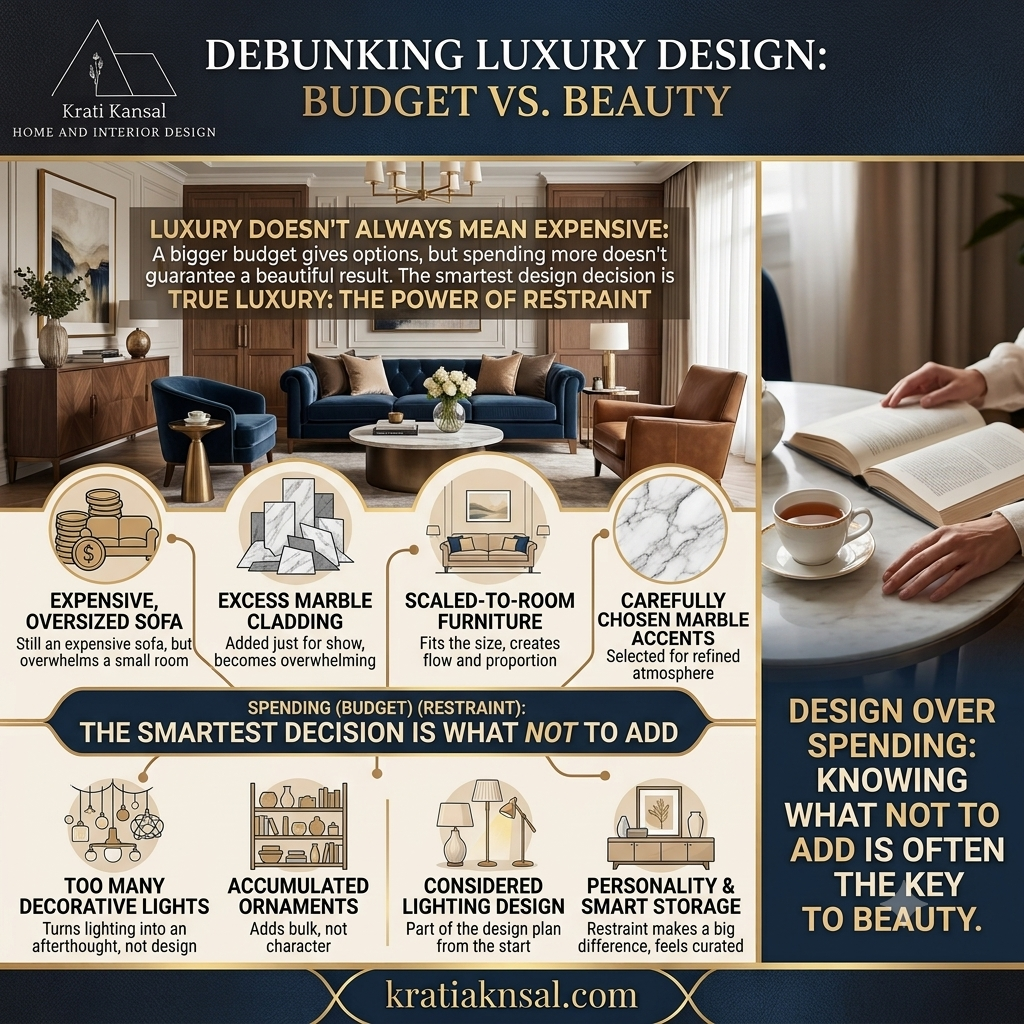
A bigger budget definitely gives you more options. You can choose better materials, custom-made furniture and more detailed finishes. But simply spending more money doesn’t guarantee a beautiful result.
Imagine a very expensive sofa placed in a room that is too small for it.
It is still an expensive sofa.
But it is not good design.
The same goes for marble, lighting, wallpaper or decorative pieces. If everything is added simply because it looks expensive, the room can quickly become overwhelming.
Sometimes the smartest design decision is knowing what not to add.
That little bit of restraint can make a surprisingly big difference.
3. Start With the Layout
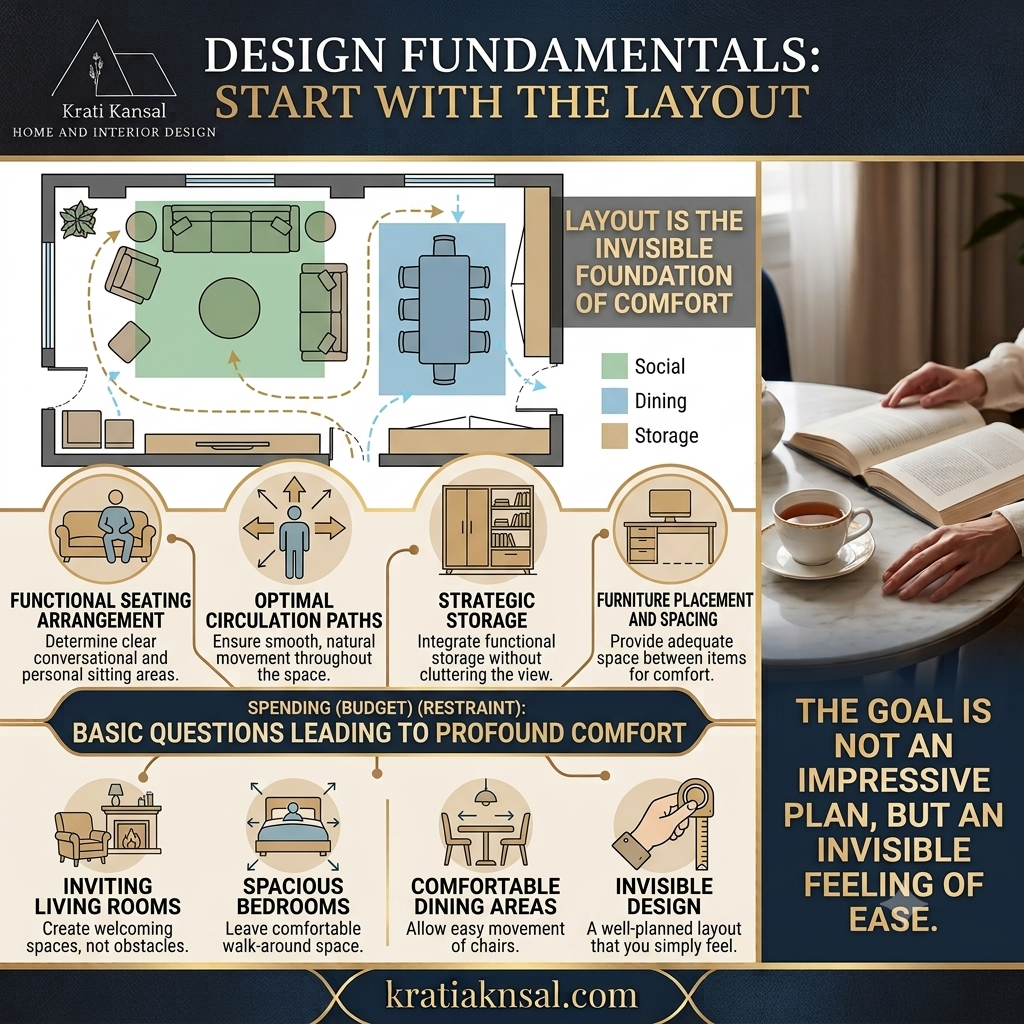
Before thinking about cushions, artwork or decorative pieces, think about how the room is going to be used.
Where will people sit?
How will they move around?
Where will things be stored?
Is there enough space between the furniture?
These questions sound basic, but they are incredibly important.
A living room should feel inviting rather than difficult to move through. A bedroom should leave enough room around the bed. A dining area needs comfortable space for chairs to move in and out.
A good layout almost becomes invisible.
You don’t walk into a well-planned room and think, “Wow, what an excellent circulation path.”
You just feel comfortable.
And that is exactly the point.
4. Good Materials Add Character
Materials have a huge effect on how a room feels.
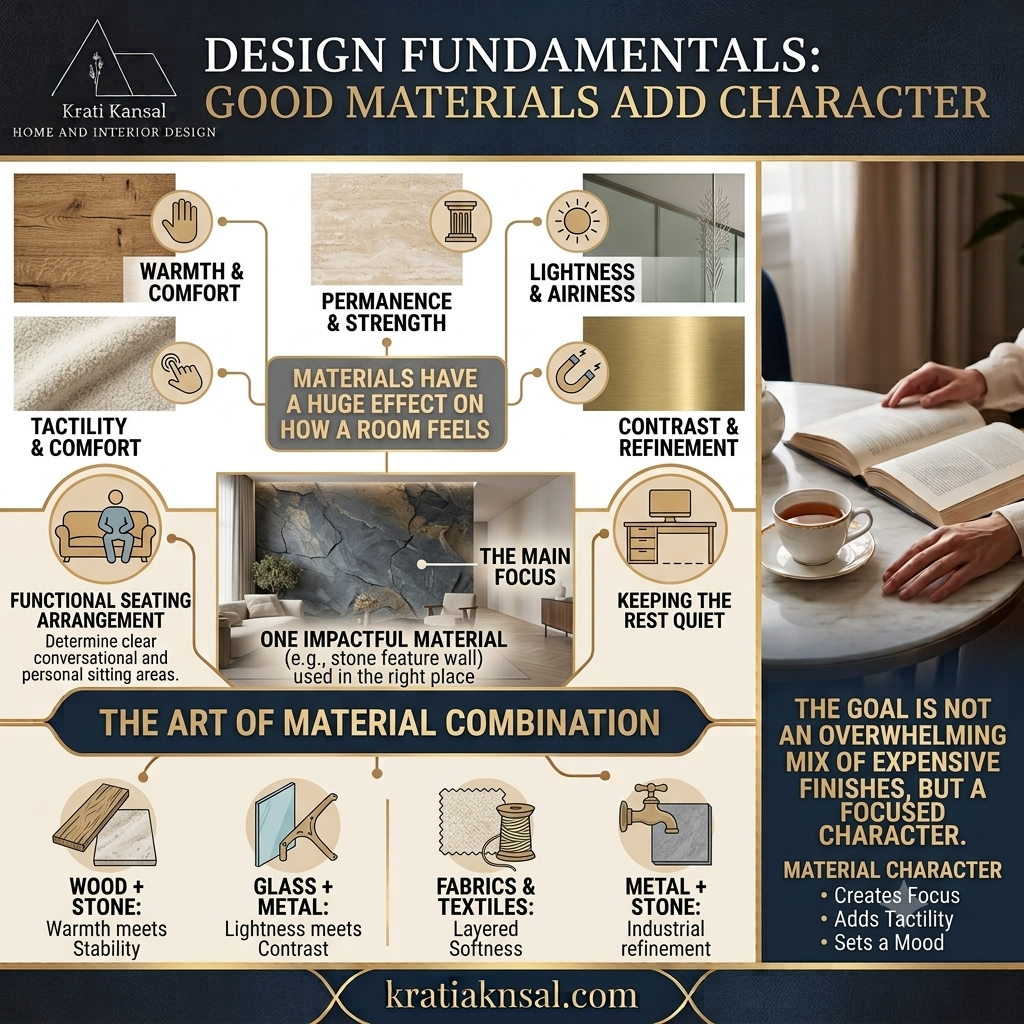
Wood can make a space warmer. Stone can add a sense of permanence. Glass can keep things feeling light. Metal can introduce a little contrast. Soft fabrics can make a room feel more comfortable.
The interesting part is how these materials are combined.
You don’t need five different types of stone, three kinds of wood and metallic details everywhere to make a room look premium.
In fact, doing too much can have the opposite effect.
One beautiful material used in the right place can have much more impact than several expensive finishes competing with each other.
For example, a natural stone feature wall can become the main focus of a room. The rest of the space can then be kept relatively quiet so that the stone actually gets noticed.
5. Lighting Can Change Everything
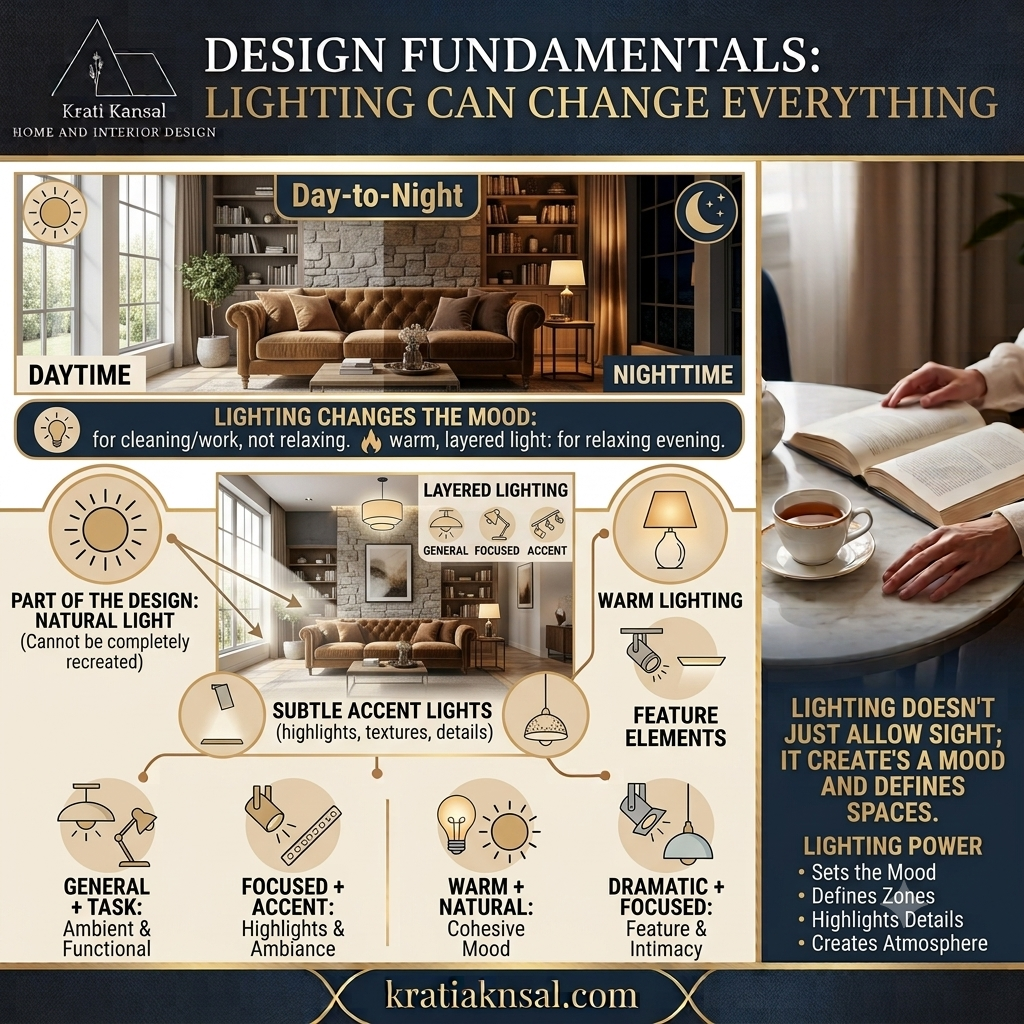
Have you ever seen a room during the day and then at night and felt like you were looking at two completely different spaces?
That’s the effect of lighting.
Lighting isn’t just there so that you can see.
It changes the mood.
A bright light might be useful when you need to clean or work, but it isn’t necessarily what you want when you’re relaxing in the evening.
This is why layered lighting works so well.
You can have general lighting for the room, focused lighting for specific activities and softer accent lighting to highlight artwork, textures or architectural details.
Warm lighting can make a room feel cosy. Subtle accent lights can add depth. Pendant lights can become a feature in themselves.
And whenever possible, natural light should be part of the design too.
There is something about daylight entering a well-planned room that artificial lighting simply cannot completely recreate.
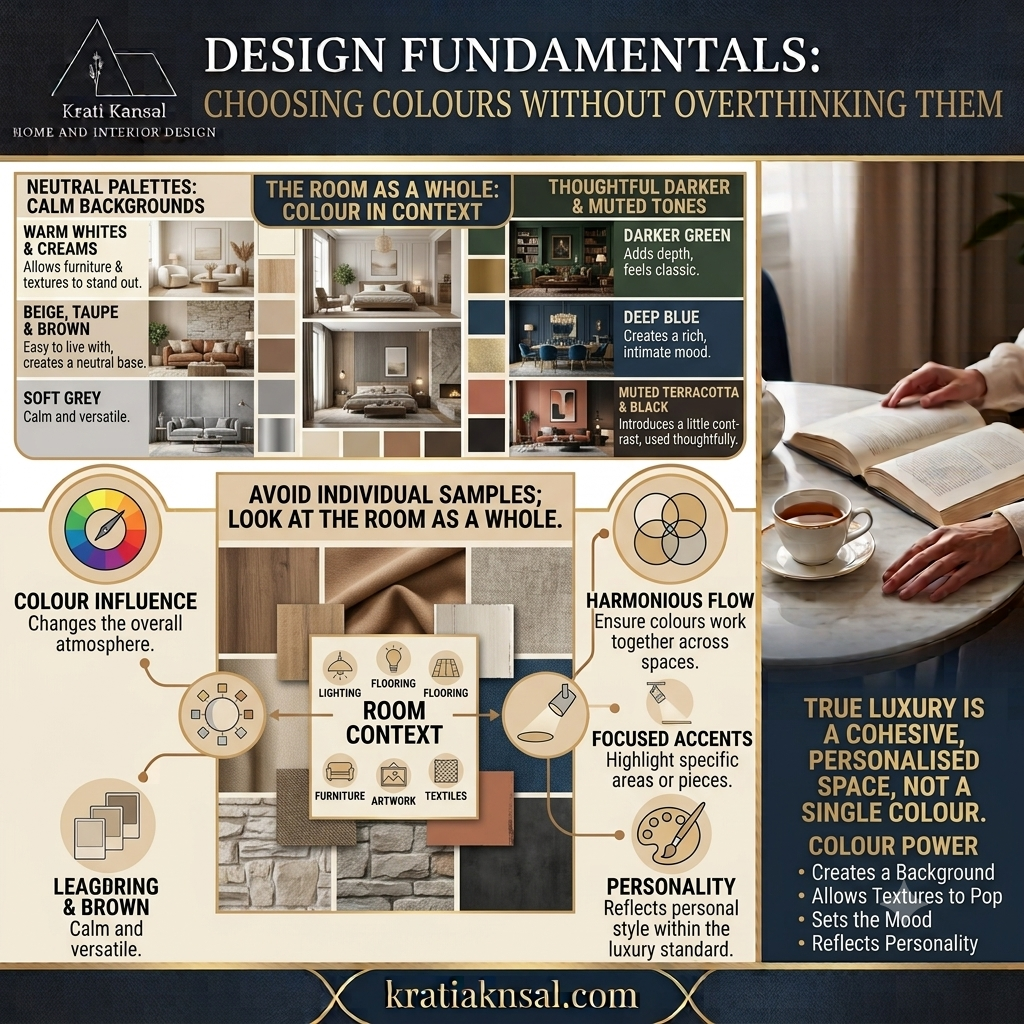
6. Choosing Colours Without Overthinking Them
Luxury interiors are often shown in neutral colours, and there is a reason for that.
Warm whites, creams, beige, taupe, brown and soft grey are easy to live with. They also create a calm background that allows furniture, textures and artwork to stand out.
But that doesn’t mean every luxury interior has to be beige.
A darker green, deep blue, muted terracotta or even black can work beautifully when used thoughtfully.
The important thing is to avoid choosing colours individually.
A colour might look beautiful on a sample but completely different when placed next to your flooring, furniture and lighting.
The room needs to be looked at as a whole.
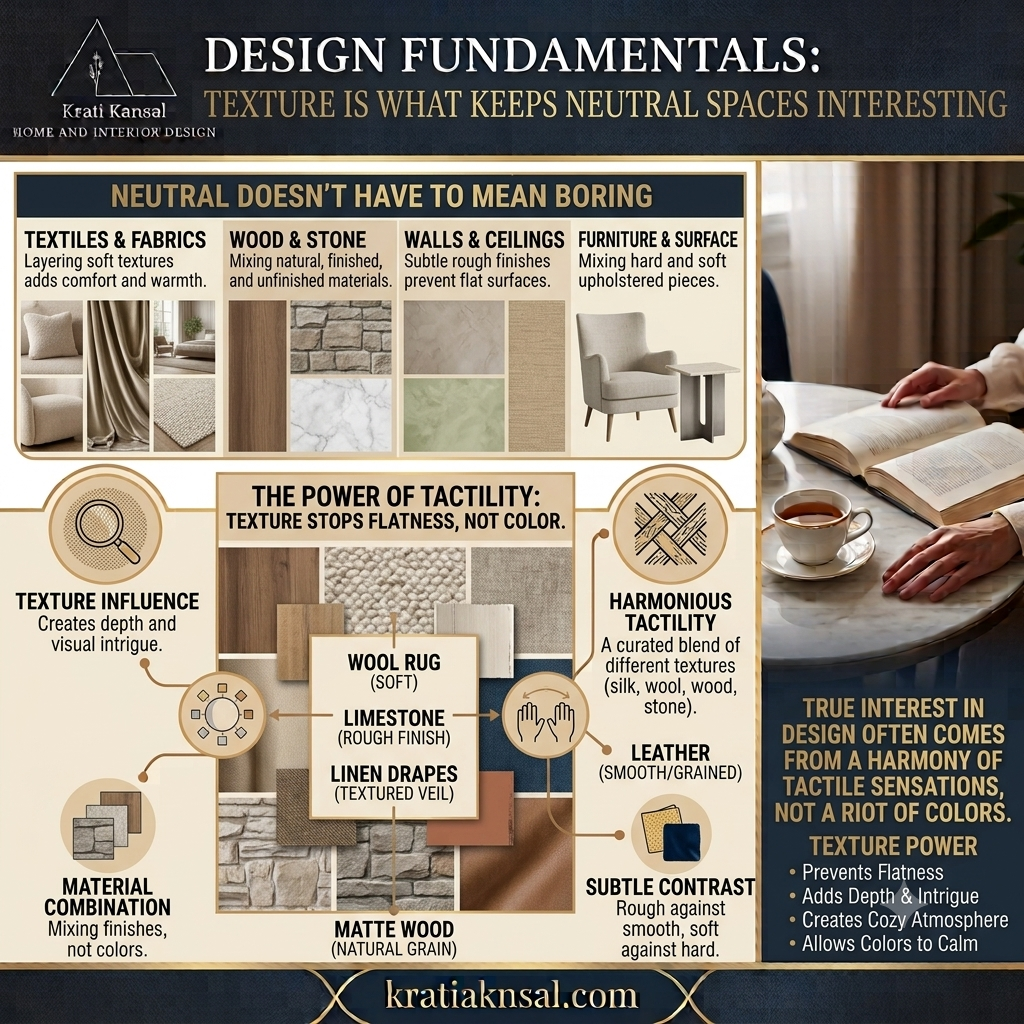
7. Texture Is What Keeps Neutral Spaces Interesting
Neutral doesn’t have to mean boring.
If a room has similar colours everywhere, texture becomes especially important.
Think about a soft rug, linen curtains, an upholstered chair, natural wood, a slightly rough wall finish and a smooth stone surface.
The colours may be quite simple, but the different textures stop the room from feeling flat.
This is one of the things that makes interiors interesting.
You don’t always need to add another colour to make a room more interesting.
Sometimes changing the texture is enough.
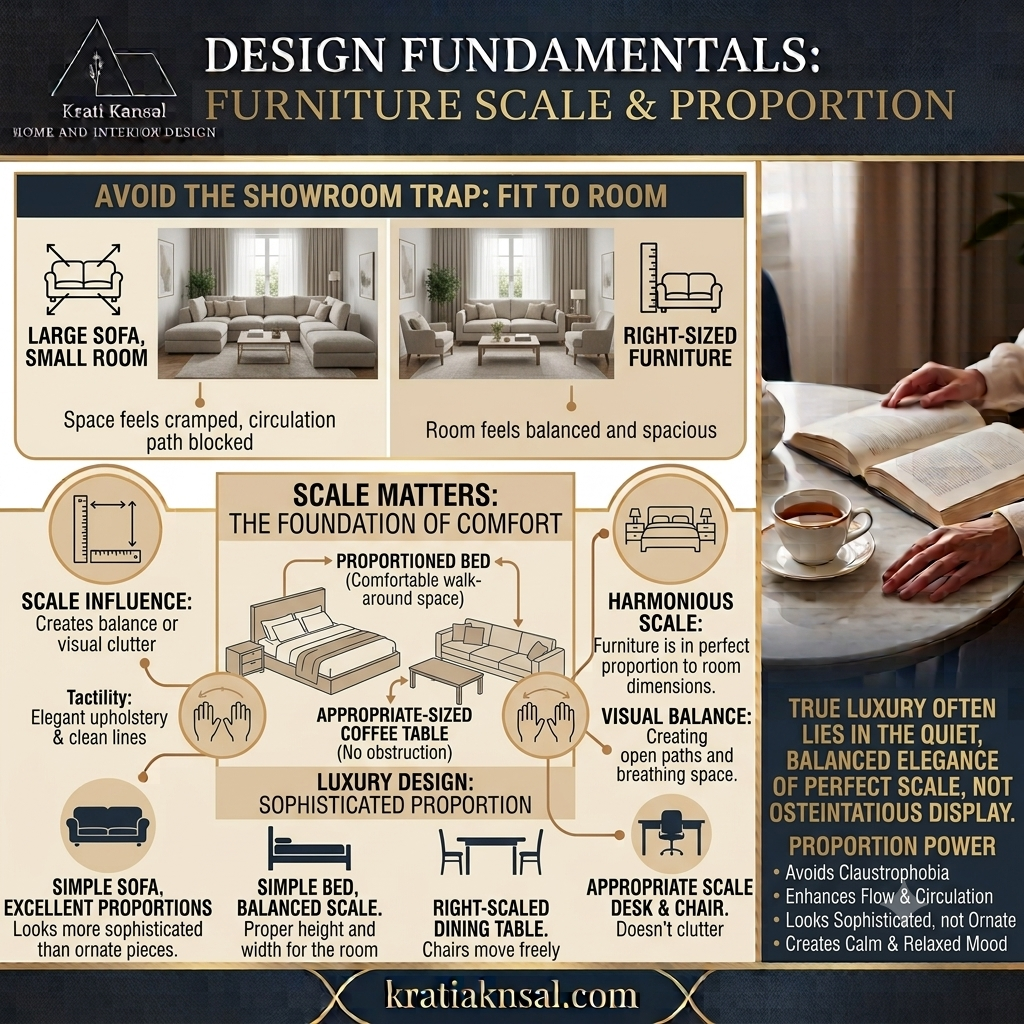
8. Furniture Should Fit the Room
A piece of furniture can look amazing in a photograph and still be completely wrong for your room.
This happens more often than people realise.
A large sectional might look impressive online, but if it takes up most of your living room, it will make the space feel smaller.
The same applies to coffee tables, beds, dining tables and even accent chairs.
Scale matters.
Luxury furniture also doesn’t necessarily have to be dramatic.
A simple sofa with beautiful proportions and good upholstery can look far more sophisticated than an overly decorative piece.
The furniture should feel comfortable and appropriate for the room rather than simply trying to attract attention.
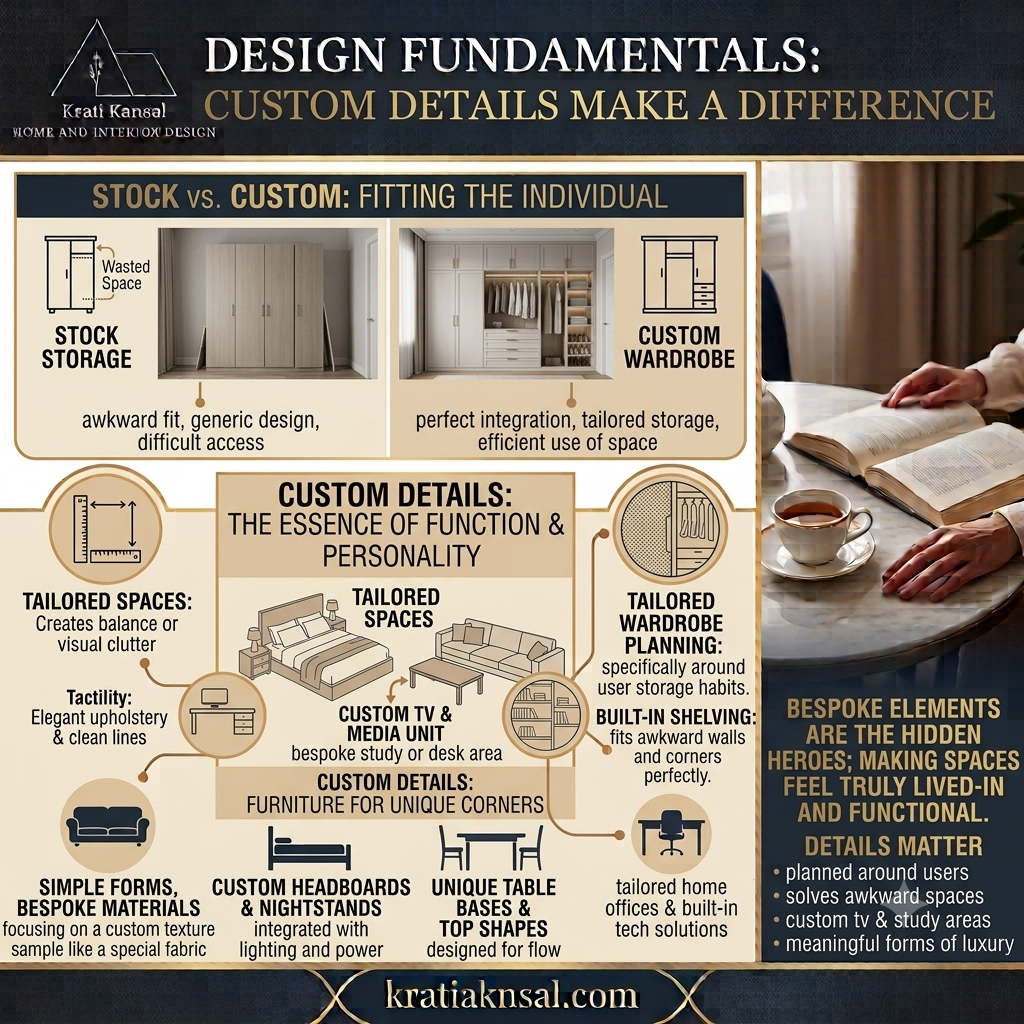
9. Custom Details Make a Difference
There is something special about a space that has been designed around the person using it.
Maybe it is a wardrobe planned specifically around someone’s storage habits.
Maybe it is built-in shelving that fits an awkward wall perfectly.
Maybe it is a custom TV unit, a study area or a piece of furniture designed for a particular corner.
These details aren’t always the first things you notice.
But they make the space work better.
And when a room works well, it feels better to live in.
That, to me, is a much more meaningful form of luxury than simply adding another expensive decorative object.
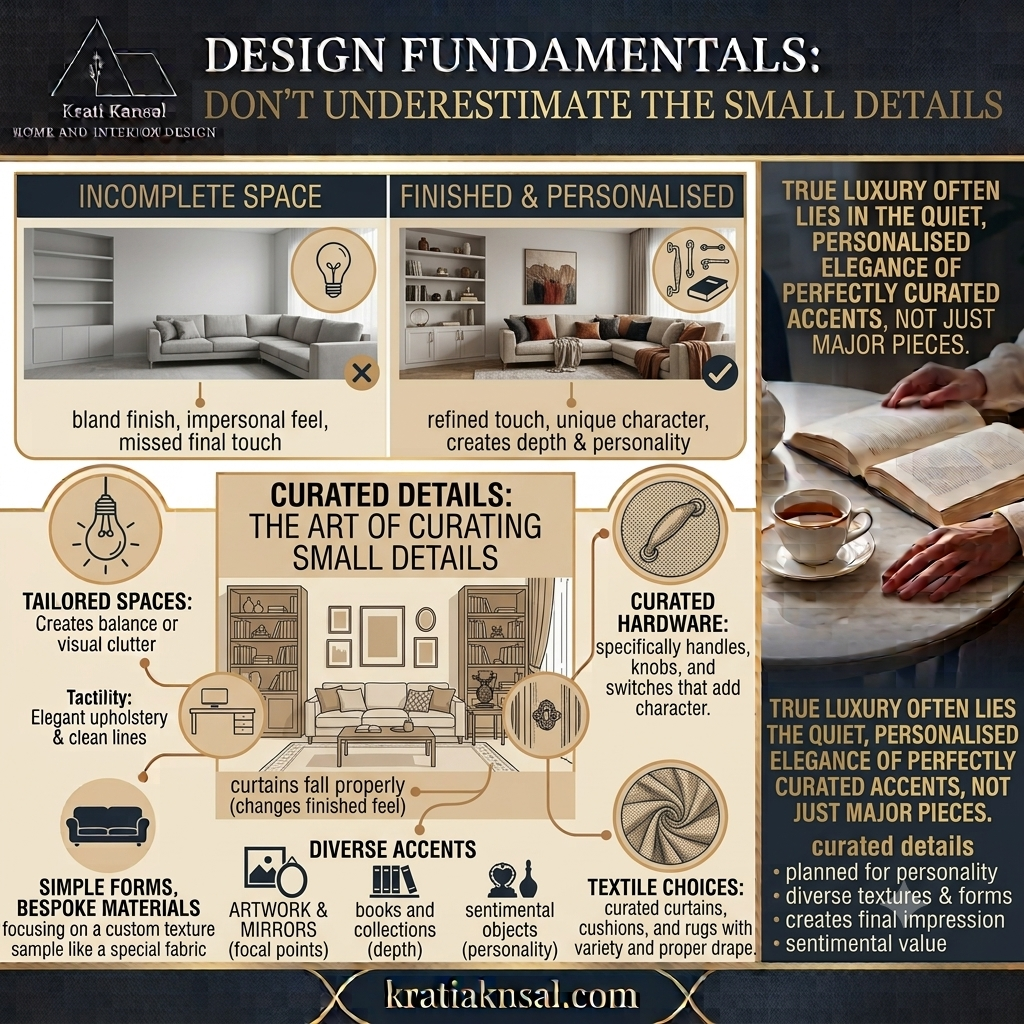
10. Don't Underestimate the Small Details
Once the major elements are in place, the smaller details start to matter.
Handles.
Switches.
Curtains.
Cushions.
Rugs.
Mirrors.
Artwork.
Decorative objects.
Even the way curtains fall against the floor can change how finished a room feels.
These things might seem minor individually, but together they create the final impression.
This is also where personality can come into the design.
A home shouldn’t look as though it has been copied directly from Pinterest.
If someone loves a particular artwork, has a collection of books, prefers a certain colour or has an object with sentimental value, there should be room for those things.
Perfect doesn’t always mean personal.
11. Sometimes Less Really Is More
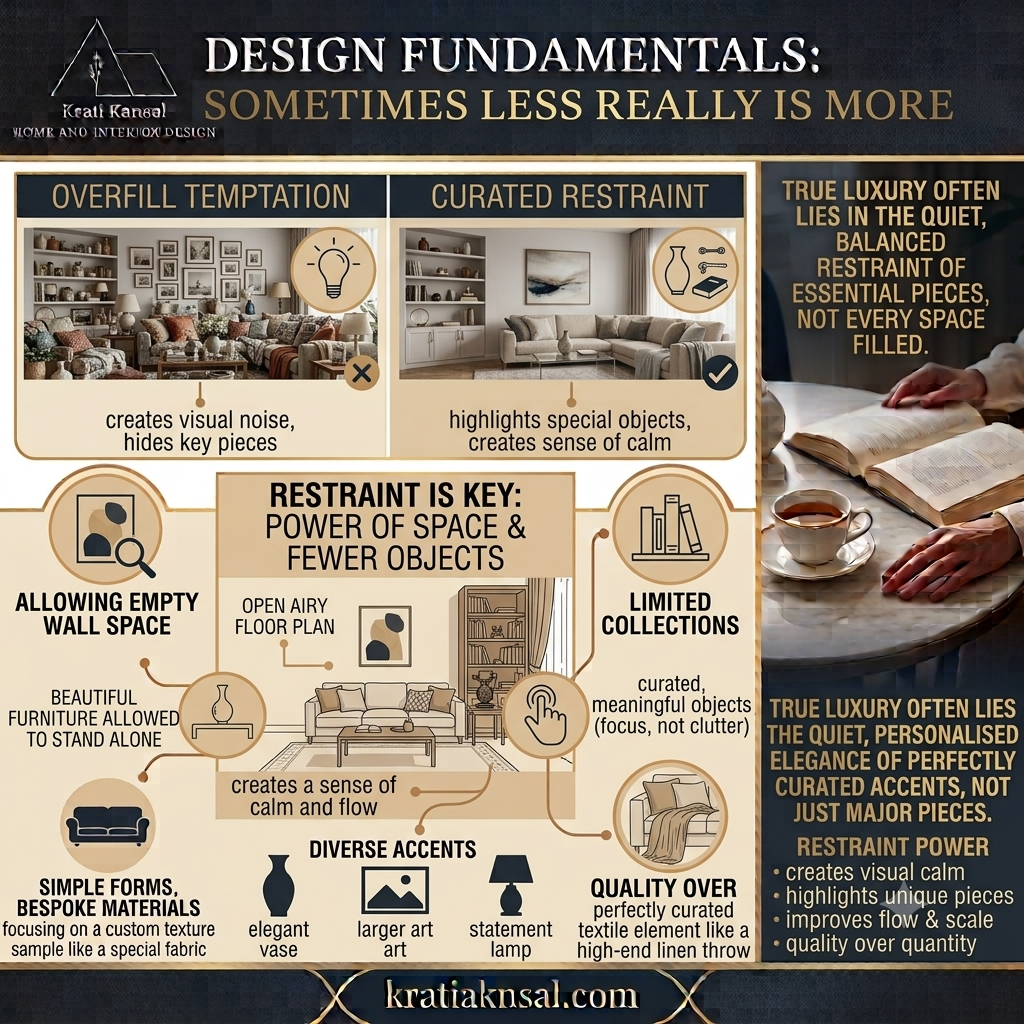
There is a temptation to keep adding things when a room doesn’t feel finished.
Another cushion.
Another vase.
Another wall decoration.
Another lamp.
But sometimes the room doesn’t need another object.
It needs space.
Leaving part of a wall empty or allowing a beautiful piece of furniture to stand on its own can actually make it more noticeable.
This is where restraint becomes important.
Luxury doesn’t have to fill every corner.
12. Creating a Timeless Interior
Interior trends are fun.
There is always a new colour, material, furniture shape or design style becoming popular.
And there is nothing wrong with taking inspiration from them.
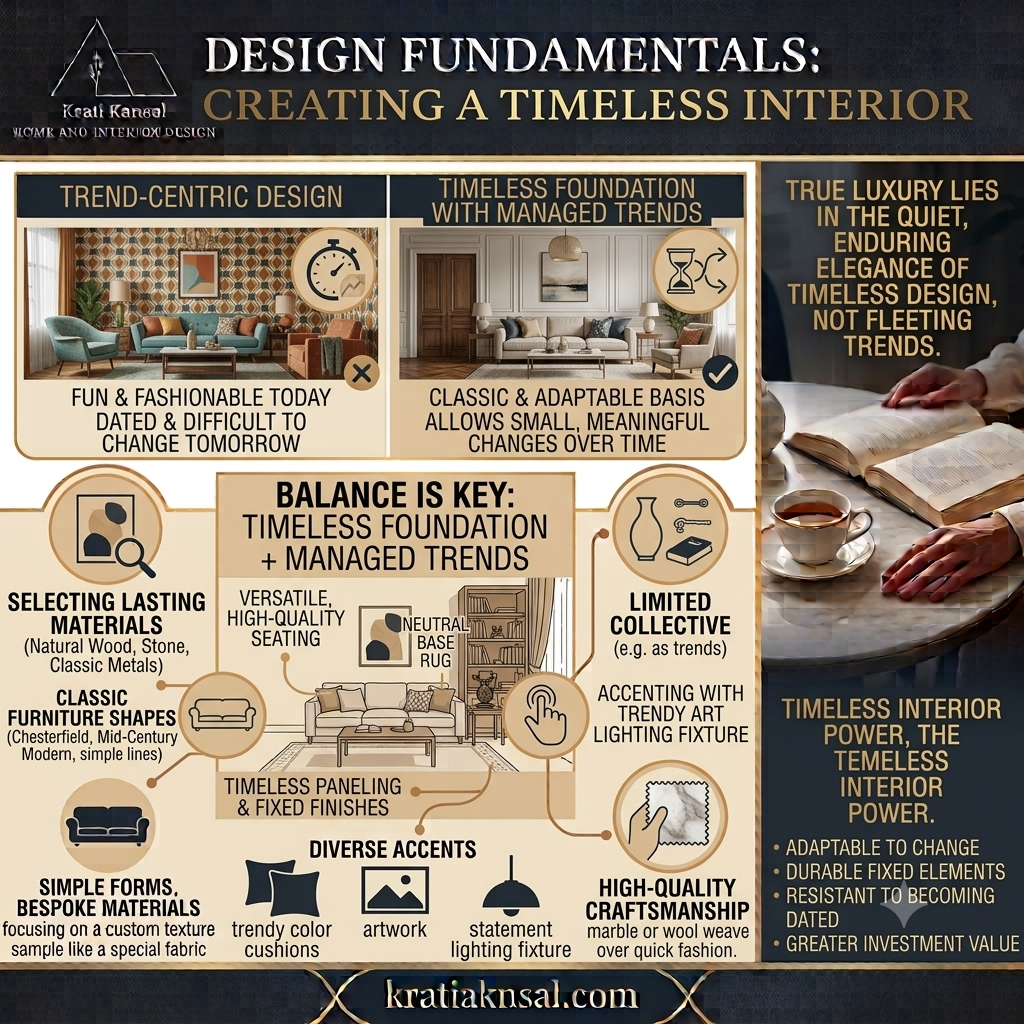
The problem comes when the entire room is designed around a trend.
A trend can look amazing today and feel dated a few years later.
Instead, it can be better to use trends in smaller, easier-to-change elements.
Maybe you love a particular colour. Use it in cushions, artwork or an accent chair.
Maybe you like a certain lighting style. Use one statement fixture rather than putting the same design everywhere.
The foundation of the room should still feel timeless.
That way, the space can change with you.
13. Does a Luxury Home Have to Be Large?
Definitely not.
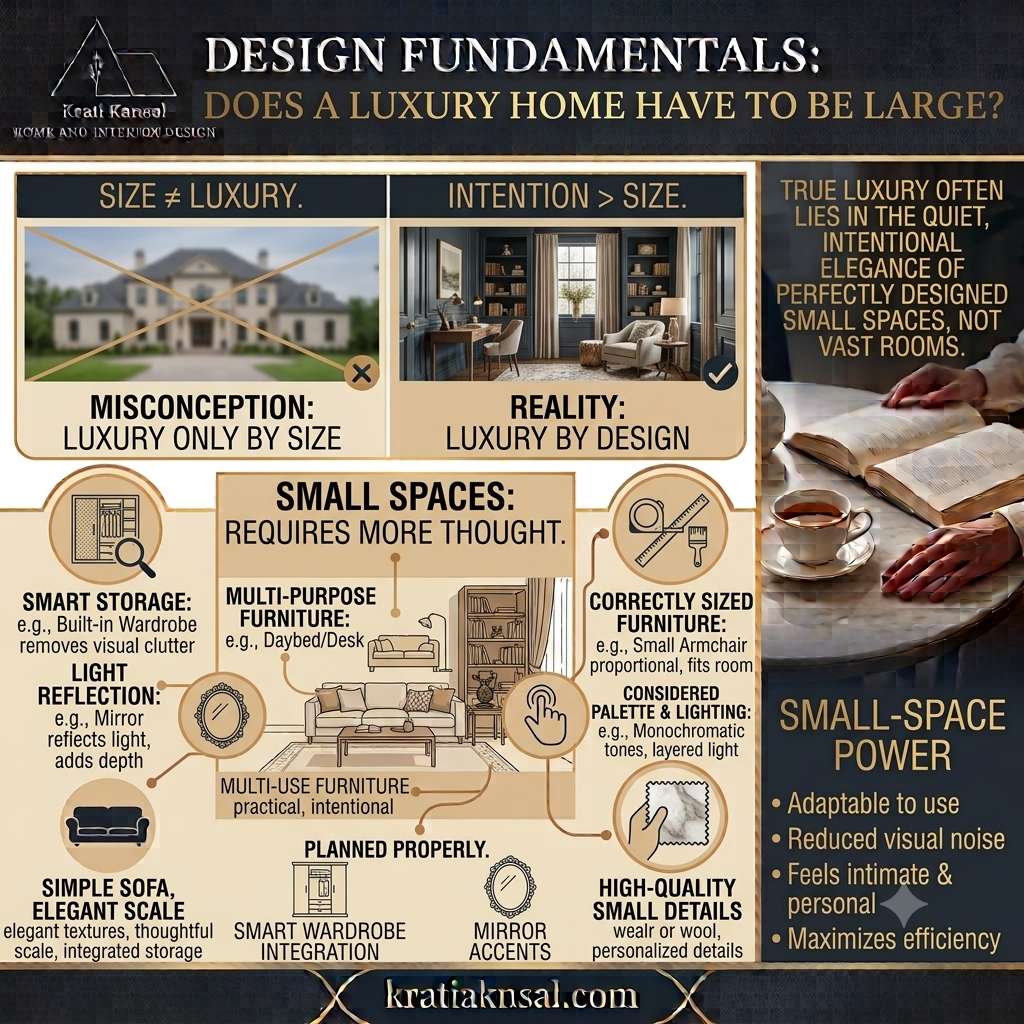
Size has very little to do with whether a space feels luxurious.
A smaller home can feel incredibly elegant when every part of it has been planned properly.
In fact, smaller spaces often require even more thought.
Storage becomes important. Furniture needs to be correctly sized. Colours and lighting need to be considered carefully.
A built-in wardrobe can remove visual clutter. A mirror can help reflect light. Multi-purpose furniture can make a room more practical.
The goal isn’t to make a small room pretend to be a huge one.
It is to make the room feel comfortable and intentional.
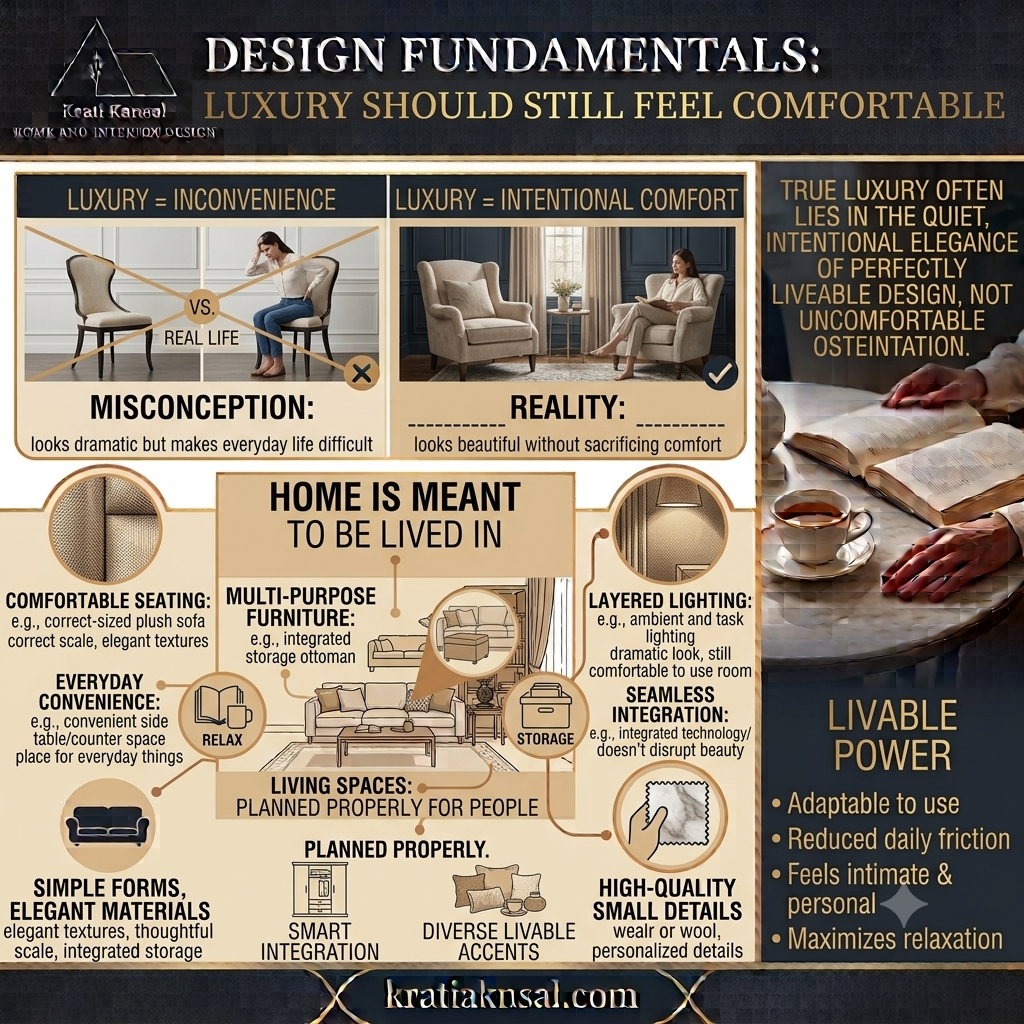
14. Luxury Should Still Feel Comfortable
This is something that can easily get lost when we talk about luxury design.
A room can look incredible in photographs but be uncomfortable in real life.
Maybe the sofa looks beautiful but isn’t comfortable to sit on.
Maybe there is nowhere to put everyday things.
Maybe the lighting looks dramatic but is too dark to actually use the room comfortably.
A home is meant to be lived in.
People sit on the sofas. They eat at the dining table. They leave things on counters. They need storage. They need places to relax.
Good design takes all of that into account.
The most successful interiors manage to look beautiful without making everyday life difficult.
15. Luxury Can Be Quiet
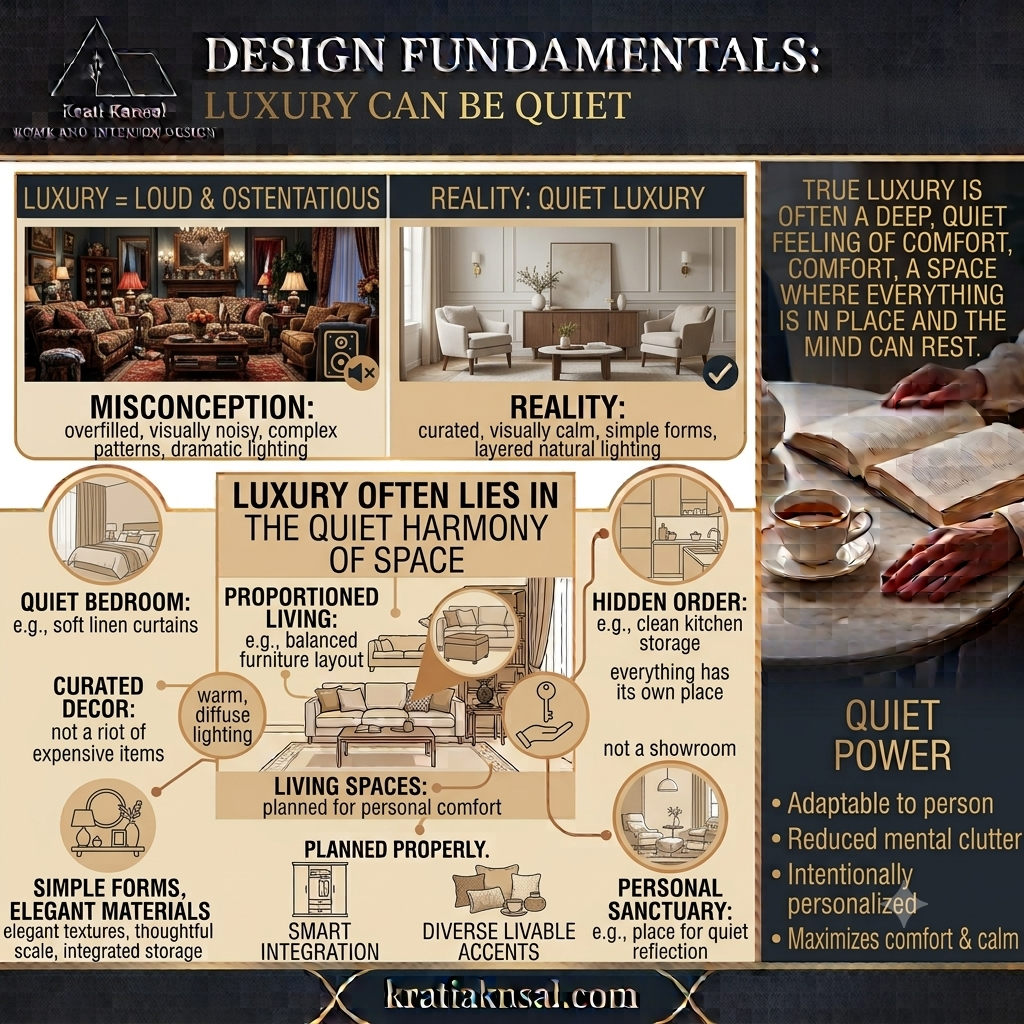
Not every luxury interior needs to make a statement.
Sometimes luxury is a quiet bedroom with soft curtains and warm lighting.
Sometimes it is a beautifully proportioned living room with just a few carefully chosen pieces.
Sometimes it is a clean kitchen where everything has its own place.
Sometimes it is simply walking into your home after a long day and feeling comfortable.
That feeling is difficult to photograph, but it is one of the most important parts of good interior design.
16. The Importance of Personal Style
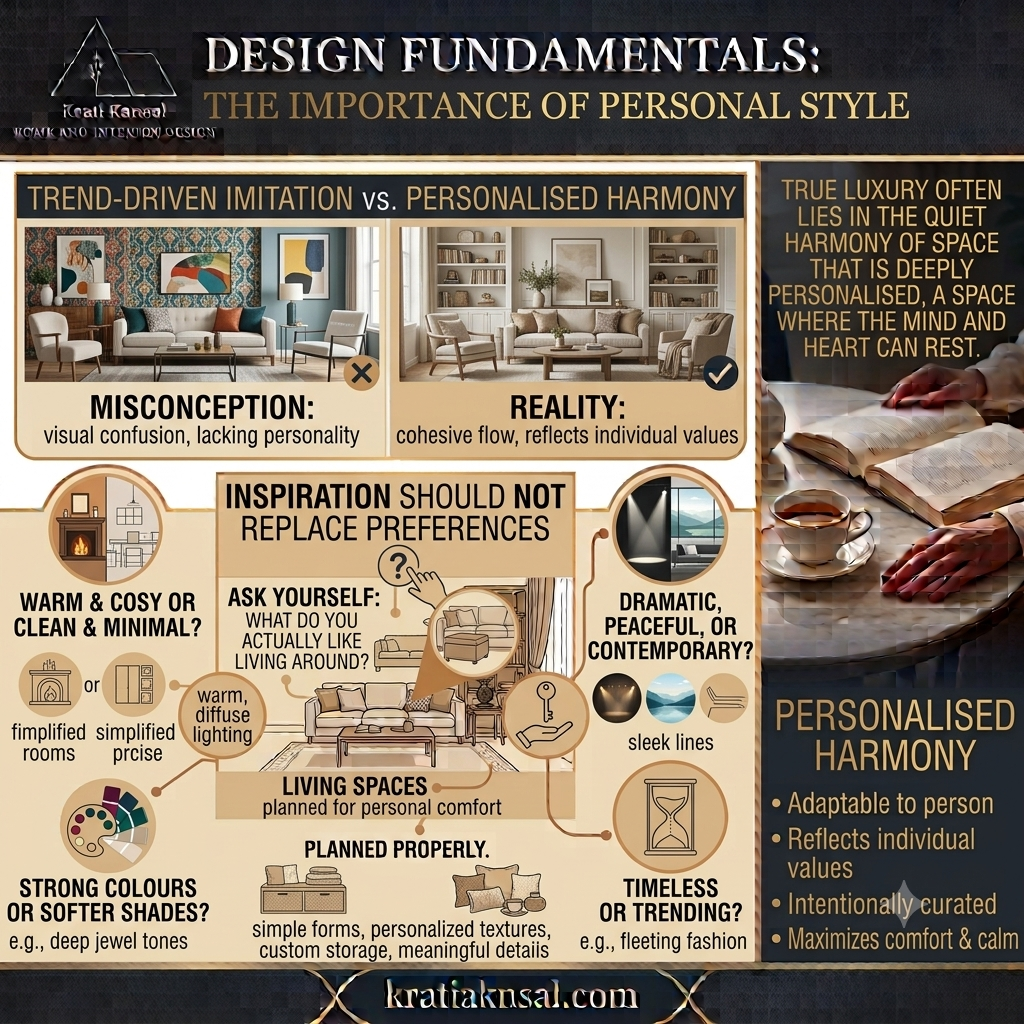
There are countless beautiful interiors online.
It is very easy to save hundreds of images and end up wanting all of them.
One room has beautiful wooden walls.
Another has a dramatic black kitchen.
Another has soft neutral furniture.
Another has colourful artwork.
The problem is that putting all those ideas together doesn’t necessarily create a cohesive home.
Inspiration is useful, but it shouldn’t replace your own preferences.
Ask yourself what you actually like living around.
Do you prefer warm and cosy spaces or clean and minimal ones?
Do you like strong colours or softer shades?
Do you want your home to feel dramatic, peaceful, contemporary or timeless?
There are no wrong answers.
The best interiors are often the ones that reflect the person living there rather than whatever happens to be trending.
17. Common Luxury Interior Design Mistakes
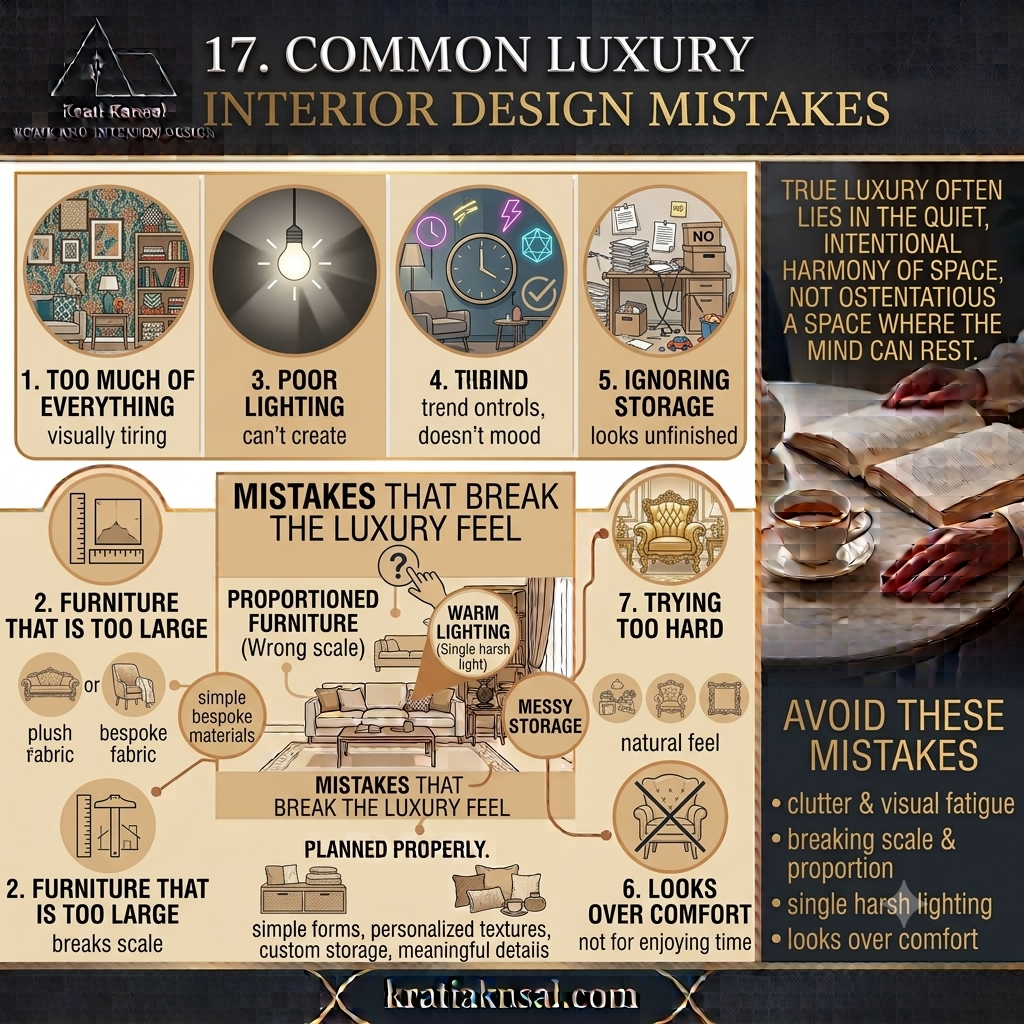
Even with a good budget, a few mistakes can change the entire feel of a space.
Too Much of Everything
Using too many colours, materials and decorative elements can make a room visually tiring.
Furniture That Is Too Large
A beautiful piece can still be wrong if it doesn’t suit the scale of the room.
Poor Lighting
One bright ceiling light cannot create every mood a room needs.
Following Trends Blindly
A trend should inspire your design, not control it.
Ignoring Storage
Clutter can make even an expensive interior look unfinished.
Choosing Looks Over Comfort
A home should be beautiful, but it should also be somewhere you actually enjoy spending time.
Trying Too Hard to Look Luxurious
This may sound strange, but it happens.
Sometimes the desire to make a room look expensive leads to too much gold, too much shine or too many statement pieces.
Luxury becomes much more convincing when it feels natural.
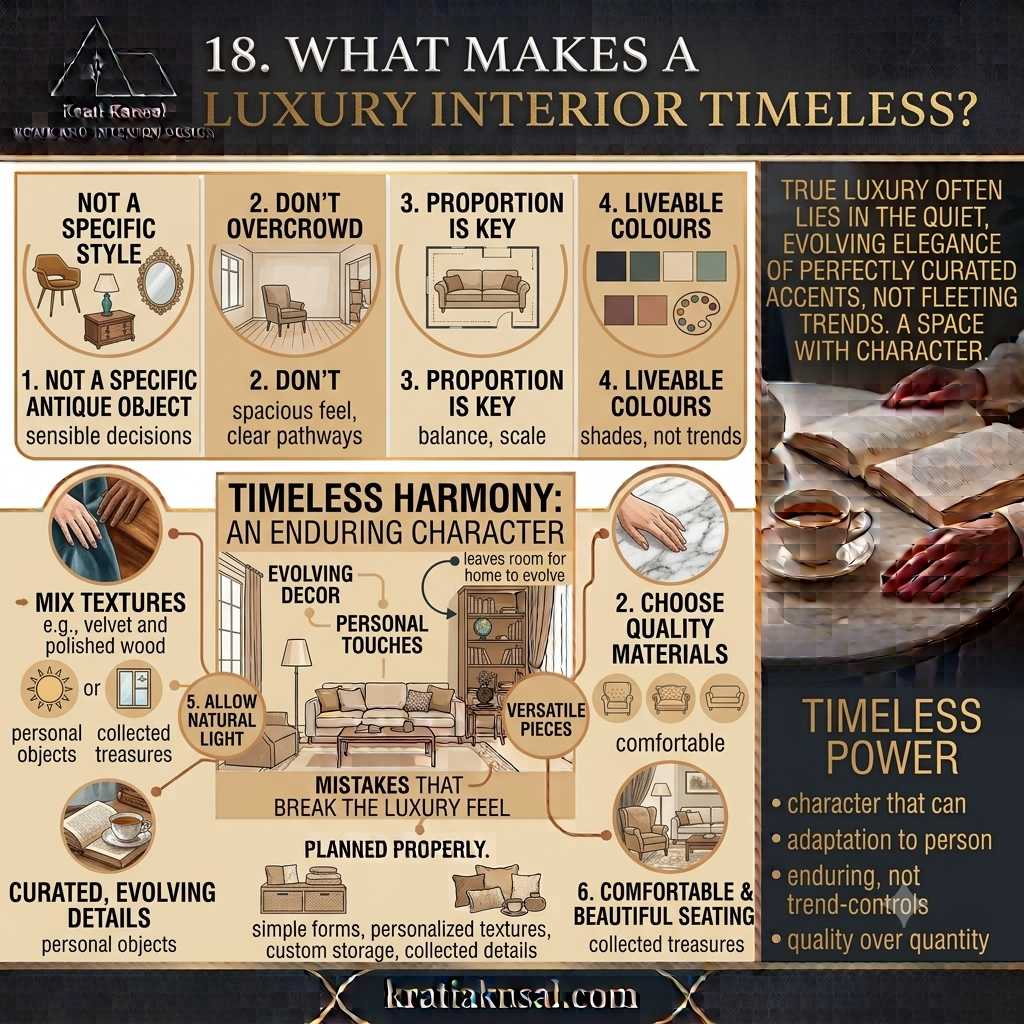
18. What Makes a Luxury Interior Timeless?
There isn’t one specific colour or furniture style that guarantees a timeless interior.
It usually comes from making sensible decisions.
Choose quality where it matters.
Don’t overcrowd the room.
Pay attention to proportion.
Use colours that you can comfortably live with.
Allow natural light into the space.
Mix textures.
Choose furniture for both appearance and comfort.
And leave room for the home to evolve.
A timeless interior isn’t necessarily one that looks exactly the same for twenty years.
It is one that can change without losing its character.
19. Luxury Is Ultimately About How a Space Makes You Feel
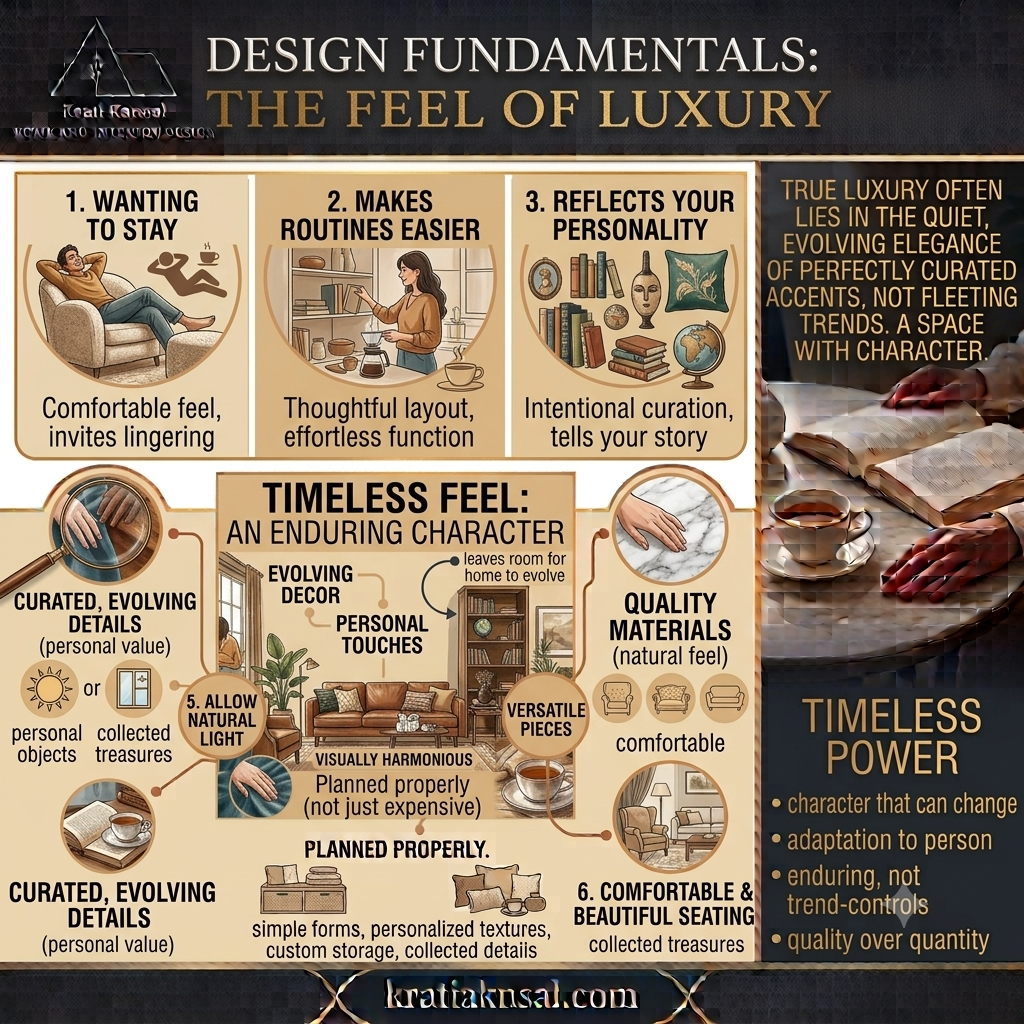
After all the discussions about materials, furniture, colours and lighting, there is one thing that matters more than everything else.
How does the space make you feel?
Does it make you want to stay a little longer?
Does it feel comfortable?
Does it make everyday routines easier?
Does it reflect your personality?
Does it still feel good when the photographs are no longer being taken?
Those are the questions worth asking.
Because an interior isn’t successful simply because it looks expensive.
It is successful when it feels right.
20. Final Thoughts
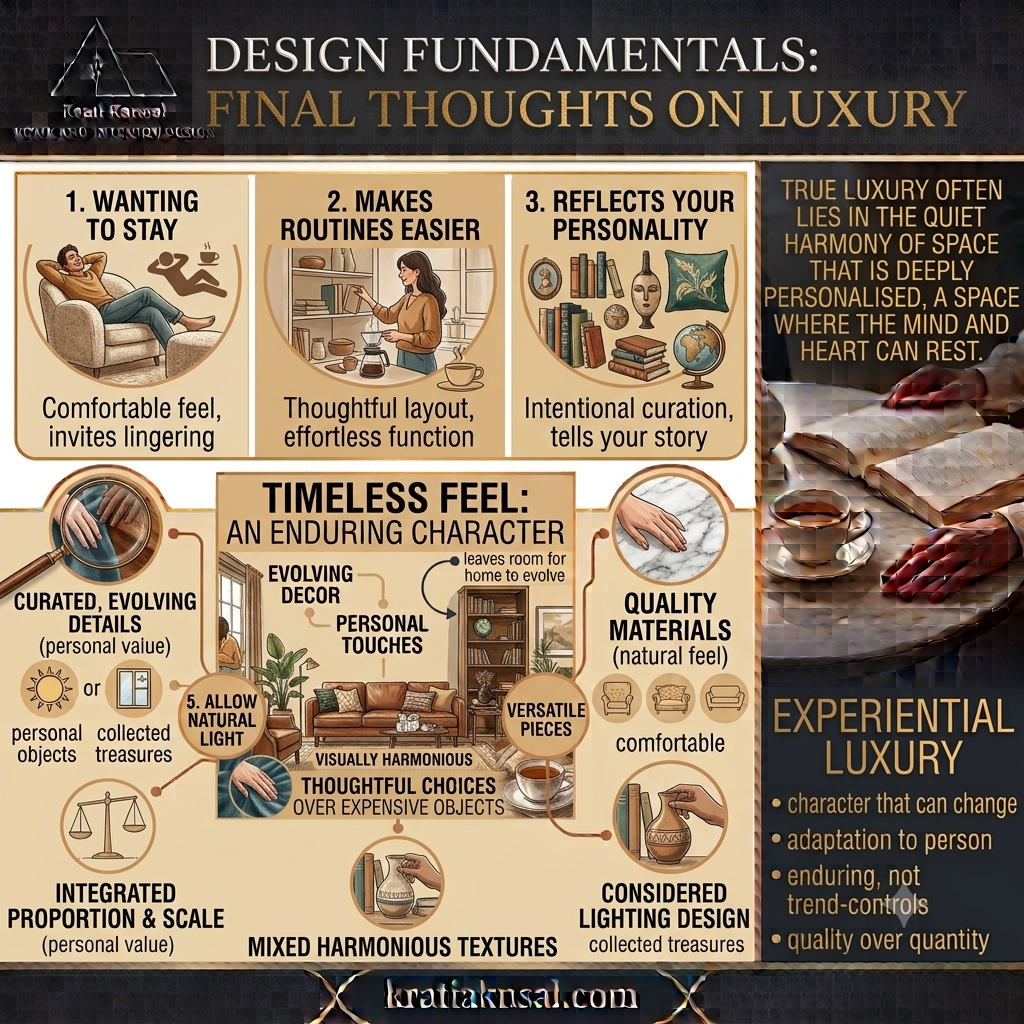
Luxury interior design isn’t about filling a room with expensive things.
It is about making thoughtful choices.
It is about knowing when to add something and when to leave the space alone. It is about choosing materials that work together, planning lighting properly and making sure the furniture actually suits the room.
Most importantly, it is about creating a space that feels personal.
A home doesn’t need to look like a five-star hotel to feel luxurious.
It can be simple.
It can be warm.
It can be minimal.
It can have imperfections.
It can have things that mean something to the people living there.
The best luxury interiors aren’t necessarily the ones that make you say “that’s expensive.”
They are the ones that make you want to sit down, stay for a while and feel completely at home.
Because real luxury isn’t just something you see. It’s something you experience.
Ready to Create a Space That Feels Like You?
A beautiful interior starts with understanding the space, the lifestyle and the people who will use it.
From the initial idea to materials, furniture, lighting and final styling, every decision has a part to play.
If you’re planning a new interior or thinking about giving an existing space a completely different feel, explore our approach and see how thoughtful design can turn an ordinary space into something that feels genuinely yours.