
There is something exciting about designing your own home.
You start with one idea, then another. You save a living room you like, find a kitchen you love, change your mind about the bedroom colour and suddenly have fifty screenshots sitting in your phone.
And then comes the practical question:
Do I actually need an interior designer?
Not necessarily.
There are plenty of projects that homeowners can handle themselves. But there are also projects where professional help can save a great deal of time, confusion and, sometimes, money.
The difference usually comes down to the size of the project, how much time you have and how comfortable you are making decisions along the way.
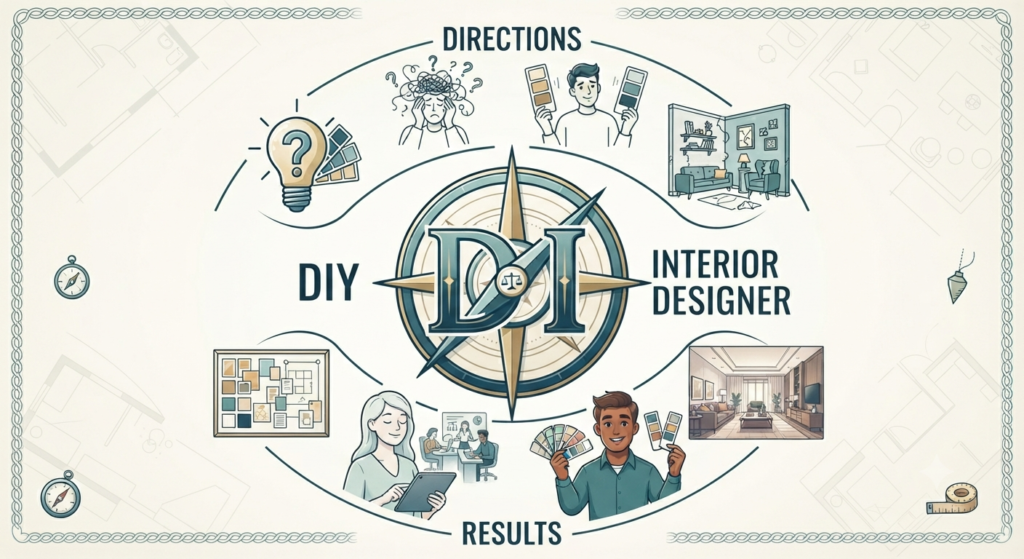
When Doing It Yourself Makes Sense
If you’re refreshing a single room, DIY can be a great option.
Perhaps the furniture is still working, but the room feels dated. You might repaint the walls, change the lighting, add curtains, replace a rug and rearrange the furniture.
That’s a manageable project.
It can also be enjoyable. You get to make every decision yourself, and there is a certain satisfaction in looking around afterwards and knowing, I put this together.
DIY becomes harder when the project starts involving several rooms, custom furniture, electrical changes, carpentry, plumbing or multiple vendors.
At that point, you’re no longer just decorating.
You’re managing a project.
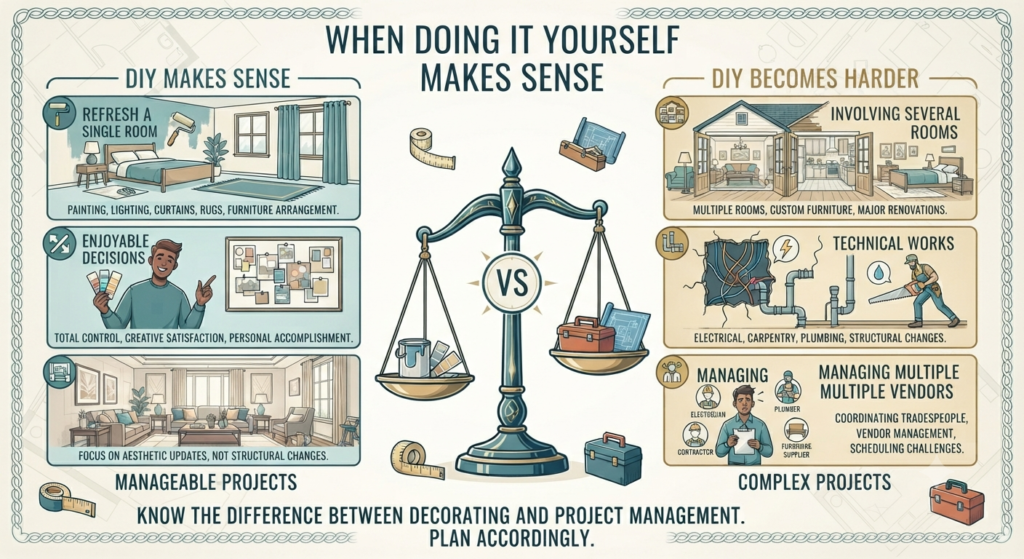
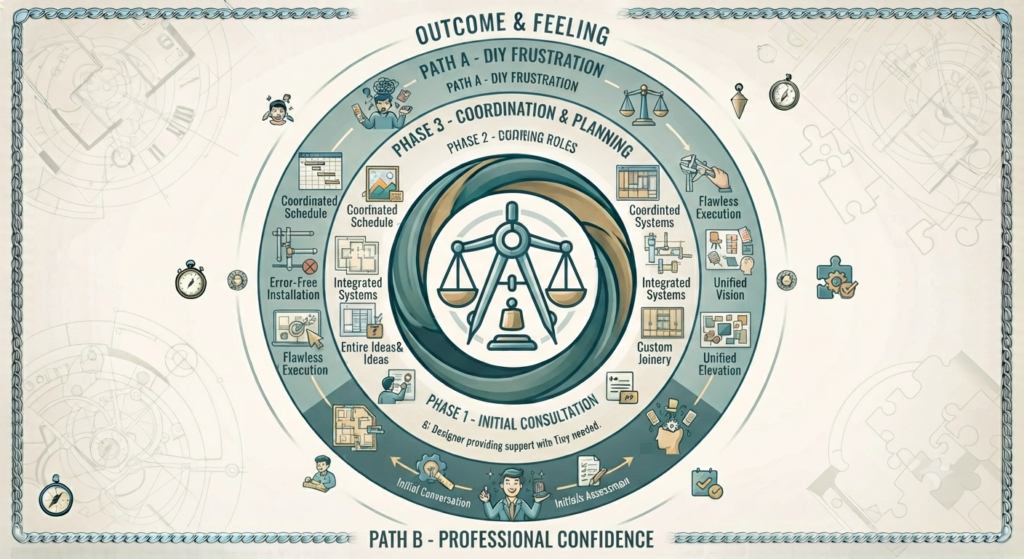
The Part Nobody Sees in a Pinterest Image
A finished interior photograph makes everything look straightforward.
The sofa is in place. The lights are on. The curtains fall perfectly. Nothing looks unfinished.
What you don’t see is everything that happened before that photograph was taken.
Someone had to measure the room.
Someone had to decide where the furniture would go.
Electrical points had to be planned. Materials had to be selected. Measurements had to be checked. Furniture had to be ordered. Installations had to be coordinated.
And when something doesn’t arrive on time or doesn’t fit as expected, someone has to deal with it.
This is often the biggest difference between looking at an interior project and actually managing one.
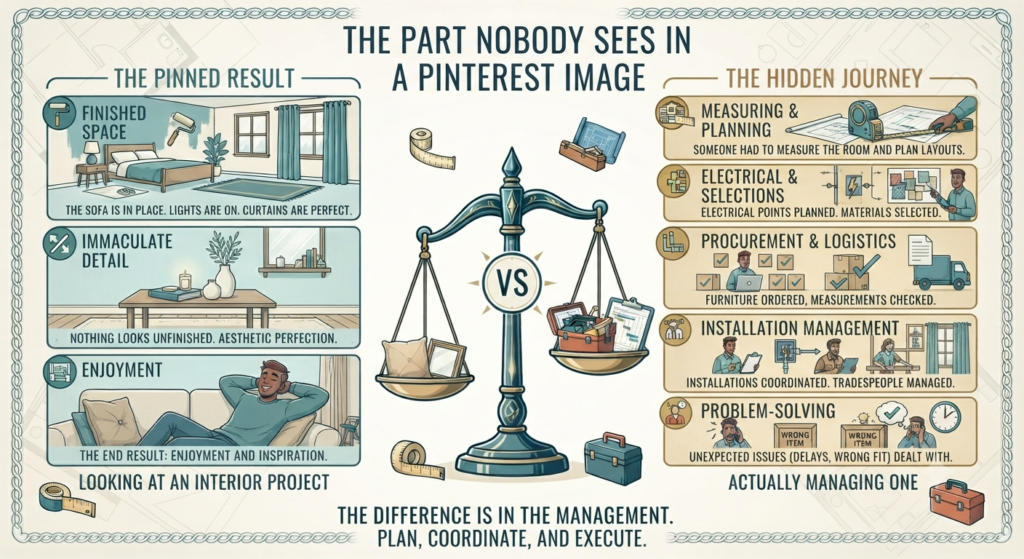
So, What Does an Interior Designer Bring to the Table?
An interior designer isn’t simply someone who chooses cushions and wall colours.
A designer looks at the project as a connected whole.
The layout affects the furniture.
The furniture affects the electrical planning.
The storage affects how much space remains.
The materials affect maintenance.
Even small decisions can have consequences somewhere else.
Having someone consider those relationships from the beginning can make the process much easier to manage.
And you don’t necessarily have to give up your own ideas.
Quite the opposite.
Your preferences should be part of the starting point.
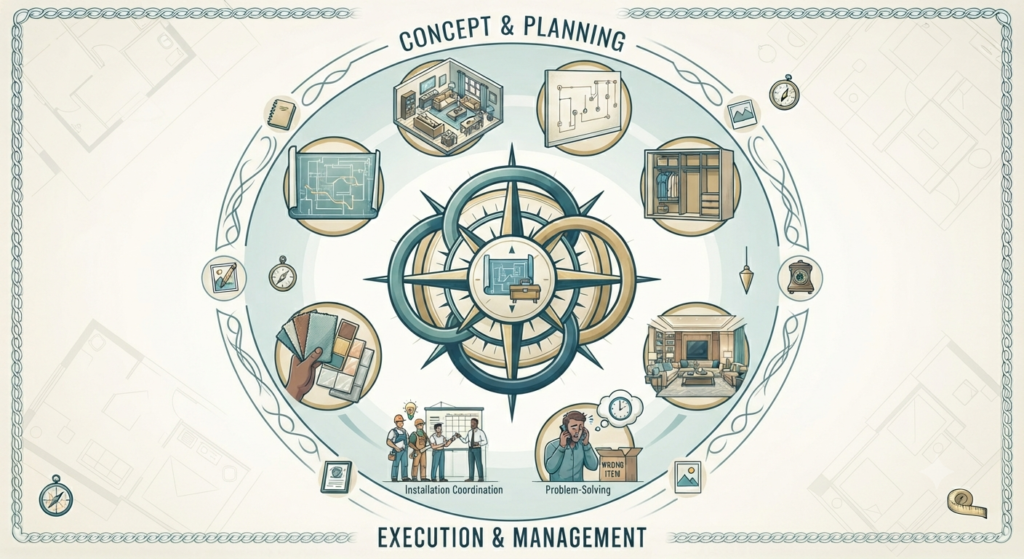
You Still Get to Have an Opinion
Hiring a designer doesn’t mean walking into your finished home and wondering where everything came from.
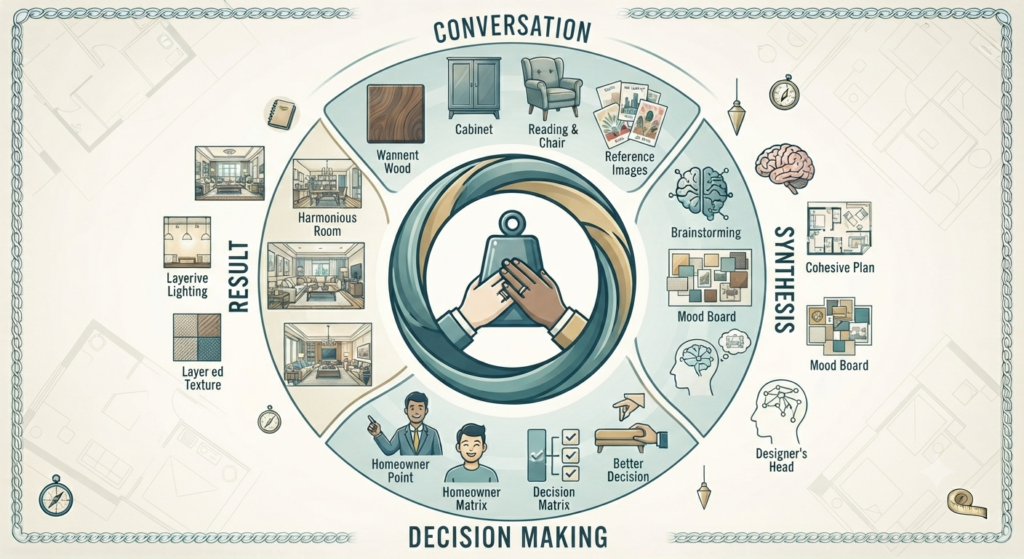
A good design process should involve conversations.
You can say that you love warm wood but don’t want a completely wooden interior. You can dislike open shelving. You can insist on having a comfortable reading chair in the bedroom. You can show five completely different reference images and explain what you like about each one.
Those details matter.
The designer’s role is to understand them and turn them into something that works together.
In that sense, professional design is less about telling someone what their home should look like and more about helping them make better decisions about their own space.
Time Is a Bigger Factor Than People Expect
Ask yourself how much time you realistically have.
Not how much time you wish you had.
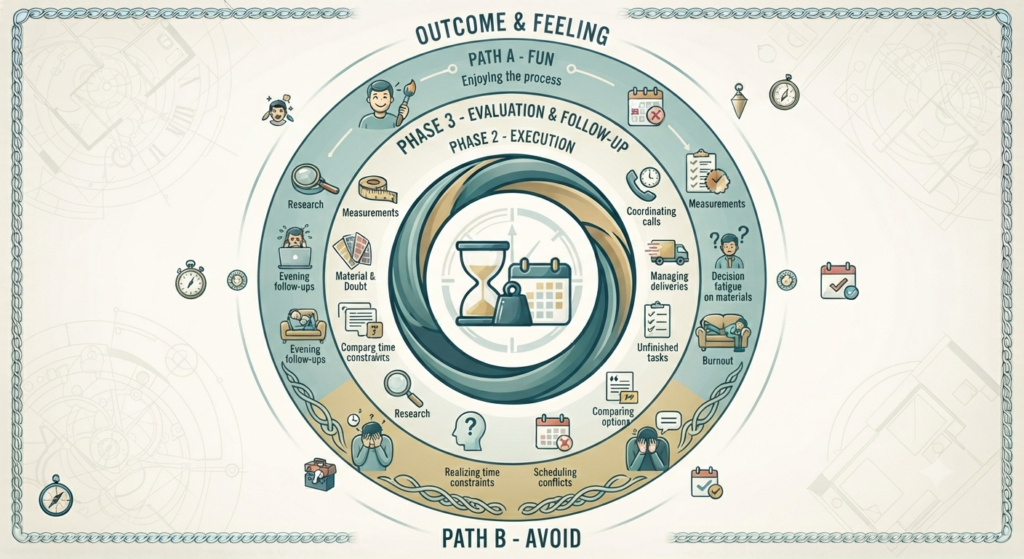
An interior project can involve research, calls, measurements, quotations, product comparisons, site visits, deliveries and follow-ups.
If you’re working or studying full-time, managing all of this can become exhausting.
You may begin with enthusiasm and end up spending your evenings chasing a delayed delivery or trying to decide between two nearly identical materials.
For some people, that’s part of the fun.
For others, it’s exactly what they wanted to avoid.
Is DIY Actually Cheaper?
It can be.
But it isn’t automatically cheaper.
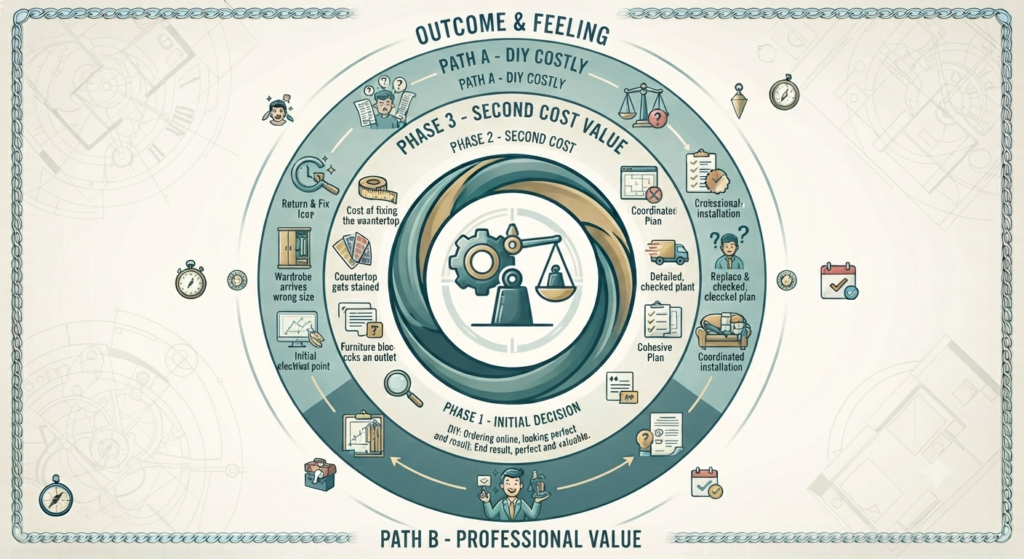
Suppose you order a wardrobe that looks perfect online but turns out to be the wrong size. Or you choose a countertop without considering how it will be used. Maybe an electrical point needs to be moved after the furniture has already been installed.
Now there is a second cost: fixing the first decision.
Professional design adds a fee, but planning can also reduce certain avoidable mistakes.
That doesn’t mean a designer will magically make every project cheaper. It simply means the cost of design should be considered alongside the value of planning, coordination and expertise.
There Is Also a Middle Ground
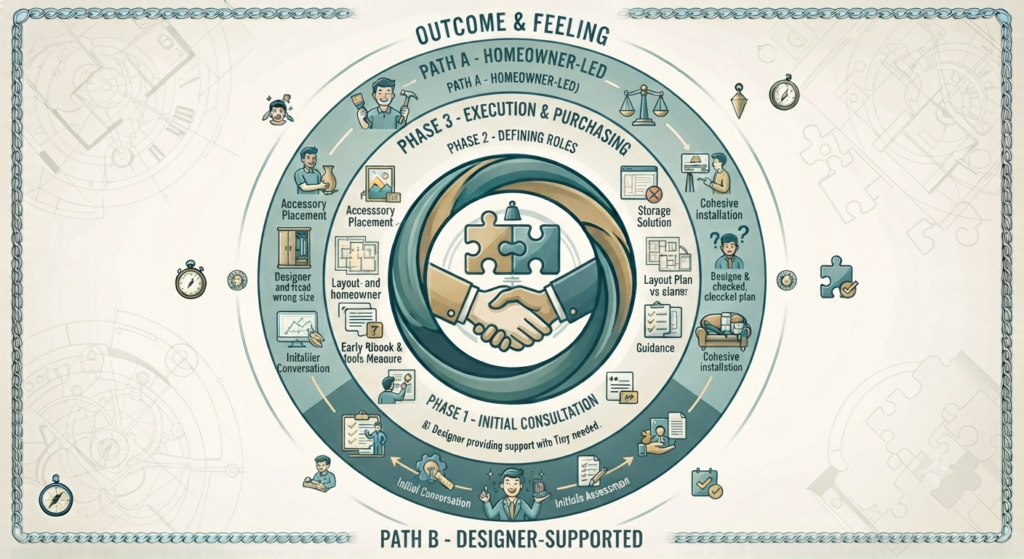
You don’t have to choose between doing absolutely everything yourself and handing over the entire project.
Maybe you enjoy selecting artwork and accessories but don’t want to plan the kitchen.
Maybe you’re confident about the overall style but need help with layouts and custom storage.
Or perhaps you want professional guidance at the beginning and prefer to handle the smaller purchases yourself.
That can work too.
The amount of professional involvement can be shaped around the project.
When Professional Help Is Probably Worth Considering
There are a few situations where bringing in an interior designer becomes particularly useful.
If you’re working on an entire home, there are simply more decisions to coordinate.
If you’re changing layouts, electrical points or plumbing, mistakes can become expensive to correct.
If you want custom kitchens, wardrobes or built-in furniture, accurate planning becomes especially important.
And if you have a clear idea of what you like but can’t figure out how to make everything work together, a designer can help turn those scattered ideas into one direction.
You don’t need to be completely lost to ask for help.
Sometimes you just need another experienced pair of eyes.
A Beautiful Home Still Has to Be Yours
There is one thing that gets overlooked when comparing DIY with professional design.
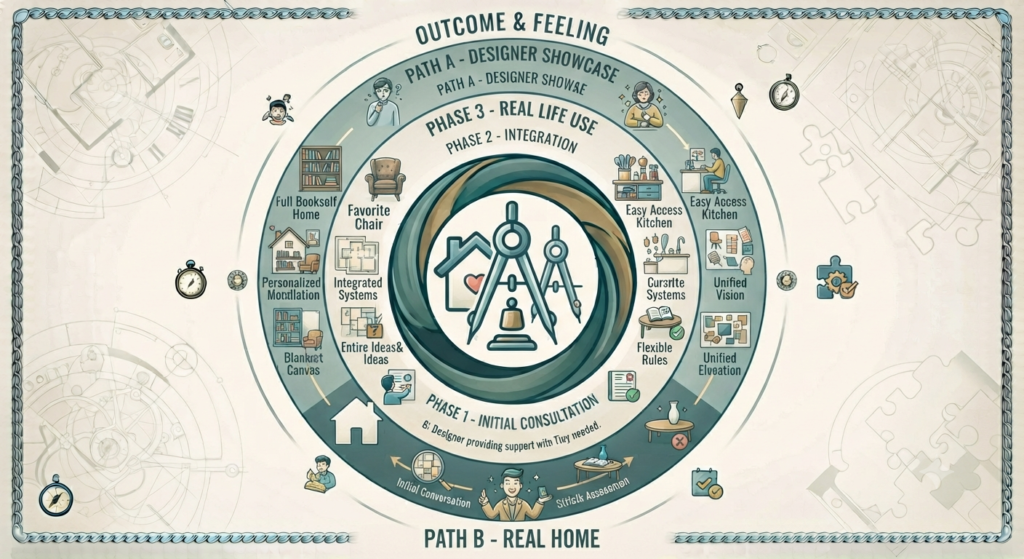
The home shouldn’t become a designer’s showcase.
It should still feel like yours.
Your books should be there. Your favourite chair should have a place. The things you actually use should be easy to reach.
Maybe you don’t want an immaculate coffee table because you regularly leave a book there. That’s okay.
Good design has room for real life.
So, Which One Should You Choose?
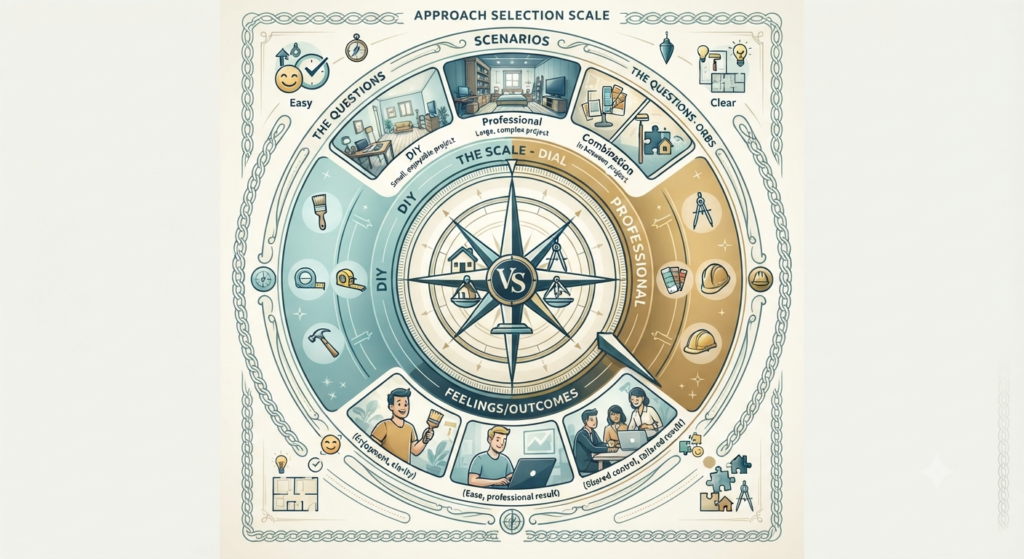
If the project is small, straightforward and something you genuinely enjoy doing, DIY may be the better choice.
If the project is large, technically complicated or simply too time-consuming, professional help can make a meaningful difference.
And if you’re somewhere in between, you can combine the two.
There is no prize for doing every part of your interior project yourself.
There is also no rule saying that hiring a designer means you have to give up control.
The better question is:
What would make this project easier, clearer and more enjoyable for me?
That answer will probably tell you which approach makes sense.
The Role of an Interior Designer
At Krati Kansal – Home and Interior Design, the idea isn’t to impose a particular style on a homeowner.
The process starts with understanding the space, the people using it, their preferences and the practical things they need from the home.
From there, design decisions can be developed with purpose rather than simply choosing things because they look good individually.
Because a home is too personal to be designed entirely from a trend board.
It should reflect the people who live there.
Thinking About Your Own Project?
You don’t need to have everything figured out before you begin.
Sometimes the first step is simply understanding what your space needs and which decisions are worth professional help.
Let’s turn your ideas into a home that feels genuinely yours.